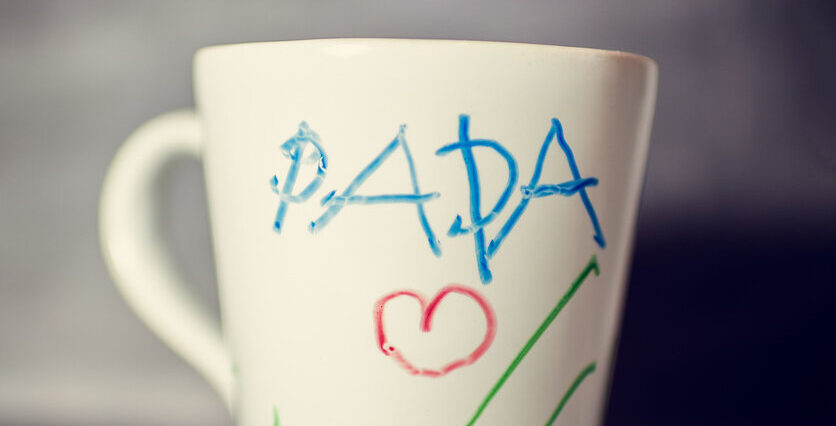
The assignment was to paint a mug for your father. It was June, and the warm air calmed our usually rowdy 1st-grade classroom. The other kids bragged about their fathers and turned their store-bought mugs into symbols of perfect families.
I dipped my paintbrush into the bright paint. I remembered playing Uno on a metal table with my dad when I was 4, matching the primary colors of the cards.
I blurted, “My dad’s in jail.” The other kids ignored me, and the teachers just looked sad. When the class finished painting, the teacher placed the mugs on a shelf to dry. When we lined up to go to the cafeteria, she asked a few kids to stay behind to bake cookies.
“Angela, come over here,” the teacher called, gesturing to the baking table. After we baked, the teacher led us to the cafeteria to share the warm treats with the whole class. It was the most fun I’d had in a while.
Months later, my sister Sophia and I were removed from our mother’s home and put in kinship care with my grandmother, my father’s mom. I didn’t know Grandma Rosa well because she and my mom had a bad relationship.
Grandma Rosa talked about my dad whenever she got the chance: his childhood love for art, how smart he was, how he loved the color blue just like my sister, and most importantly, his name. David.
My grandmother told me that David loved and cherished me. My mom’s mother, Grandma Edna, had described a man with long wavy hair. Nicknamed Tiger, he’d swept her daughter off her feet. Tiger didn’t sound like the kind and gentle man Grandma Rosa taught me about. I couldn’t wait to meet him and find out for myself.
One day when I was 7 and still living with Grandma Rosa, Sophia, my cousin Ameya, and I were watching TV. We heard the jingle of keys in the lock. In walked a man who looked strangely familiar. “Hey girls,” he said to my sister and me. “Come give your dad a hug.”
I walked over and wrapped my arms around him, then hesitated. What should I call him? “Hey Daddy,” I said quietly.
He hugged Ameya, and my cousin Alex came out of his room. It was disorienting to see my dad and my cousins in the same room. “Hey lil man,” my dad said to Alex.
He asked me what I was doing, and I told him all about the shows I watched, my Christmas break assignment, and what I wanted for Christmas—the Orbeez foot spa I always saw on commercials. He nodded.
As Christmas approached, I envisioned my father arriving with the Orbeez foot spa.
Reunited Again
Christmas morning, my cousins and I made snowmen and drank hot chocolate, wondering when dad would show up. Finally, tired of waiting, we opened presents. I got pink Christmas pajamas and a child-sized ukulele, which was nice, but no foot spa. I wondered if my father had decided not to come or drop off a present because I was too greedy.
Another year passed with no glimpse of Dad, and then my sister and I went back to my mom’s care. We three bounced around, homeless and then in a tense, fragile apartment with a lease that my uncle had abandoned.
Then I got home one day, and there was my dad sleeping on the couch. I thought it was temporary, but he stayed. It was nice being like the families on TV: one mom, one dad, and the kids. My life felt more stable somehow, even though my parents argued.
And while my dad didn’t converse much with me besides awkward small talk, every other day he walked my sister and me to school. Sometimes he embarrassed me by using parked cars’ rearview mirrors to fix his beard, but overall, just being together felt good.
Six or seven months later he left again, and my mom, my sister, and I moved into an apartment-style homeless shelter. I’d stay at Grandma Rosa’s house sometimes. Then, during the summer between 3rd grade and 4th grade he reappeared there, sleeping on her couch.
For nine years I had solved the equation of his absence and anger by blaming myself. “I’m too greedy, too childish, too needy.“
I thought we were getting another chance to bond, but day after day, he ignored me and Sophia. My grandmother woke us up, dressed us, and cooked our meals, while my aunts took us to Coney Island.
It felt strange being raised by my father’s family while my actual dad just melted into the cushions. When he wasn’t sleeping, he was usually gone. I’d try to tell him a story about something funny that happened at the park. He’d just nod along, wait for me to stop talking, and say ‘Wow.” It was obvious that he wasn’t listening.
Every time he tuned me out, I figured I was too childish for my father to be interested in a conversation with me. I just had to grow up faster.
I Didn’t Pull Away
The next summer, when I was 9, Sophia, my cousins Ameya and Alex, and I piled into a taxi with our aunt for a day out at Rockaway Beach. Then my dad opened the door and sat next to me. I hadn’t seen him in a couple of months.
I had never gone anywhere fun with him. Maybe we could build a sand castle together. But then a knot tied in my stomach: What if the beach didn’t change anything? What if I didn’t know how to be his daughter?
The car was packed too tight, and my car sickness made it worse. Then my dad guided my head to his shoulder. Though it strained my neck because I was sitting up straight while he slouched, I refused to move. If I pulled away, I would be the one widening the gap between us, and what if my dad thought I didn’t want a relationship with him?
But then the cab stopped somewhere in Brooklyn or Queens, and he got out and left. I was relieved to finally have space to breathe, but disappointed to give up the hope of spending the day with him.
The summer ended and the school year began, and the rollercoaster went back up. Sophia, my mom, and I moved to yet another shelter apartment. I thought my dad was just helping us carry the bags there, but then he spent the night, and the next night, and the night after that. The longer he stayed, the higher my hopes got, but he left a month or two later, so they never got too high.
Whenever he vanished, I wondered: Was he back in a cell? Sleeping on his mom’s couch? But if I asked my mom about him, it would only make her angry. And if I asked anyone else, they would get sad or look down on me and my family.
The Wrong Equation
I was 13 when the Covid-19 pandemic hit, and my world shrank to the size of my mother’s apartment. My mom was volatile, my dad was back with us, and home felt like a pressure cooker. My strategy was to stay perfectly obedient and quiet to keep the peace.
To escape, I watched shows for hours: Steven Universe, Bob’s Burgers, and Adventure Time. I felt sad when characters explored their relationships with their fathers. Watching fathers love their weird kids unconditionally showed me that mine had never actually been there for me.
And as lockdown dragged on, my father went from quiet neglect to active cruelty. I had seen glimpses of out-of-control rage before, but now he was angry and mean most of the time. He shouted and cursed at me, and called me names. The air in the apartment grew thick with the constant threat of violence.
For nine years I had solved the equation of his absence and anger by blaming myself. I’m too greedy, too childish, too needy. Blaming myself was my way of coping with the uncontrollable nature of my father’s distance. If I was the problem, then I had the power to fix it by growing up or changing.
But with the new wave of hostility, the script in my head changed. I was just a 13-year-old girl behaving in her own home, trying to survive a pandemic. I realized that it didn’t matter how perfectly I behaved, how quiet I stayed, or how much I grew. His hostility continued.It wasn’t a reaction to anything I was doing. I couldn’t control him, and his behavior wasn’t my fault.
Looking at my father through this new lens, I finally understood that his treatment of me didn’t reflect my worth. He wasn’t failing me because I was an unlovable daughter; he was failing me because he was incapable of being a father.
Once I realized his failure wasn’t my fault, a burden lifted from my shoulders. I stopped trying to earn his approval or expecting him to be the father I wished he was. My eyes refocused on the good relationships I do have. I went into foster care at 16, and as I entered my last year of high school, I stopped trying to reshape myself into what others might want and instead became someone I’m proud of. I began dressing how I pleased, hanging out with supportive friends, and discovering who I wanted to become.
I walked across the stage at my high school graduation knowing my father wasn’t in the seats. He hadn’t checked my report card, helped me study, or talked to me about colleges. I got my diploma with my own effort and hard work, plus the help of trustworthy adults and peers. I navigated the labyrinth of college applications and FAFSA forms with the help of friends, teachers, and counselors. The acceptance letter from the college I had dreamed of felt like proof of my independence.
My sister Sophia and I experienced together having an unreliable father. We kept ourselves grounded by reminding each other that we deserve to be treated with kindness and respect. My foster family keeps their promises in ways my father never did. I have friends who are interested in what I have to say and we make happy memories together.
By the time I packed my bags for my college dorm at 17, the empty space where my father should have been didn’t feel like a sinkhole. It felt like proof of my own strength.
- Family
- Foster Care
- Grief