I’ve always loved writing. As a child, I wrote essays for school on issues like gender inequality or deforestation, and journaled to vent emotions and record my life. Eventually I discovered poetry, and liked the freedom of it—how not every line needed to rhyme and I could play with different structures and tones.
Inspiration must have been everywhere I looked, because I don’t remember having to search for it. Whenever I had an idea, I wrote it down before the thought slipped my mind, and that became my favorite piece until I wrote another.
As I got older, my attitude and habits around writing shifted. Maybe it was time pressure or the topics I was asked to write about, but my excitement for school essays evaporated. I did get more interested in fiction, but suffered from a lack of follow-through. After planning a clear beginning, middle, and end, creating main characters, and even coming up with scenes, other things would demand my time and I couldn’t muster enough interest to keep the project going. I’d wind up starting a new project and then abandoning that too. This pattern frustrated me endlessly. I wanted to be able to share my work with others and be proud of what I accomplished, but didn’t know how to get past blocks.
Flamingos, Butterflies, and Jaguars
Then, during the summer before 9th grade, I found important keys to keeping my inspiration going. My family and I travelled to Mexico, and I adored it. I’d been to England, Belize, and Puerto Rico, but I had never been so inspired by a place. Visiting the beach and pool, or indulging in foods I hadn’t tried before, like mole and tamales, it was as if my brain switched on. The air itself made me feel alive. I began to have more ideas, and make more connections between them.
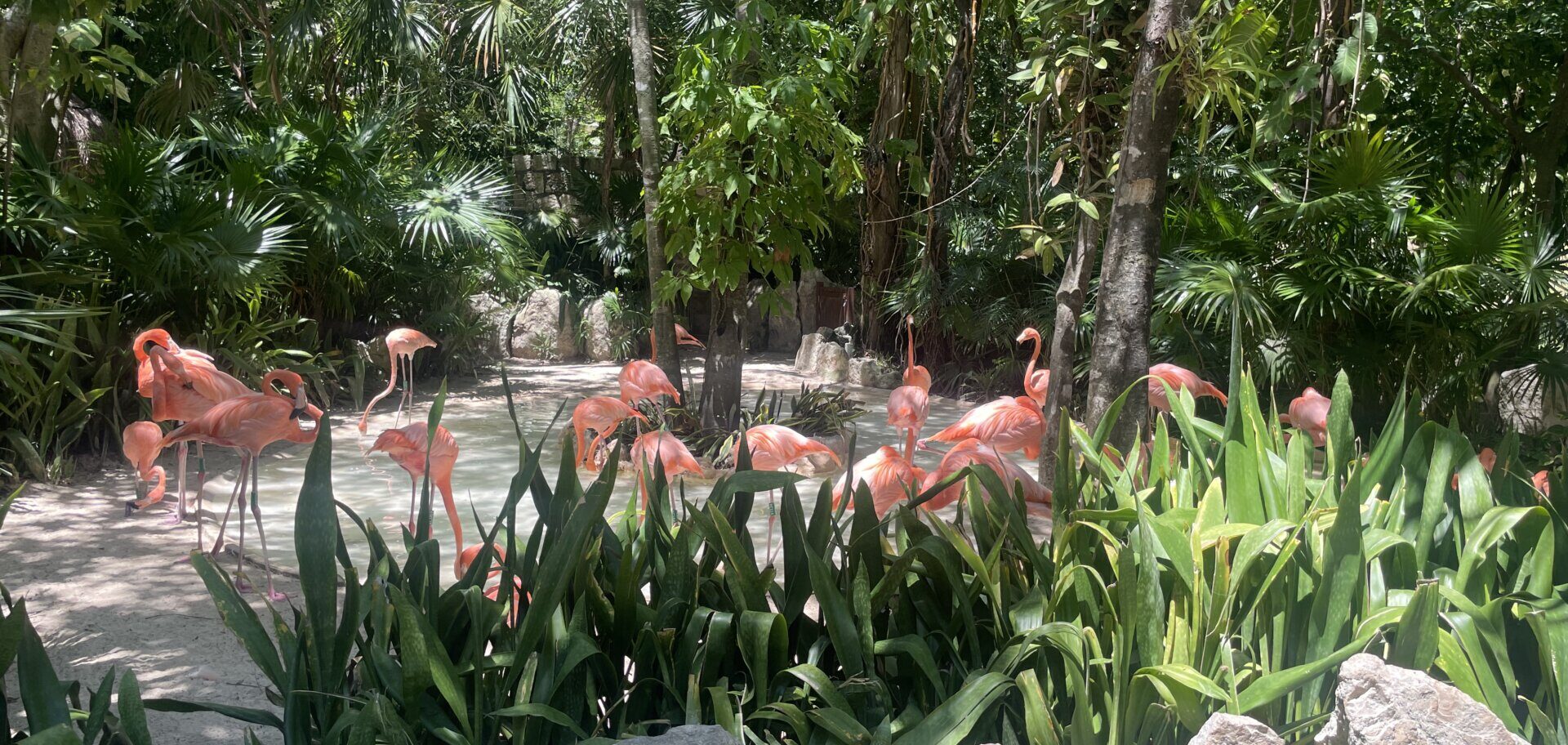
One of the parks we visited made an especially strong impression. Some animals roamed free; others—flamingos, butterflies, and jaguars—were in enclosures. We saw a performance with lively drums and flutes and dancers wearing long, frilly skirts with colorful feathers and beautiful patterns. Afterwards, I looked over all the pictures and videos we’d taken, feeling strangely compelled. It reminded me of a movie, but I couldn’t figure out which one or where I had seen it.
The next day at the beach, while my sister swam and my parents left to order food, I lay back and tried to remember any movie with that kind of lush scenery.
“Aren’t you going to come in the water?” my sister asked, applying more sunscreen to her arms.
“Does any of this look familiar to you?” I showed her the pictures I couldn’t stop staring at on my camera.
“That’s where we went yesterday.”
“Obviously, but besides that: Does it remind you of anything we’ve seen before?”
“No, I don’t think so.”
I sighed and made my way to the waves, trying to focus on having fun. But I couldn’t let it go. Back at the hotel, I described each of the pictures on a piece of paper. Bright pink flamingos in shallow water, tree roots hugging cave walls, shops of handmade jewelry. Suddenly I realized it was not a movie that I was thinking of, but an idea of my own!
This brought an adrenaline rush. Immediately I started jotting down thoughts in fear of missing any detail. I wrote longhand before bed, in my notes app on the beach, and made mental notes when I didn’t have either. I managed to get a rough plot and a couple of characters that fit the setting and scenery I’d been inspired by.
In-Flight Inspiration
I decided the five-hour plane ride home would be a good time to explore more of my new story idea. But it was hard to focus with all the commotion, and though I forced my pen to the page, I ended up with meaningless scribbles and swirls. Frustrated, I tapped the mini TV on the seat in front of me and browsed the movie section.
My eyes landed on a thumbnail showcasing four young women (the 2019 film by Greta Gerwig). I’d seen copies of the book Little Women by Louisa May Alcott before and knew it was a classic.
I plugged in my headphones and was immediately swept into the world of Jo March and her sisters Meg, Beth, and Amy in New England around the time of the Civil War. The story focuses on their journey from childhood to womanhood. Jo in particular spoke to me as an aspiring writer, especially the ink stains on her hands and her determination to sell her stories. Her bonds with her sisters also reminded me of the relationship I have with my own sister.
Long after the plane landed, I continued thinking about the March sisters and their creative lives, how they happily acted out a play that Jo wrote. My mind also wandered back to Mexico and the ideas its scenery had sprouted in my head. I had come up with the concept of a couple of friends who vacation in a beach house somewhere in California each summer, except the one summer they travel to Mexico and everything goes wrong. For some reason, I could not plan past the opening scene.
Once school started, I took a long break from working on my story. Whenever I was reminded of it, I felt guilty. Writing for school assignments was also hard: I stared at the page, bored. Everything around me felt bland. I couldn’t access those summertime feelings, and color seemed to drain from the plan for the story I’d imagined. My hopes for its completion fizzled.
Forward Motion
I asked for and received the book Little Women for Christmas, and it was even better than the movie. On the page I found more similarities between Jo and me, like how her hands were often cramped from nonstop writing, or how nervous she got when strangers read her work.
I noticed I felt calm when reading the book, so only a couple of weeks later, I decided to read it again. I got comfortable on my bed and began, progressing more quickly this time. At the halfway point, as Jo was attempting to publish her novel, I found myself contemplating my writing journey. I stopped reading and thought: If she can do it, then maybe so can I. Scrambling for a piece of paper and pen, I wrote: “Jo didn’t give up.”
If she can do it, then maybe so can I. Scrambling for a piece of paper and pen, I wrote: “Jo didn’t give up.”
Then I continued reading, jotting down any moment I related to. Noticing those moments helped me keep my hopes alive for my own stories. By the time I finished re-reading, my piece of paper was full of notes like this quote from Jo: “It’s very bad poetry, but I felt it when I wrote it.” It was as if she had experienced everything I’ve felt as a writer.
It motivated me to revive my idea from Mexico. I made time for it after school and on weekends. Progress was slow, but anytime I felt disappointed with what I’d come up with, I re-read my list of quotes and details about Jo to keep myself on track. Her dedication to writing was my model and inspiration.
The list served me this way for months, and by June I had written everything up to the climax. There were a couple of scenes that I still could not express the way I imagined them in my head, as well as some plot holes and other things I wanted to fix. Six months ago, those flaws would have been the reason to abandon the project. However, after putting more thought into what I wanted and recognizing that it was to be like Jo March, I knew I needed to stop making excuses and just keep writing.
So that’s what I did. With summer, my schedule changed and my writing pace wasn’t as fast. But it was different from past periods of creative slowing, because I had gained confidence in my ability to push forward with a story idea. I also realized that each story has a different catalyst, and at any given moment, I might feel inspired about one more than another. I became comfortable working on different projects simultaneously. This is helpful because it allows me to be always making progress on something.
The problem is that I still haven’t completed any story drafts. I try to limit the number of projects I’m juggling at one time, but that’s never worked. Whenever an idea comes to me, scenes and scenarios consume my mind until they are written down, so I can never resist new starts.
How Far It’ll Go
A few months ago, I started writing for Youth Communication and had my first personal story published, followed by this one. It’s a whole new source of inspiration to think that others might read my work, and that it could prompt them to not give up on their goals, either. It’s made me realize that it takes lots of time, and usually several drafts, for a piece of writing to become its absolute best. According to my editor, I’m one of the most diligent writers she’s worked with. It turns out I have no problem putting in that time and work when I have the knowledge that I will be rewarded with a published piece, and have an editor that I need to respond to.
Jo March helped me fall in love with writing again. The lessons I can share from this are: Finding even a little time in your day to get an idea started gives you momentum. Don’t be too self-critical; first drafts are supposed to be messy and maybe not make the most sense, but unfiltered thoughts help you discover what you actually mean to say. Hitting pause on a project you feel stuck with can create space to see where it’s going.
But I haven’t solved all my problems as a writer. I still get caught up in perfecting each scene I write, preventing myself from finishing pieces of work. Unlike writing for Youth Communication, with my personal projects there is no editor to help me. It makes me think that having small weekly goals for myself, like word counts, may be beneficial in building my momentum. Also, asking close friends to read my work would give me an outside perspective and someone to get things ready for. Thinking about how far my writing can go, and all the people it can influence, is something that just might have the strongest impact on my work in progress, because it reminds me that every big successful story started from a small idea in someone’s head, and that it is up to the writer to expand on it.
Pushing toward perseverance has reminded me how important writing is to me, and I don’t want to give up on something so essential. The fact that I felt such a powerful connection with Jo March tells me the mindset I must go into writing with. Jo didn’t let setbacks come between her and her goals, and neither will I.
- Arts/Culture
- Work