I first heard about Youth Communication through my school when I was in 9th grade. I have loved writing since childhood: short stories, poetry, fanfics, lyrics, and more. I had recently moved to the U.S. after the full-scale invasion of Ukraine, so I was acclimating to learning in a new language. I submitted my application, somewhat on a whim, on January 11th, 2024, writing about my experience fleeing the war. I was accepted on February 2nd.
When I first came into the office, I met my editor Virginia and we talked through how to expand my application into a full story. Those conversations often felt like therapy sessions. To write about losing my home I needed to be awfully vulnerable.
I had to recount the bombs flying, the stress of moving country to country, the hurt of having to live every day as if nothing was wrong. I had to act like a normal kid, doing homework, participating in class, socializing, as if my whole world hadn’t crumbled. Two years later, I still feel a disconnect sometimes when my peers talk about school or fights with parents being their biggest problems; for me it’s the ongoing war and possible erasure of my home, loved ones, and culture.
It was not easy writing about a wound so fresh, but working on the story and answering my editor’s questions helped me process a lot. Today I can talk freely about it, even though the ache is certainly still there. Now I can say “I’m a Ukrainian refugee” to new people and feel pride instead of shame. I have overcome things, and I can actually talk about it. I wonder if I would have been able to open up as much if I hadn’t joined the writing program.
When it comes to my writing, I don’t have to wonder: Virginia definitely helped me develop my skills in things like shaping a story. I learned that scenes, real-life moments shown through dialogue, make a story more immersive.
One writing rule I will definitely take away is “kill your darlings.” This phrase has been attributed to various authors and quoted by countless writing teachers. It means that as a serious writer, you must be prepared to remove any phrase or sentence or paragraph, no matter how fond you are of it, if it does not serve a purpose in the text. Every word must add to the story.
It was often nerve-wracking to see something I found beautiful or interesting get cut because it did not move the story forward. It made me think critically, “Is that bit useless? Can I put it somewhere else, or rewrite it, or expand it?”
But it also led to me standing up for my writing more. If I believed that the darling did contribute to the point, I’d fight for it to stay. My editor and I would discuss it; sometimes the solution was to edit the darling or perhaps move it to a different spot where it worked better.
Another unique thing about writing for this magazine is the patience we writers get from our editors. In the “real world,” the deadlines are ever-present and there’s a lot of stress about doing your work. The YouthComm editors understand we have school, other extracurriculars, and our own personal lives. They guide us gently and let us take breaks from working on the story.
Being vulnerable on the page and putting it out in the world wasn’t easy, but it has made me less ashamed of my struggles.
We write a lot of drafts, which means I read my words over and over, and my initial delight in what I wrote fades sometimes. But the good thing about it is that the stories get better with each draft. Without a deadline for having a final draft ready, we can take the time we need to make the stories the best they can be.
And even though we keep working, I don’t feel pressure at YouthComm. It’s a different planet, where I can be calm and write because I want to, not because missing a deadline will get me in trouble.
A Writers’ Community
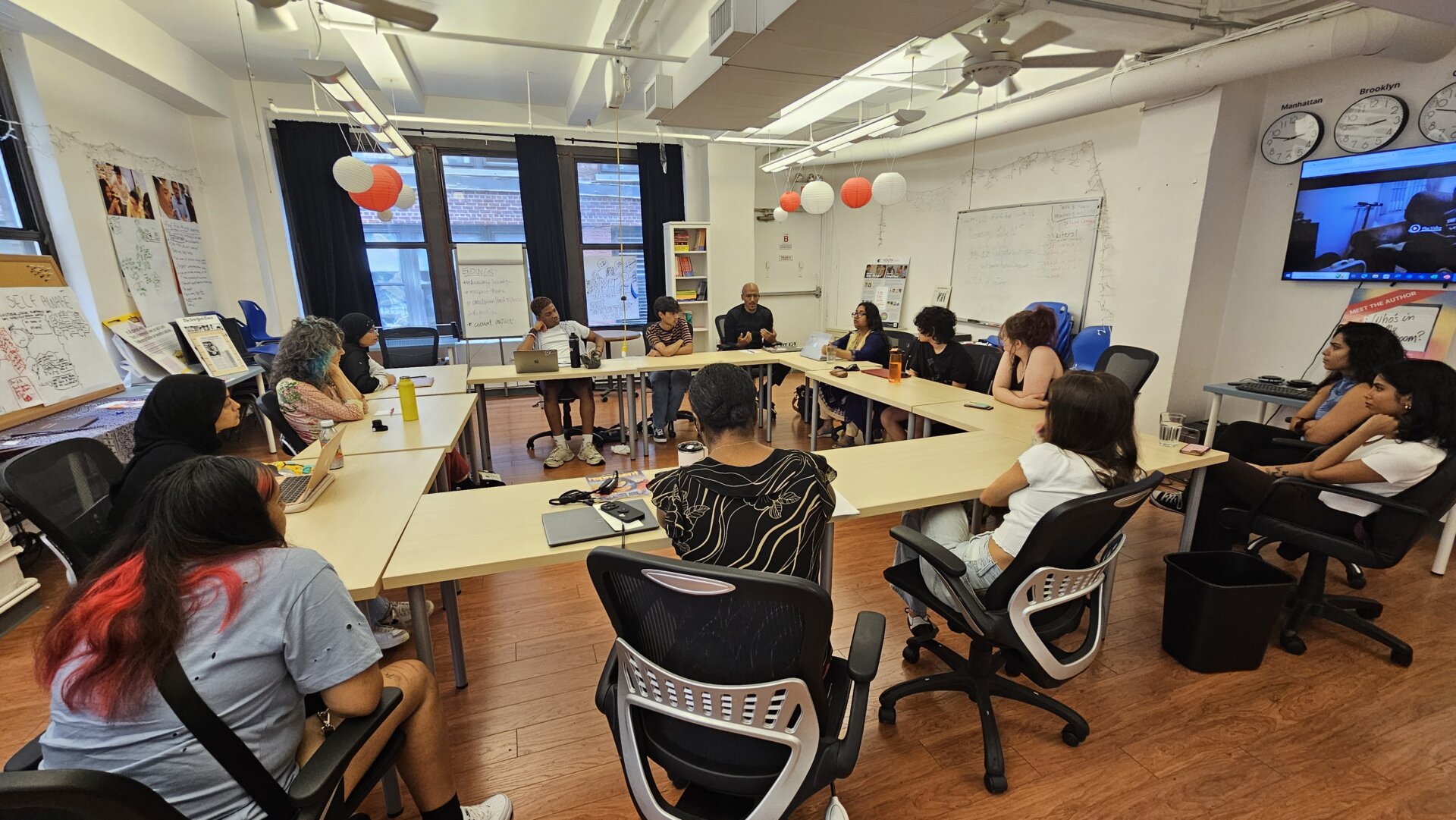
Besides the one-on-one editing sessions, I also love the monthly writers’ meetings. The tables are set up in a room so everyone is looking at one another, and the teen writers have discussions about our writing and whatever topics we burn to write about. We talk about phone bans at schools, the overwhelming rise of AI and our worries, as well as more personal stories we’ve been working on.
I was a freshman when I started at YouthComm. Most of the writers were older than me and seemed so wise, but also easy to talk to. As time went on and we got to know each other, it was fascinating to connect the faces around the table with stories I read in the magazine. These real people who talk so deeply about what they are passionate about are also published writers. They’re not just a random person at your program; you’re looking at a talented storyteller who writes about personal topics like their gender or racial identity or trauma they’ve been through.
Yet these meetings are not at all intimidating. What makes them different from gatherings at school or other extracurriculars, in fact, is the ease. We have no objective besides sharing our thoughts. No homework, no tasks, just good company.
At the last meeting, there were some newer writers I hadn’t met before. We went around the circle, as we always do, introducing ourselves and the stories we published or are working on. We then bounced ideas off of one another about things that are relevant to us teens. Afterwards, we ate pizza and mingled.
Two of my friends and I walked over to another duo and introduced ourselves. One of those girls complimented my jacket; I complimented her jewelry. Then she said, “You wrote that Ukraine story? I read that before I joined the magazine. I didn’t expect to meet the legend!”
As she said that, I froze. I knew the story had been published, but it was still a delightful shock that people who I haven’t met have read it—and liked it! It made me see my writing in a new light. I know my writing isn’t awful, I’ve been sharing it with my loved ones for ages, and they’ve been saying encouraging things. But a part of me always thought that their praise must be exaggerated. How can some words that a teenager wrote be fascinating to a stranger?
So I took a moment to collect myself and let the pride in. I deserved the praise, even if sometimes I felt like I didn’t. I’ve stopped being so quick to deflect praise. I feel more comfortable sharing my writing now because it has gotten better. I’m keeping myself to a high standard. I do not beat around the bush, getting straight to the topic and reminding myself to name things, such as emotions, and to be specific. And sometimes, if it is of utmost necessity, I slaughter my darlings (though it is a tragedy each time).
And I am putting it all out in public, for more people to read. Being published is validating; I’m not as embarrassed about sharing what I feel. It is thrilling to be read by so many people.
Next year I’ll be a senior, and I feel more confident overall. I’ve expanded the subjects I write about. Being vulnerable on the page and putting it out in the world wasn’t easy, but it has made me less ashamed of my struggles. They are a part of the human experience, and that has helped me be more empathetic too.
For example, in my seminar class, we recently talked about Malcolm X and his struggles with addiction; “I knew I had to stay high” (p. 133) is one of the quotes I wrote about.
I could’ve simply written that it is a shame he lived like that, but instead I wrote about his mental health and how his childhood and his environment led him to use drugs, among other things. I can relate more to the emotional turmoil and trauma of others, how hard it feels to deal with constantly being in fight-or-flight mode or depressive states. And now I’m better able to put that into words and share it.
While we are on the topic of confidence: When I meet with Virginia to discuss potential stories, sometimes she shoots the idea down. And it’s OK. Maybe some of the dead darlings can rise together to form a different story.
About the Author

- Arts/Culture
- Mental Health
- Work