CRASH! It was as if I could feel it plummeting toward me right before it happened—and yet, the chandelier never fell. It crackled and swayed above my head, its bright golden lights engulfing my field of vision. The crescendoing organ, meanwhile, made all the seats in the theatre shiver. My brain sensed danger, yet my mind whirred with wonder, each thought rushing to predict what would happen next.
While The Phantom of the Opera isn’t typically a little girl’s first Broadway musical, it was mine.
I was seven years old when I sat beneath that chandelier, and I’ve never forgotten it. My mom and grandma were my usual companions, going to see Phantom, then Wicked, then The Lion King. We weren’t wealthy, but my mother received great discounts on shows as a benefit of being an essential worker, and my grandma, a retired teacher, favored spending whatever extra money she had on family activities like these. The world of theater felt unearthly: admirable to the point of being untouchable, yet so close to my heart. Watching show after show, I felt as though some intangible magic was being instilled in me, as portals to new worlds unfolded before my eyes.
First, I was entranced by the technical aspects of theater, like the chandelier, costume quick-changes, and sounds. I recognized and admired the artistry of each production’s technical moving parts, even as these clever elements blurred the line between the real world we sat in and the fictional one on stage. But with every show I watched, my attention shifted more toward the actors’ choices. As an audience member, an observer, an adventurer, I studied the expressions of each actor, allowing myself to become lost in their performances.
The Stage Within My Mind
I couldn’t have expressed what theater meant to me, nor could I have known what it would become. All I knew was that I was drawn to it like Earth is to the sun. At my small Catholic school in the South Bronx, our only extracurricular activity was a basketball team, and even that got shut down. Nevertheless, my brother’s Chromebook never failed me. I spent the summer days of my 5th and 6th grade years in Covid lockdown, and search bars became the remedy for my seemingly everlasting boredom.
Free monologues for girls
Videos for best acting tips
How to fake cry???
How hard is it to be an actor?
Little shop of horrors nyc…
I searched for YouTube videos, blogs, articles—anything that would teach me about acting, but even more than that, help me feel active within this creative world I had glimpsed. In my bedroom, I’d record myself acting out scenes using my tablet, then watch them back. Imagining myself in a variety of situations and emotional states, from melodramatic arguments to comedic breakdowns, was simply a way to have fun and pass time. For now, my only audience member was myself, and that felt right.
During the pandemic, listening to show tunes and Broadway cast recordings became a daily ritual. I could not go a day without annoying my mother with obnoxious singing, but at a time when the outside felt grim and hopeless, I wanted to fill my home with as much optimism as possible. I realized that I had developed a talent for mirroring facial expressions and emotions, sometimes even without thinking. Likewise, I could easily follow the harmonies of songs and understand the emotional weight of their lyrics.
I found myself caught in daydreams of being on stage and impressing audiences. I liked the idea of being admired in the same way that I admired the actors I grew up watching; I wanted to see the view from the stage. As I watched countless recordings of Broadway shows on YouTube—labeled “slime tutorials” to bypass anti-piracy moderation—I projected myself onto the actors.
I never considered community theaters or free programs because I didn’t know there were options for kids like me: low-income and not knowledgeable about theater. I yearned for a sense of unrestraint, the privilege of many options and opportunities to pursue. Passion alone was not enough, but it would plant the seed in my mind that told me to seek out more for myself.
An Avenue of Opportunity
I worked hard in middle school so that I could go to a high school that would open new doors for me academically. But when I was accepted to a private high school, I discovered opportunities beyond the classroom. I was in awe of all the extracurriculars I could do: sports, a chamber ensemble, clubs, and even a rock band. The upcoming drama production immediately caught my eye.
Auditions for The Bugs were held in my school’s black box theater. My body trembled as my eyes darted from person to person, each as unfamiliar as the other. Their smiles and enthusiasm illuminated the small, dark space, yet my thoughts were overcome with shadows of doubt. Everyone seemed to know each other already, and I had only arrived a week ago.
Nevertheless, everyone seemed so kind and full of energy. It felt like a community that I wanted to be a part of. I didn’t have the formal acting training or the years of theater productions that many had under their belts, but I had the curiosity to try something new.
She was my first big character, and I wanted to do her justice while using her as a vessel for my own emotions.
We read through a couple of scenes from the play together and acted them out in whatever way we thought fit. I was scared of fully committing to the characters. What if others thought I was trying too hard? What if my acting choices were cringey? Ironically, this was a play about a bunch of bugs trying to stop a swimming pool from being built in their backyard, so cringeyness was the least of my worries. I would have to bend my imagination in a way it had never before, and let go of my inhibitions. As the audition went on and I watched my peers act and laugh together, I slowly became more comfortable, letting my personality shine through my acting.
The Bugs turned out to be one of the best experiences of my life. I never would have thought that playing a smitten, comedic-relief firefly would change how I viewed art as a whole. But it showed me how art could be something that I felt in my entire body, an electricity that I created simply through introspection and curiosity about a character. I wanted to feel the power of being on stage again. In the feeling of warm lights shining on my face, the roar of the crowd, the soft grip of my castmates’ hands as we bowed, invigoration and confidence stirred within me.
The Role That Transformed Me
In freshman and sophomore years, I would go on to play many characters, like Lucinda from Into the Woods, and various characters from a student-written play festival, including a matter-of-fact therapist, a teenage girl grieving her sister, and a cynical love interest. Each presented me with a new challenge, and in turn new insights into how I could interact with others on stage and make the character my own. Through Lucinda I would learn how to make my sass felt even all the way in the back row. Through Alicia, a character experiencing the beginnings of grief, I would learn how to make myself (and the audience) cry, though it did take the help of listening to “White Ferrari” by Frank Ocean on repeat.
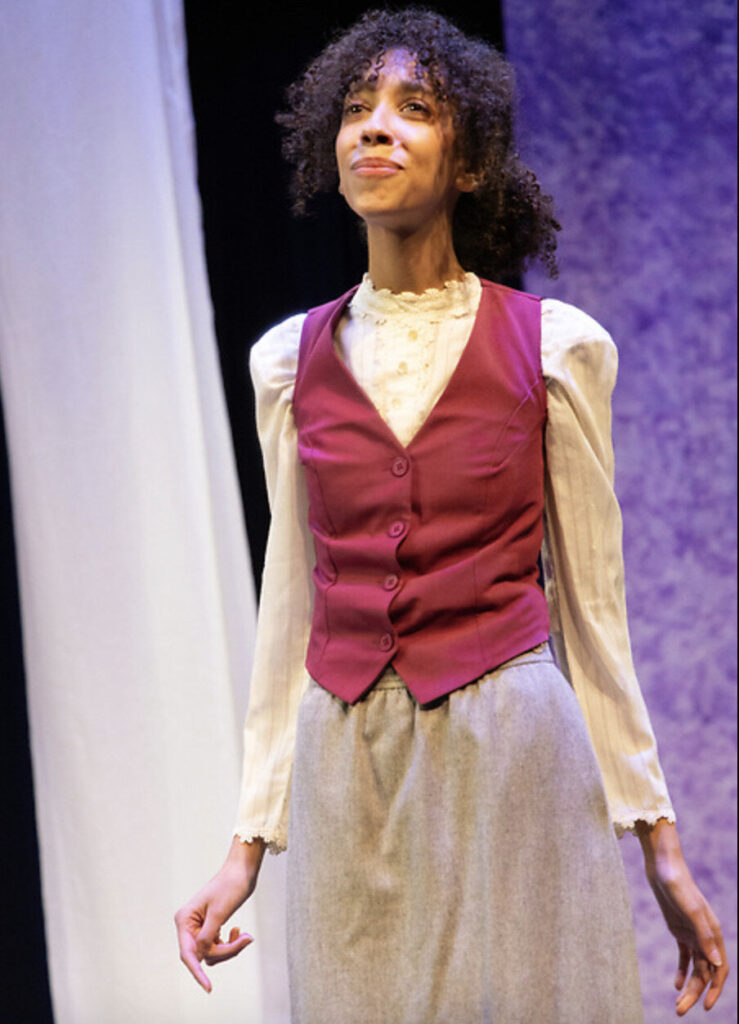
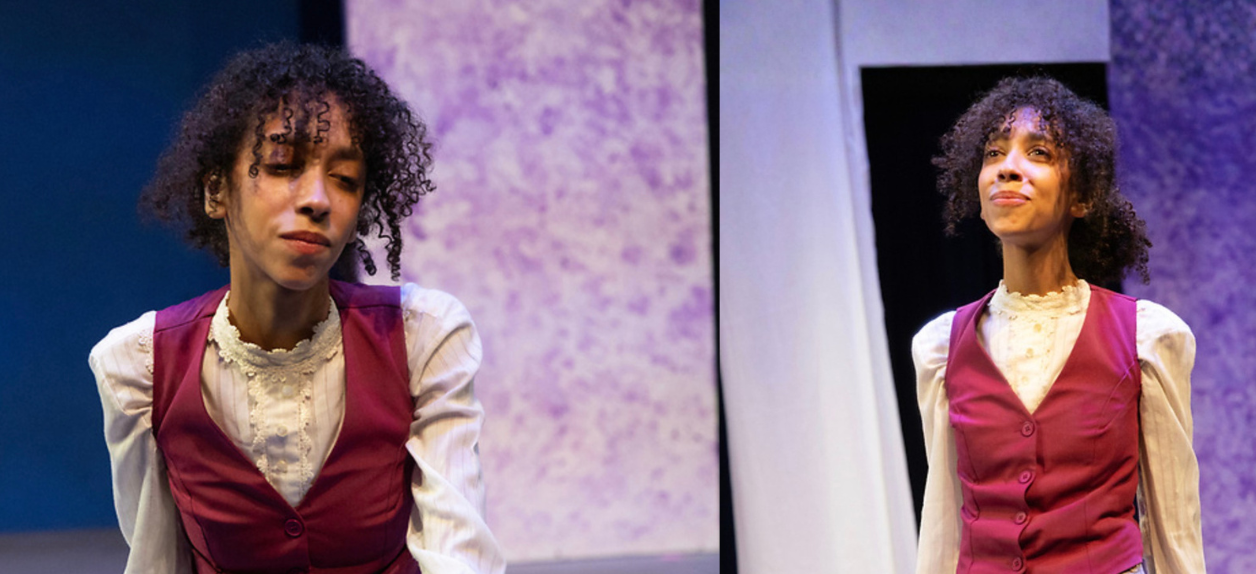
However, my greatest challenge came in the beginning of junior year, when I played Helena in A Midsummer Night’s Dream.
Helena is chasing after a man, Demetrius, who is in love with her best friend. At first, I viewed her as lacking basic dignity. She runs around the woods begging for Demetrius’ love, speaking in code, diminishing her own self-worth in order to be loved. Not only was it difficult for me to decipher the Shakespearean language and understand what she was saying, but it was even more difficult for me to find a way to relate with her. I wanted to figure out her motivations, her goals, and most importantly, what she meant to me as her own person. She was my first big character, and I wanted to do her justice while using her as a vessel for my own emotions.
After reading countless “Shakespeare translations” of her scenes, researching analyses of Helena, and practicing her monologues in my bedroom, something shifted. I had seen only interpretations of her as an annoying and pathetic character, likely to be hated or laughed at by the audience, yet I found her depth and complexity. She was a teenage girl who longed to be loved and did not understand how to put herself first. Beneath all of her melodramatics, she was incredibly vulnerable and human, and I wanted to portray her as such.
At first I had to think hard while rehearsing Helena’s scenes, but eventually, her emotions and physicality came naturally. Each time I stepped on stage, I was able to let Helena guide my actions without a second thought. During one rehearsal, my director told me something that stuck with me: “None of your performances are the same. Each time we do a scene, it’s a different version of it. That’s a good thing.”
After our first performance, my best friend (whose favorite play of all time happens to be Midsummer) Facetimed me to give her feedback. She told me that my performance was the first time she “had ever truly liked and began to understand Helena as a character.” It felt incredible to hear audience members, directors, and friends praise my performance, and for the first time, I felt that the achievement was really mine. I had seen Helena, empathized with her, and then humanized her the best I could so that others could share in that empathy.
Months later, I still carry Helena with me. She is a reminder of the work that I have put into drama, yes, and more besides: She represents how much theater and acting have given me and changed me. Acting forced me to look deep within both myself and my characters, to embrace our commonalities and fully understand our differences. I needed to remain open-minded and try to empathize before jumping to judgmnt. Helena became an extension and reflection of my own humanity. Acting has taught me to be more attentive to friends’ body language and emotions, to seek understanding of others.
But before I was Helena, before I was anything of an actor at all, I was that kid under a chandelier. Then a silly firefly who couldn’t tell (stage) right from (stage) left; and now an actress who can let parts of my personality that once lived deep inside bubble to the surface, interweaving the emotions of each character with my own.
The Author

Evangeline Mujica
- Arts/Culture