
Every youth deserves to have some adult in their lives who thinks they are “the bomb,” says Rich Hooks Wayman, 38, a gay foster dad who lives in Minneapolis, Minnesota.
In the late 1990s, Rich was invited by some lesbian social workers to start a “host home” program for gay, lesbian, bisexual, transgender and questioning youth who were homeless. As a host home parent, he put up kids for six months at a time without receiving money for their room and board. The program ran for several years and served about 20 to 30 youth each year.
Then he decided to become licensed as a foster parent because he heard caseworkers had a hard time finding homes for transgendered youth. (Minnesota youth were being shipped out to a group home in Los Angeles. It didn’t make sense to remove youth from their home communities and schools just because no one would take them in Minneapolis!)
‘I Accept All Kids’
Rich is accepting of kids who want to form new identities. “My own personal viewpoint is that society has a lot of crazy ideas about boys and girls,” Rich explains. “I’ve had very frilly girls and butch dykes and girls who are into being guys-I’m OK with it all. I accept the kids and just hope I can be a good guide, guardian, protector and mentor.”
Rich helped to support three “host home” youth and one foster youth before meeting his current partner, Aaron Hooks Wayman. Now Rich and Aaron’s live with three straight girls. The oldest is a 20-year-old girl who’s lived with him since she was 14 and is now in college. (She was related to an ex-partner and decided to stay with Rich after the break-up.)
They also live with a 15-year-old foster daughter and an 18-year-old who has aged out of foster care but moved back into his house this August to attend the University of Minnesota.
Some straight girls, especially girls who have been sexually abused, seem to prefer having a gay foster dad, says Rich, because they know they won’t be sexually abused. “They can relax and be open to building up a relationship of trust,” he explains.
But being gay parents has put off straight boys, notes Rich. “Every single straight boy who’s come to visit our house has chosen not to stay with us. I get the impression it’s a’What am I going to tell my friends?’ issue.” Some kids also seem confused by the idea of two male parents, he notes, because they came from single parent households headed up by females, and all their foster care placements were with single women.
Sensitive to Rejection
Yet Rich believes gay parents can bring a special understanding to fostering. Just as youth in care know what it feels like to be rejected or only partially accepted, gay people often must find their path in life without the support of parents. “Youth in foster care know when they’re just being tolerated, and gay people know when they’re tolerated. No one wants to be tolerated,” says Rich. “People want to be celebrated and embraced. We may be more sensitive to what it’s like to feel like an outsider. We have a deep understanding of the pain and trauma of rejection by family and peers rejection and the challenges that go along with reconnecting with someone else.”
The Midwest, where Rich lives, is a religious, politically conservative place, so gay men and women in America’s heartland truly “understand what it is like to come from conservative environments and try to define themselves,” Rich adds.
Rich finds some of his strength in spirituality. He and Aaron regularly attend Wesley United Methodist Church. He also sometimes drives one of his daughters to Catholic Church services or activities, takes her to church camp and attends the passion plays she performs in.
Giving Back to the Community
Rich, who describes himself as “your typical flaming gay male,” grew up in a small farm community in Iowa. “I was raised in a loving, supportive family, but I struggled with my sexual orientation because of my family’s faith. They’re fundamentalist Christians,” and the religion didn’t accept homosexuality. Rich didn’t come out as gay until he was 24, after he was in college and on his way to earning a law degree.
He found a job as a lawyer helping poor people, but now works as the collaborative director of a Minneapolis-based program for homeless youth called StreetWorks.
Battling the Stereotypes
Coming from a large extended family, Rich loved kids and always wanted children, but didn’t feel the need to have his own biological child. “I have no need to perpetuate my own DNA on this planet. we’re already overcrowded and we need to take better care of the people who are already here,” explains Rich. For him, fostering teenagers is a way to “give something back to the community and create long lasting change.”
Preventing gay people from becoming foster parents, says Rich, “Is absolutely ridiculous and hateful. It makes no scientific or social sense and it’s not based on data or research. It limits the options for social service agencies that need more good homes. In so many ways it’s irrational. There are too many wonderful youth and children waiting for a loving home. Politicians shouldn’t discriminate against GLBT parents and force youth to live in shelters or group homes waiting for a real family.”
Rich hopes that the example he and his partner set will help others think twice about stereotypes they may have against gay foster parents. He says, “It’s easy to say,’F-ggots shouldn’t be raising kids!’ But it’s harder to say,’My neighbor or my coworker shouldn’t raise kids.’ The personal stories really battle the stereotypes.”
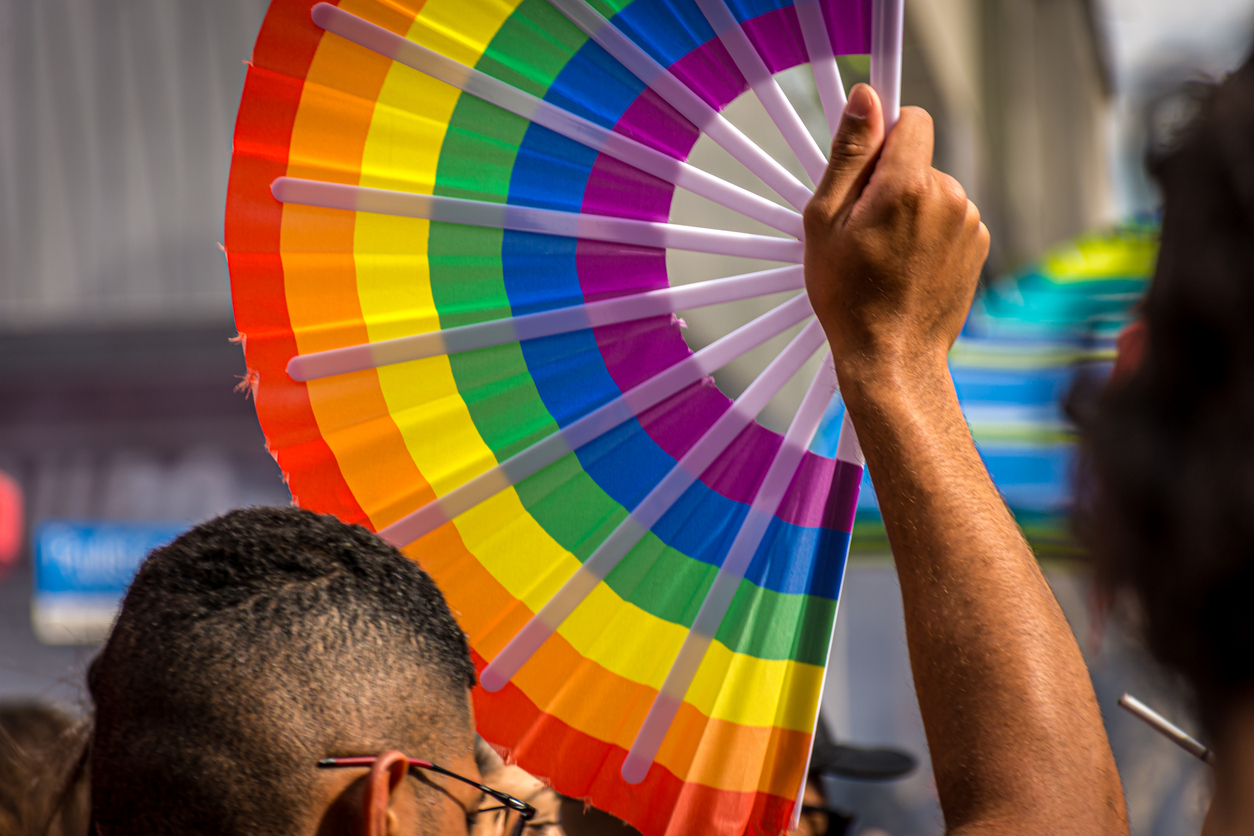
OK With It All
A Gay Foster Dad Opens His Home
About These Stories
YC runs intensive nonfiction writing programs for teens in New York City, where they’re mentored by a professional editor to write personal stories about their lives and about issues that affect young people. Their stories are then published and read by thousands of teens, educators, policymakers, and other adults who work with and for young people.