
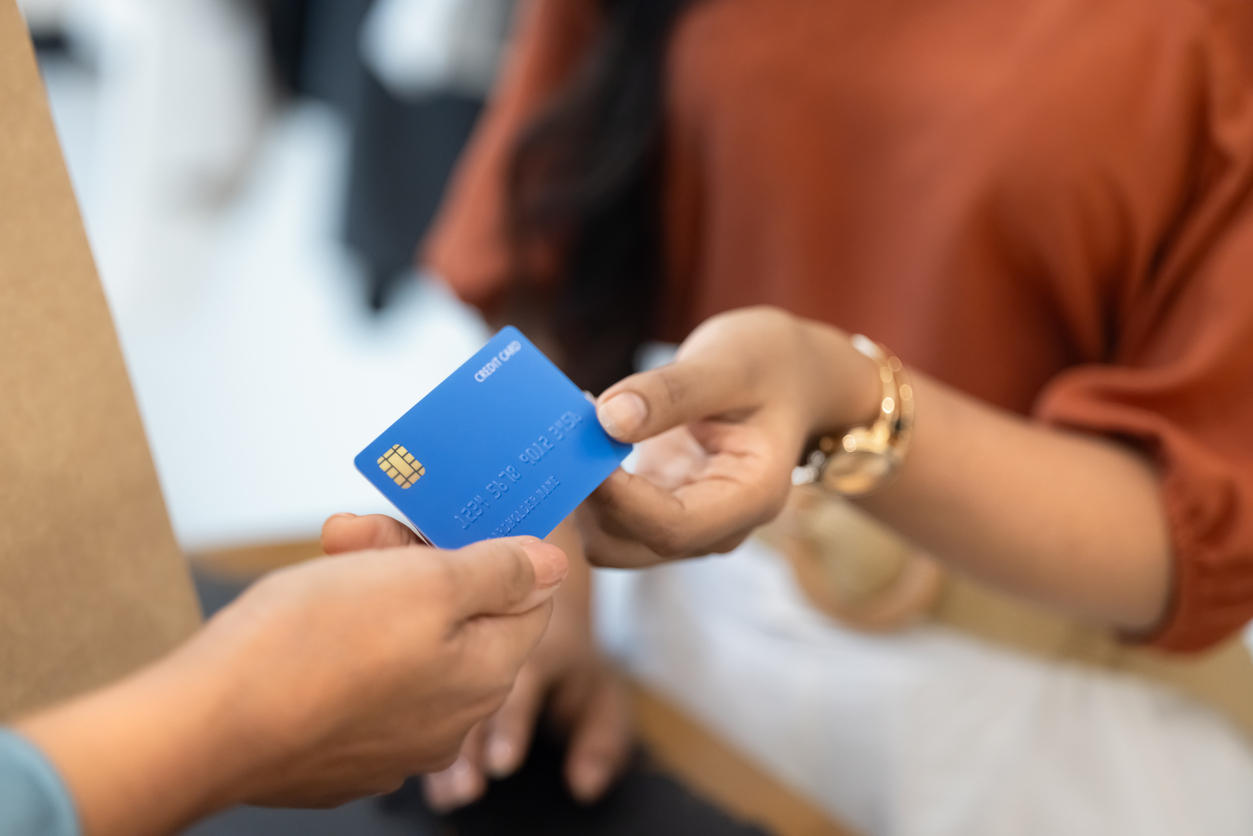
My debt problems started when I first went to college. I was 17 years old and I was still living in a group home. Just like every other college freshman, I was bombarded with credit card applications in the mail. Since I was working as a youth advocate and as a waiter, I figured that if I got a credit card and used it to buy the things I needed, I would be able to pay the bills when they arrived.
So I applied, not for one credit card, but for three. As luck would have it, I got approved for all three credit cards. I was very happy with myself and felt as if I had achieved a goal. I felt more like an adult now. I could buy things and not have to pay for them ’til later.
As soon as my credit cards arrived in the mail, I signed the back of them and headed off to do some shopping. At that time I was going through an Adidas clothes phase. So everything I bought had to be from Adidas. I had sneakers, pants, shirts, shorts, headbands, wristbands, two coats and even a book bag that was from Adidas.
With my credit card, I bought even more Adidas stuff as well as CDs, a radio, video games, and I started eating out a lot. It was amazing. I didn’t have to have the money to buy these things. I could just give the store owners any one of my three credit cards and whatever I wanted was mine.
Three Credit Cards
While the credit limits on each of these cards were $700 each-which means I could spend up to $700 with each credit card-I managed to max out the cards fairly quickly. When the bills came in, I paid the minimum amount that was due, which wasn’t more than $25 per card.
In my mind, I thought I was doing the right thing-just as long as I paid the minimum amount due and paid it on time each month. And, because I had started to get used to using the credit cards so much, as soon as I would get some credit available on the cards, I would immediately use it to buy something else. I enjoyed this. Being able to buy anything I wanted was a luxury for me and I took advantage of it.
But soon even the minimum amount I had to pay-the $25-started becoming difficult. In addition to my credit card bills, I had other bills. I had to buy books for school, pay for my transportation and for lunch. I did buy my first semester books with my credit cards, but I didn’t have enough credit to cover my second semester. I also had a monthly cell phone that was not cheap. At night, I loved going out and partying. (Do you know how easy it is to spend $100 a night in New York City?)
How Can I Pay Them?
While it always seemed that I had money, I was never able to hold onto it for long. I was making about $300 every two weeks at my part-time day job, another $150 from my weekend job, and about another $150 from my allowance. But I wasn’t even saving anything for when I left foster care. And I still couldn’t pay for what I bought with my credit cards. I was too busy spending.
Paying the minimum balance, I started to notice, wasn’t helping me much. Even though I paid the minimum balance, the credit cards still took a percentage of what I owed, and added that to the amount I owed. This is how credit card companies earn money. Say you owe $400. Even if you pay the minimum amount due and don’t use the credit card to buy anything else, the next month you will owe more than $400, because they charge you interest on what you still owe. Believe it or not, it might not be long before the $400 you spent has turned into $800.
My own bills skyrocketed. Soon I owed $1,800 to the credit card companies. My cell phone bill went up to $250. Eventually it was turned off because I did not pay the bill. I felt I could not handle the bills, like I was trying to climb out of a deep hole, but the more I tried to get out of it, the harder it was to get out.
I Stopped Trying
Part of me didn’t want to pay the bills because that would’ve resulted in me having no cash for myself. And there was no way I would’ve been able to deal with that! The other part of me wanted to pay them. I wanted to be responsible and keep my credit cards in good standing. So I paid what I could afford.
After a while, though, I got tired of paying bills altogether. I wanted to spend my money on myself, not on my creditors. I began to miss payments. Then my credit card bill would be charged a late fee, which could cost a lot-some cards charged $15, but one card charged $25 a month if I didn’t pay the minimum balance on time! How was I ever going to pay that back?
I reached a point where I didn’t care about paying my credit cards back. So I went from making late payments to making no payments at all. I hoped that somehow they would all just disappear, that they would pay themselves off.
But they never did.
Warning Letters
I got letter after letter from the creditors telling me that if I did not pay them back it would affect my credit rating, meaning that they would write up a report saying I was not good at paying back loans. That could make my future hard for me, because often when you’re trying to rent an apartment or buy a home or borrow money for college, they check your credit rating to see if you are good at paying back money. If you were lousy at paying back your credit cards, no one’s going to want to trust you.
One day I grew concerned. When I left foster care, I wanted to have my own apartment. I knew that in order to have this, I had to have good credit. There were also other things that I wanted-like a car and, one day, a house. The only way I was going to be able to repair my credit was to pay the bills that I ignored for so long.
$2,100 in the Hole
So I started paying them. Or at least I thought I was doing so.
Turns out that because I had allowed the late charges and penalties to pile up on the bills, I was way over my credit limit. So I was also now paying an over-the-limit-fee, which is different than a late charge. The over-the-limit-fee was $25. At this point, I now owed the credit card companies $2,100. The minimum payments were no longer cutting it. They were only paying the finance charges. I had definitely gotten myself into a hole and I was having a hard time getting out.
I began paying as much as I could-which was about $50 per card-but I saw no difference in the amounts I owed. No matter how much I paid, it seemed like I just kept owing more money.
Finally, to my relief, I heard about a debt management agency. Instead of paying the creditors, they would take all my bills and work with my creditors on negotiating lower interest rates for the amounts I owed. This would also help stop the annoying letters and phone calls that I was receiving about my outstanding bills, as long as I paid the lower rates reliably. Instead of making five separate payments, I would now make only one payment to the debt management agency, and then they would pay my creditors. This would last for a couple of years, or until all the bills were paid off.
Trying to Break Free
Unfortunately, I was unable to stick with the plan. I lost my job one summer and I was unable to find work for several months. So the bills started piling up again. I finally found some work and again began to work on getting the bills paid.
Till this day, five years later, I am still paying off the credit cards. Right now I owe about $1,000 in credit cards. I have cut up all my cards except for one, so that I will not keep spending a lot of money that I don’t have. I decided to keep that one credit card just in case I have an emergency.
I truly resent credit cards now. I look at them as a trap, laced with everything your heart desires (or that your credit limit allows). I wish that I had paid everything off when I was younger. Now it’s a burden to have to carry these bills so many years later, especially since I now live on my own. After I get done paying the rent, utilities, phone bill, cable, buying food, paying for transportation, paying what I owe to the credit cards and other bills, I barely have $50 left to myself.
In addition, my credit is now messed up. Had I known that negative items stay on my credit report for seven years (yes, seven years!), I would have thought twice about not paying the bills back. Now, for the next seven years it will be very difficult for me to get a loan for a home or car.
Paying for My Misspent Youth
Lucky for me, I got my apartment through someone I know, so they did not do a credit check. Fortunately, since I paid that rent almost always on time, I was able to get a letter from the landlord saying that I was a good tenant, and that the rent was paid on time. This helped me get my next apartment. Although my new landlord did do a credit check, he let me have the apartment based on my good payment history with my former landlord.
I have joined my second debt management agency and I am determined to get the bills paid. With patience and perseverance, one day I will be debt-free.
Today, I am very cautious about how I spend my money. I try not to waste it on foolish items. I still want a house and a car, but if I don’t clean up the mess I made when I was younger, it will never happen. Yes, it’s a pain in the butt to have to pay bills from when I was younger. And just to think, I don’t even wear Adidas anymore.
SIDEBAR: How a Credit Card Works
If you don’t pay your creditors within 25 days (also known as the grace period), the amount you pay back later is higher than what you initially purchased. How much more depends upon several factors: how much you pay each month and the interest rate the creditor is charging you. The more you pay each month, the quicker the balance goes down. The less you pay, the longer it takes. The interest rate the creditor charges you for the use of their money depends upon which creditor you use and how good or bad your credit is. Some cards charge you as high as 28% a year of what you purchase. If you don’t pay your bill on time, late payments can result in a late fee of up to $25. Bad Credit Can Hurt You Later Having a credit card is a big responsibility. If you don’t make payments on time or use the card foolishly, like if you use it to buy big-ticket items that you know you can’t afford, it can ruin your chances at getting credit later on in your life. That’s because when you have a credit card you get credit reports. These reports are used to determine if you are eligible for credit and how much credit you get. This report tracks whether you are good or bad at paying your credit card bills. If you are bad at paying off your credit cards, that can stay on your report for up to seven years. That means that when you turn 26, how well you paid your creditors when you were 19 might determine whether or not you can get a loan for that car you always wanted or even rent an apartment.
How to Save for Life after Foster Care
Getting ready to make the transition from foster care to independent living can be a thrilling experience, but it can also be an expensive one. Securing your apartment alone in expensive cities like San Francisco or New York City can cost you anywhere from $900 to $1,500, depending upon the lease agreement you sign. Buying the bare necessities for your new home, like cookware, a bed, a television, bathroom supplies, dishes, curtains and food can also cost you a pretty penny. While these costs are necessary, there are steps you can take to help prevent yourself from ending up in debt before you even begin to enjoy your new independence. The best way is s-a-v-i-n-g (saving) money at least a year before you are discharged from foster care. How much you save is up to you. You know what you are going to need and what you will want once you’re on your own. The first few months will cost you at least $1,000 in expenses. Just make sure that you have enough to cover that as well as any additional expenses that might come up. In other words, be sure to have a “rainy day” fund. This is money that you save for when you really need it. (Believe me, those unexpected expenses seem to come at the most unfortunate moments.) If you don’t have enough time to save as much as you are going to need, make a list of the things that you want and the things that you need. Start saving for the things that you are going to need. Understand that necessity is more important than self-indulgence. That big screen television and DVD player will have to wait, since food and rent are of more importance.
View the lessons based on this story
- Charging Into Debt On My Way Unit 2 | Session 10