
When people make rules it tells me one of two things. Some people’s rules tell me that they care and that the rules are there to help me out. Other people’s rules make me think they don’t care, they just want me to go by their rules.
When you grow up in foster care, like I did, you come across a lot of different people with a lot of different rules. It’s hard to keep adapting to people’s rules. It’s hard to know when the rules are for your own good or just to boss you around.
See, my life is hard right now because I’m living with my aunt and I’m 20 years of age. Usually when you’re 20 you’re supposed to be out of the house and on your own. So living with my aunt at this age makes me feel uncomfortable, like I should be able to make it without her by now, like I need to work harder in everything I do so I can.
My Aunt Is Strict
It’s hard because I’m not where I think I should be at this age. I believe I should be in my own home by now, doing what I like doing, like playing my music loud so everybody can hear it. But I’m not. I’m in my aunt’s house. And the hardest thing about living in my aunt’s house is that I don’t like to be told things over and over again after she already told me them over and over. I don’t like her rules.
My aunt is a church lady. She goes to church, and she wants her house to be a holy house. But I’m just not a holy person!
My aunt is strict, especially in her home. From the first day I moved in, she had lots of rules. The first rule I remember being bothered by was the rule about how I can’t listen to music with curse words in it. My first reaction was, “OK.” But I didn’t mean it. I’ve moved a lot and I’m used to being told to do things which don’t make sense, so I meant, “Like, whatever you say.” The only music that doesn’t have curse words in it is church music, and I ain’t with that.
So I just unpacked my clothes where my aunt wanted me to put them and did my thing. Days went by and it was cool. I was feeling comfortable. And, yes, I was listening to music with curse words in it. I just put the radio on very low so only I could hear it.
Is This Fair?
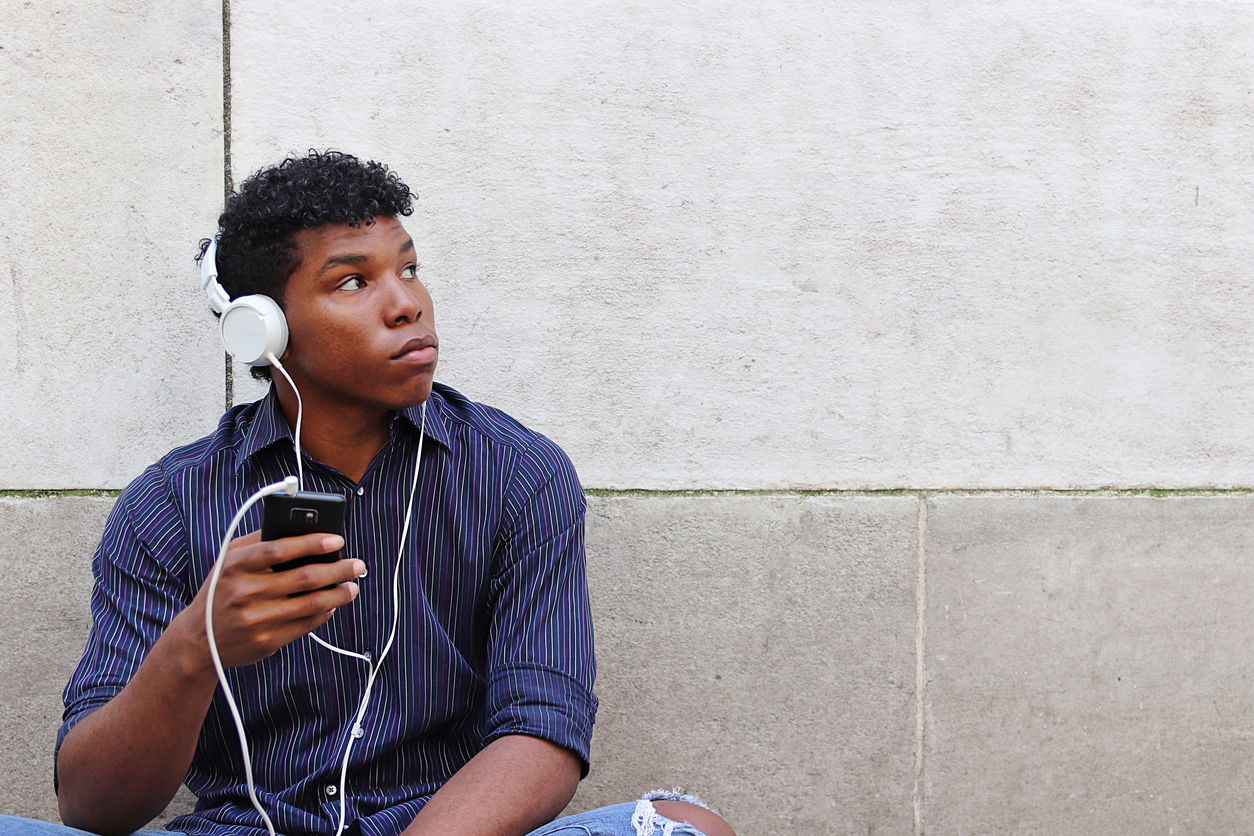
But one day my aunt heard the curse words. How did she hear the curse words? Well, she went to the store and I was playing my music loud and she walked in on me. She told me to turn it down, so I did. When I turned it down she said, “Put your headphones on.”
It sounded to me that she was telling me I could listen to what I wanted to listen to as long as she didn’t have to hear it-which I was pleased about. But the way she talked to me also made me feel like she was bossing me around.
I never talked to her about my feelings, ’cause I was glad I could listen to my music. I did ask her once why I could not listen to rap music without headphones. All she said is, “This is my house and you abide by my rules.”
Having No Say
That made me feel like I will never have anything to say about what should be going on in her house even though I’m living there. It’s like I can’t say what is wrong or right in the house I’m living in, too. I wish she had just listened to what I had to say. I don’t even care if she changed her mind about music, I just want to feel like she listens to me.
The next rule that I wasn’t feeling was, “Don’t yell in the house.” I can understand that rule, because my aunt, my sister and I live in an apartment and we have neighbors who don’t want to hear us yelling. But at the same time, people get excited and sometimes it’s hard not to yell. If someone says something funny, maybe we get loud.
Our Relationship Suffers
I also know we aren’t always as loud as she makes it seem. My aunt gets excited herself, yelling at us about not yelling. She always hollers, “People live next door, keep it down!” Because her telling us to keep it down more than enough makes me listen to how loud I am, I’ve realized I’m not loud.
Once I tried to talk to her about it. I said, “I don’t think we are loud. I just think you’re paying attention to what we are talking about instead of doing what you’re doing.”
She wouldn’t talk to me about it. She just told me, “Keep it down,” and, “I don’t want to hear it no more.” When I have company, she just says, “Your company is going home if it don’t get quiet.” To solve all that, I just won’t have company.
Then there’s the TV thing. The TV thing with me and my aunt is like me and weed-it just don’t mix. Like weed, I won’t smoke the TV thing but I’ll smell it. In other words, I’ll hear what my aunt has to say about the TV, but I won’t listen to it.
“The TV is too loud, cut the TV down,” she’ll say.
So I tell her, “I can’t hear the TV.”
She’ll say, “It’s too loud. I can’t hear my TV, so turn yours down!”
I’ll explain to her that sometimes when I change the channel it gets louder and it’s not me turning it up. She just says, “Turn it down. I don’t want to hear it.”
Well, it doesn’t really bother me about turning the volume down, but I really wish she would have asked me in a nice way, like, “Can you turn it down, please?” If it happened like that I definitely wouldn’t be writing this.
Now you see that the main thing that really bothers me about my aunt’s rules is not that she has rules, but that when I try to discuss them with her she doesn’t listen to where I’m coming from. That makes me feel like she’s just telling me what to do for no reason. If she would listen to me sometimes, even if she didn’t agree with me, I think our relationship would be much tighter.
My Feelings Matter
I think it’s important for kids to feel listened to, especially kids in foster care who sometimes move around a lot. We need to feel like we’re not just being told what to do and where to go for no reason. We need to feel like our opinions and feelings matter.
If I have kids I’ll do my best to see what they like. Most of all, I’ll listen to them, and understand them. Like I always say, “If you don’t listen you will never understand.”
Yes, it’s more rules to the game, but in time the rules can change, if only people listen.
Listen to Da Rules
About These Stories
YC runs intensive nonfiction writing programs for teens in New York City, where they’re mentored by a professional editor to write personal stories about their lives and about issues that affect young people. Their stories are then published and read by thousands of teens, educators, policymakers, and other adults who work with and for young people.