
When I was younger, I thought Coney Island was the coolest place because of its amusement parks.
Since it’s only a five-minute walk from my home, I’d go there two to three times a week in the summer with my family and friends. Coney Island had practically everything I liked: roller coasters, spinning rides, a big Ferris wheel, video games, great food and a beach.
There are two amusement parks in Coney Island: Astroland and Deno’s Park. The parks have some similar rides, but Astro-land’s famous for the Cyclone roller coaster while Deno’s is known for the 150-foot-tall Wonder Wheel.
On a typical trip to Coney Island, I’d meet up with my friends and ride the Cyclone, my favorite ride. It’s a wooden roller coaster that’s been there since 1927.
An Adventurous Ride
While I’m slowly going up the steep hill, I get to see the beautiful sights of Coney Island and the beach. The water looks crystal blue from high up, and the sky blends in with the ocean. At night, all the rides are lit up and the park sparkles.
Then, when I hit the first drop, I feel like I’m going to fly out of the car because the fall’s so steep. The roller coaster rattles and shakes, making sharp turns, which makes me think I’m going to fall out. But I enjoy the ride’s roughness. It’s an adventure!
After getting off the Cyclone, I ride the bumper cars, get on the Pirate Ship and then head to Nathan’s for a hot dog.
Dirty Fun
Even though both amusement parks look nice at night, they look polluted in the day. People are slobs. There’s leftover food, plastic bags and admission tickets on the floor. Sometimes, after I get off a ride, I have dirt on my clothes and skin from the filthy seats.
The boardwalk’s littered with garbage and there’s graffiti all over the walls. When I told NYC writer Naomi that I go to Coney Island beach, she gave me a disgusted look and said “Ewww, that’s a dirty beach!”
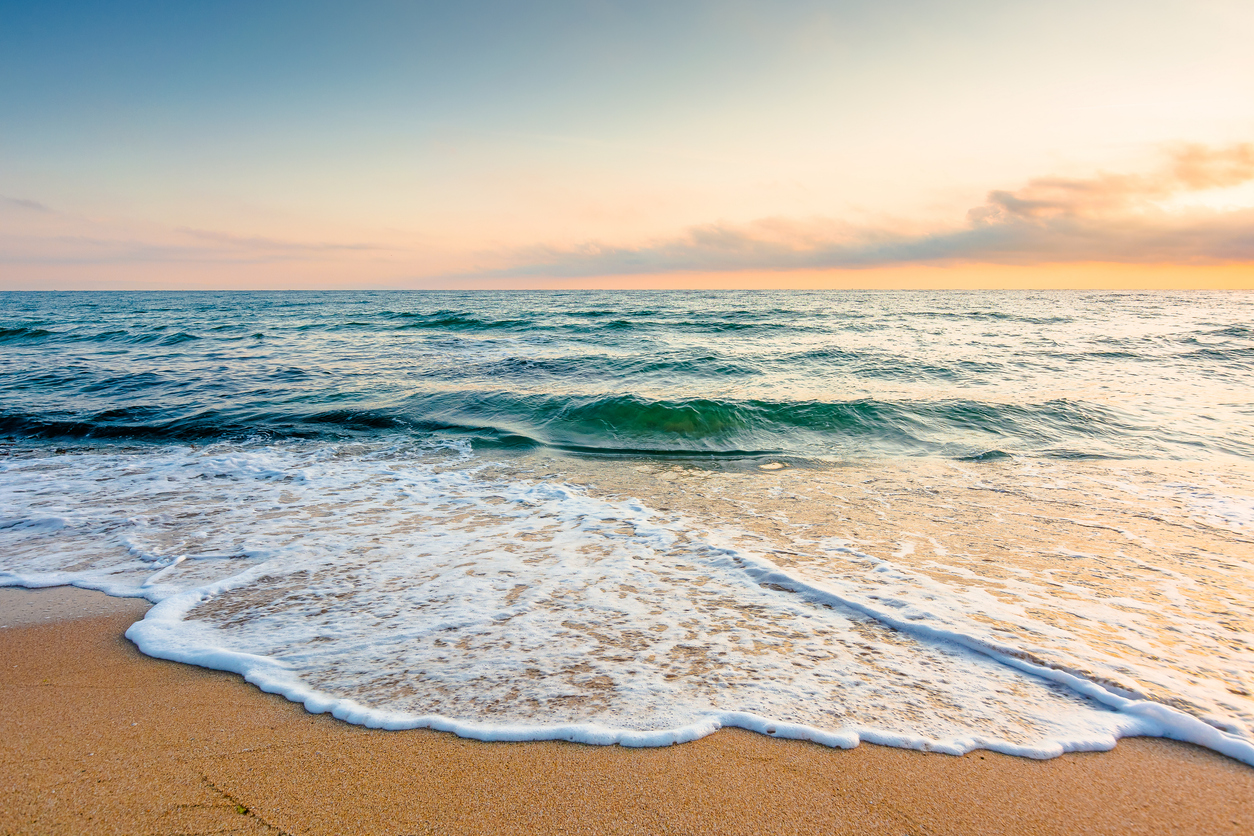
She’s right because the water looks moldy green and there are usually soda cans, bags, shoes and other nasty stuff floating in it. It’s so gross.
I’ve also heard that some areas around the amusement parks are dangerous at night, but I’ve never had to pass through those sections on my way home.
But back in the ’30s and ’40s, Coney Island was different.
“Coney Island was very safe. People weren’t worried about walking the boardwalk late at night as opposed to today,” said my grandma, Evelyn Jaffe, who’s 81.
She lives near Coney Island and used to go to its amusement parks decades ago.
“It was a great gathering of all different communities. Coney Island was always packed with people from all over the world,” she said.
Clean Beaches
“The beaches were clean and nobody used the ocean as a garbage like the way they do today,” said Connie Kaufman, a 70-year-old woman who moved to Coney Island 20 years ago. “It seems like now, everything is ruined.”
She also attended Coney Island’s amusement parks frequently as a child. She said the beach was safer because there were ropes to hold onto in the water if you couldn’t swim.
I’d never thought about the history of Coney Island and how it might’ve changed over the years. But one day, I was watching TV and flipping through the channels when I saw Coney Island on channel 13. I couldn’t believe that some of the rides had existed for almost 100 years.
The program showed old footage of Coney Island in the ’30s and ’40s. It looked so beautiful and big back then and made today’s Coney Island look bad by comparison.
In that era, Coney Island had two major amusement parks: Steeplechase Park and Luna Park. “My favorite park was Steeplechase,” my grandma said, remembering its different shows. “Some of the shows were called ‘freak shows’ in which all different types of weird people would perform.”
“I also enjoyed the baby parade in which there would be decorated carriages with babies in costumes,” she said.
A Dragon Coaster
“In the evening on the boardwalk, there was a nightclub atmosphere where we’d go ballroom dancing,” my grandma said.
Ms. Kaufman remembers the roller coaster Dragon Gorge. “That was one of my favorites,” she said. “I also enjoyed the water flume along with the swinging rides and bumper cars.”
But Coney Island’s parks hit some rough times in the mid- ’60s. On August 28, 1963, a fire broke out in a pizzeria east of Steeplechase Park. Six amusement venues, including the Ravenhall and Washington Baths, were burned.
Plagued by Misfortune
Then steeplechase Park closed down in 1964.
Ms. Kaufman knew it would never be the same after that. “I felt terrible when the amusement parks were no longer existing,” she said.
Coney Island continued to be plagued by misfortune. In 1975, a 15-year-old boy was killed on a Ferris wheel when he opened the car door and his head got caught between a suspension bar and the car door.
And then, a fire damaged the Tornado roller coaster on December 10, 1977.
Nearly two decades later, on July 29, 1995, 14 people riding the Hell Hole, a rotor ride, were injured and hospitalized. The ride was permanently closed after that.
By this point, Coney Island parks held a bad reputation. A man who’s worked in Coney Island for 15 years who asked not to be named said, “This sh-t is going to die. Can’t you see it dying now? I hate what is happening to this place.”
Better Options
Even though I used to be very excited about Coney Island when I was younger, it’s not my first choice when it comes to amusement parks. Now if my friends and I want to go to a huge amusement park, we choose Six Flags or Hershey Park over Coney Island because they have more of a variety of rides.
Plus, their roller coasters are more advanced and modern than the ones in Coney Island.
Each time I go to Coney Island, I think about all the stories people have told me about the old parks. It sucks that I can’t experience how Coney Island was back then.
Still, when I go to Astroland or Deno’s, I make the best of it. Rides like the Cyclone and Pirate Ship may not be around in 15 years, so I’m taking advantage of them now.
Coney Island Memories
About These Stories
YC runs intensive nonfiction writing programs for teens in New York City, where they’re mentored by a professional editor to write personal stories about their lives and about issues that affect young people. Their stories are then published and read by thousands of teens, educators, policymakers, and other adults who work with and for young people.