
Some teens conjure up nasty images in their heads when they’re asked to describe Harlem. They think something like, “Ugh, bad neighborhood, crime, and old, crumbling buildings.”
But others more aware of Harlem’s history might think, “Harlem, the cultural mecca that gave rise to wonderful works of art and literature, a place that really represents Black culture.”
Yet both trains of thought may have to be revamped as a result of Harlem’s recent economic revitalization. Franchises like Starbucks, Old Navy, The Disney Store and HMV Records are being or have been built. Dilapidated buildings are being repaired and the neighborhood is now considered by many to be a desirable place to live.
There are concerns about this “new” Harlem, however. Some fear that Harlem could eventually lose its Black cultural identity while others say that the newly-placed franchises take money away from the community.
For some time, Harlem has been a predominantly Black neighborhood filled with boarded-up buildings and bargain stores. Now, that is changing, and rent and the price of living are on the rise.
More Jobs
Loretta Wallace, 17, who works at Harlem Overheard, a teen newspaper, said that stores like Modell’s and HMV Records have helped revive the neighborhood. “The stores on 125th Street have produced more jobs for people,” Loretta said. “More people work, and more young people get jobs.”
Beryl Perkins, manager of the newly opened Old Navy, said, “People come in here every day to tell me how happy they are that we’ve come here and about what great service we give.”
Adds Princess Privel, who works and lives in Harlem, “People don’t shop downtown as often. Everything’s in one place, so they all shop here.”
However, not everyone is so content. Gregory Malana, 20, a staff member at Harlem Overheard, said he thinks chain stores don’t give enough back to the neighborhood.
“The money stores like Old Navy bring in goes back to the corporations and not to the community,” Malana said. “Yeah, the changes going on in Harlem get people more small jobs, but the pay is bad, and they’re treated like nothing.
“People are thinking that more jobs will help the neighborhood,” he added, “but in the long run, the community won’t benefit.”
Mostly Part-Time Shifts
Many of the new businesses are hiring in part-time shifts with no full-time employment options, said Ricky Jones, director of projects at the Harlem Restoration Project, an organization dedicated to finding affordable housing for Harlemites. Stores that only have part-time work don’t help adults with families who need full-time jobs with health benefits.
“But those are the exact people who line up for these jobs,” he said. Jones said that while these businesses are providing quality goods, they’re not interested in workers’ rights or salaries.
Jones also said that big companies like HMV and Old Navy are pushing smaller, less competitive businesses into bankruptcy. For example, when Blockbuster came into Harlem, the smaller, independently-owned video rental stores were forced out of business.
This hurt many poor Harlem residents because Blockbuster requires its members to own credit cards. Unfortunately, many Harlem residents don’t have credit cards, and as a result, can’t rent videos, Jones said.
Jones believes that if bigger corporations continue to take over the smaller businesses, the culture and soul of Harlem will be lost.
New Harlemites
Still, as new businesses have moved in, Harlem’s crime rate has dropped, attracting new residents. Abandoned buildings are now being renovated.
Wealthier people are finding historically Black Harlem a desirable and safe place to call home, and because rents there are still low compared to downtown Manhattan, they can easily afford Harlem’s cost of living. Professional Blacks, but also many Whites, are moving in.
Yet Harlem’s economic boom may be hurting the people who’ve lived in the neighborhood their whole lives. Just as family businesses are being pushed out by chain stores, some long-time Harlem residents who can’t pay rising rents are forced to move out, causing some to worry that Harlem will lose its identity as the capital of Black culture.
The “making” of Black Harlem has been a long process. Beautiful brownstones were originally built in the late 19th century in Harlem to draw wealthy White people further uptown. But the homes sat empty, and when southern Blacks moved up north in droves to cities in the early 1900s, they moved into Harlem.
During the 1920s, Black musicians, poets, dancers and writers made Harlem famous. The Harlem Renaissance nourished jazz and be-bop, and memorable Black figures like Thurgood Marshall, Zora Neale Hurston, Marcus Garvey and Ralph Ellison all stayed in Harlem during that time. The era has been captured in countless poems and stories, including works by Langston Hughes and Countee Cullen.
Fallen Into Disrepair
But after World War II, Harlem’s economy declined. By the 1960s, the area had fallen into disrepair, becoming known for gangs, addicts and poverty.
In the last few years, though, Harlem has begun to rebound. Historians and Harlem residents have been persuading New York City’s Landmarks Preservation Commission to give Harlem’s Sugar Hill district landmark status. In addition, work has gone into restoring historic sites, like the Apollo Theater.
Kiante Young, 19, a staff member of Harlem Overheard, said the neighborhood’s history is important to Harlem’s residents.
“It’s a flourishing part of the city and has a huge tourist base, which makes me feel proud to be from Harlem,” Young said.
Shonda Printe, 24, Harlem Overheard’s managing editor, said Harlem is now a great place to work. “I’d describe Harlem as very quiet and peaceful, but also very bubbling and busy,” Printe said.
New housing is also under construction to fill in vacant lots. For example, Renaissance Plaza (240 new apartments on the east side of Lenox Avenue from 116th to 117th streets), has already been flooded with about 500 names of interested renters.
However, according to The New York Times, 75% of the apartments in Renaissance Plaza will be sold to people earning up to $88,100 a year for a family of four, and the other 25% will be sold to households earning up to $133,500 a year.
Meanwhile, the average income of a Harlem family was only $18,700 as of the 1990 census. It’s unlikely that most long-time residents will be able to compete with those potential renters with higher incomes.
Housing Prices On Rise
Generally, housing prices in Harlem have risen drastically in five years, with some areas, like West Harlem, boasting a 20% increase. Brownstones in perfect condition can go for up to $585,000, which means that only a select few can afford to live in this newly desirable area.
“I can’t move here because I can’t afford it!” said Printe, who lives in Brooklyn.
Many newcomers have moved into some of the most expensive, most luxurious homes in the area and the less rich (mostly Black) people live in less expensive homes. While, of course, this is true for most of America as well, such class divisions represent a particularly unique dilemma in Harlem.
According to The New York Times, although there’s not yet more White house buyers in Harlem than Black buyers, the number of White buyers is increasing more quickly than the number of Black buyers. This increases the racial diversity of Harlem, as well as the class diversity, raising concern for some.
Some people believe that Harlem is losing its cultural significance because of the many chain stores moving in and because many native Blacks are moving out while White people move in. Harlem has always been a Black neighborhood, and critics fear that if too many Blacks are forced out of their homes, Harlem will lose its historical meaning.
New Diversity or Lost Culture?
Harlem’s changes worry Janice Rice, 17. “While I’m not a racist person, I think that it would be terrible for Harlem to lose its Black heritage,” she said. “It’s always been a neighborhood for Blacks, and I think it should stay that way.”
However, Young said the diversity is a positive change. “Having only one culture in a neighborhood is stupid!” he exclaims. “Why should we separate based on color? I have great relationships with people of all nationalities.”
Maureen Anglin, who works at the Lane Bryant store in Harlem, agrees. “There are more cultures moving into the neighborhood, but I love the diversity,” she said.
So what’s Harlem’s future? There are mixed opinions as to what path the current revitalization will take. “In light of the social stratification of Harlem, I see major conflicts in the future,” said Jones, “especially economically.”
For now, Jones seems to sum up the second Harlem Renaissance perfectly: It is “both a mixed blessing and a curse.”
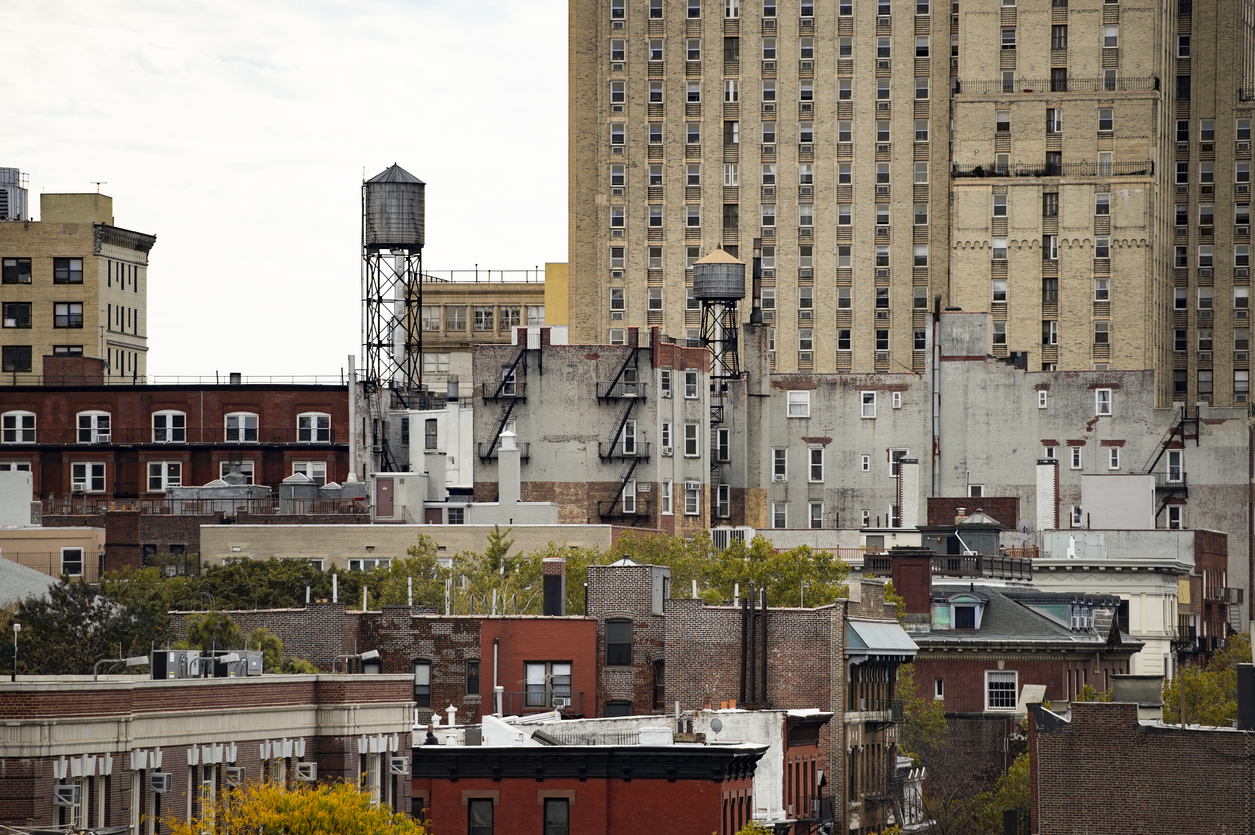
A `Brand’-New Harlem
About These Stories
YC runs intensive nonfiction writing programs for teens in New York City, where they’re mentored by a professional editor to write personal stories about their lives and about issues that affect young people. Their stories are then published and read by thousands of teens, educators, policymakers, and other adults who work with and for young people.