
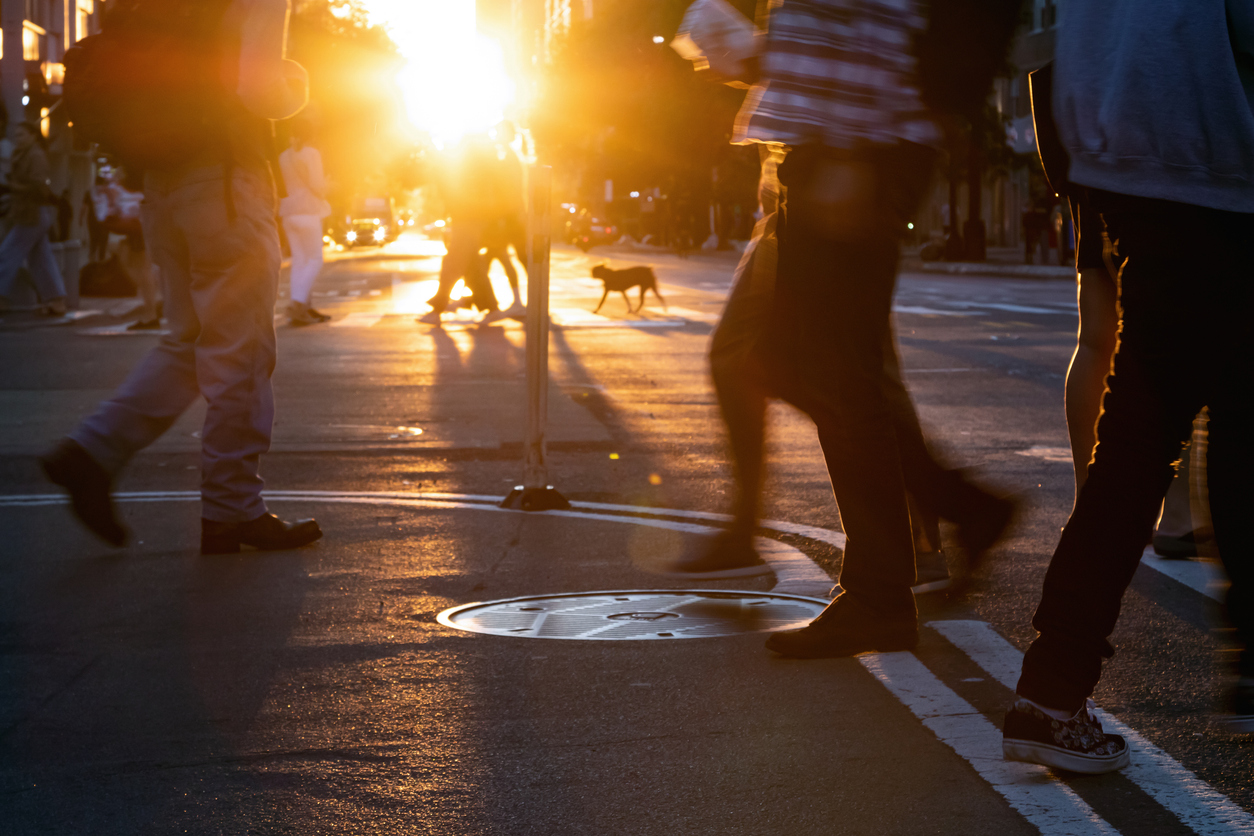
The first time I saw Times Square, I was shocked. I saw hundreds, perhaps thousands of people walking in just a couple of blocks. I’d never seen such a thing. “They all seem to be in a hurry,” I thought.
There was a ton of traffic too, and I didn’t know where to look or go. I felt overwhelmed, suffocated, rushed and quite desperate. To an 11-year-old boy from Colombia, being among so many grown-ups was quite frightening.
“Where can we go now, if we are stuck in the middle of all these people?” I asked my mother.
“Don’t worry, it will be fine,” she said. After an hour and a half in Times Square, we finally went back to Corona, Queens, where I lived.
Technological Wonders
The second time I went to Times Square, I didn’t feel as rushed or suffocated because I knew what to expect. This time, I noticed the structures more, and was amazed by the technology, especially those gigantic screens showing world news on the top of buildings. I’d never seen something like that before.
But despite the wonderful technology, I felt empty because people seemed to be like robots, just running through streets and turning at every corner. It seemed like a giant chessboard where every piece was programmed to make a certain move.
I didn’t feel like that back in Cali, Colombia, where I was born.
Cali has some things in common with New York City, like its tall buildings, shopping areas, offices and restaurants, but it’s much smaller and less busy.
I lived with my mother in a neighborhood called El Siete de Agosto, or The Seventh of August. It was a small neighborhood with beautiful houses of different colors and shapes. It was a splendid place to grow up in.
Fresh Air, Grass and Soccer
I remember walking on my block on sunny days as leaves from the trees fell on my path. I enjoyed the smell of the fresh air and green grass on my neighbors’ front yards.
Old ladies watered their lawns. I often ran out to the street to play with other kids from the community. And on weekends, the adults played soccer and hide and seek with us kids.
Almost everyone knew each other on my block, and I felt like we were all there to help each other when help was needed.
I often had conversations with Nelson, who was one of the community leaders. Nelson’s grandfather was the first person to construct a house 60 years ago in the empty territory that became El Siete de Agosto. We usually talked about my school work, my dreams of becoming a doctor and the monthly community meetings he planned.
Nelson got married when I was 10, and we had a big reception in the community park. Adults danced to salsa and sang old folk tunes called vallenatos. There was a lot of food, including rice and beans, bread, pork, chicken, potato salads and vegetable salads. I distinctly remember the smell from a four-foot side of beef and its seasonings-onions, tomatoes, apricot and garlic.
I had a great time at that celebration, because I saw friends who had moved out of the neighborhood. I hadn’t seen them for months.
But my neighborhood had sad moments too. When my friend Jeffrey was 8, a brick wall fell on him and crushed him to death. The entire block went to his funeral and grieved.
I was only 9 and didn’t understand very well what death meant. But I cried a lot because I knew that I’d never see, play or talk with Jeffrey again.
Despite the bad moments, I felt very stable in Cali. But when I came to New York City, that stability left me.
Left Comforting Cali for Corona
I came to this country in December 1996, because my mother wanted a better life for us. She wanted me to receive a better education and have a better chance of going to college.
When we first got here, I lived in an apartment on the second floor of a house in Corona. I felt comfortable living there. Flushing Meadow Park was only a few blocks away, so I could go there to walk or play soccer whenever I wanted to. I also loved the peaceful mood created by the trees on my neighborhood’s blocks.
During the summer, my block reminded me of Cali. When I saw people outside talking to each other, I was reminded of my neighbors chatting on the streets of El Siete de Agosto, where it was warm almost year round.
But life in New York was very different. I had many obstacles to overcome in order to adapt to a new country and a new city, like learning English at my junior high school. And I had to get used to the city’s pace and crowds.
I’m Busier Here
Over the years, I’ve adjusted to my life in New York and its routine while still missing parts of life in Colombia. I had a routine in Cali that was more flexible than the one I have here.
In Cali, I got out of school at 2. School was just a few blocks from my house, so I got home around 2:20. I had time to do my homework, eat and then visit friends and family.
Here, I have to take a train to Queens International HS; it takes about 35 minutes to get there. I come back home around 4:30, rest, eat and do my homework. By the time I finish, it’s about 8 pm. It’s too late to try and connect with others, at least on weekdays.
On the weekends, I go out with my friends from school and try to have as much fun as possible by going to the movies, the park and sometimes the mall. I usually have a great time, but I don’t feel the same sense of unity and friendship with people here that I felt back home. I think it’s nearly impossible for me to feel that in New York City because there are so many different perspectives that I find hard to identify with.
Plus, so many people here are always in a hurry and don’t have time to be courteous because of all the things they do on a daily basis.
Here, most people I’ve met seem to care only about themselves and their immediate family. In Cali, my nearest neighbors felt like extended family.
I also miss having friends in my neighborhood. I have many friends at school, but I don’t have any friends around my home. I don’t even know who lives next door.
Strangers Next Door
This may be because of where I live. After four years here, my mother and I moved to Elmhurst. Now we live in an apartment building with 50 or 60 apartments, so it’s hard to know people when they just go to their floor and apartment.
There’s usually nobody outside, except during the summer, when there are people on the sidewalks and in the park in front of the building. But most of the people in the park don’t seem to be from my building, and I don’t feel comfortable trying to get to know random strangers.
I’ve spoken to my mother about our experience in New York as immigrants. I talk to her a lot about school and my internship at NYC, and she talks to me a lot about her job. Sharing our daily experiences has kept us united despite our stress and lack of time.
Met Others From Cali
My mother has made close friendships with people at her job and we often visit her friends’ homes. And I’ve also made good friends at my school, like my best friend Santiago. He’s also from Cali, though I met him at Queens International HS. Our mothers have become friends, too.
One New Year’s Eve, I celebrated the holiday at a party with Santiago and his family. It was a special day because I spent time with people who have the same experience I have-being immigrants from Cali.
Still, despite the differences between Cali and New York, and as much as I miss my old neighborhood, I’ve gotten accustomed to the lifestyle here and like it.
New York has given me many opportunities to succeed in life, like getting a decent free education. (We have to pay for high school in Cali.) I’ve also enjoyed getting to know different kinds of peoples and cultures. And, perhaps most importantly, I’ve gotten to share my experiences as an immigrant by writing this article.
I plan to live here for a long time and sincerely don’t know if I’ll be able to live in Cali again. If I did I’d have to get reaccustomed to that city, which would be another major process.
A Tale of Two Cities
About These Stories
YC runs intensive nonfiction writing programs for teens in New York City, where they’re mentored by a professional editor to write personal stories about their lives and about issues that affect young people. Their stories are then published and read by thousands of teens, educators, policymakers, and other adults who work with and for young people.