
When my cousin and I walked out from Kennedy airport last September, I couldn’t imagine myself living here in this noisy, crowded city.
The hot air hit my face and the noise bothered me after the long silence on the airplane. Cars honked and people yelled for cabs.
They pushed and pressed each other in the lines or on the way through the exit.
The gigantic parking lot stretched in front of me. The concrete just made it hotter.
A fat lady put on her sunglasses and tried to cool herself with a wet tissue.
I stood and fanned myself with a magazine and looked for my aunt.
Finally my aunt found me and her son, whom I had brought with me from Hungary to live with his mother in New York.
My aunt’s voice expressed so much fun and excitement, but I couldn’t understand what she liked about this city.
I Cursed the Turnstile, Then Climbed Under It
We went to the subway station carrying my heavy suitcases.
While my aunt stood and studied the subway map, I cursed at the turnstile, thinking the station was closed, not knowing that I had to use a token.
I thought we would buy tickets on the train, like in my country.
So I climbed under the turnstile. Then I looked at my aunt, who couldn’t stop laughing, and realized the truth.
I got calmer when we sat down in the air conditioned train. But I didn’t feel comfortable because of the advertisements in English.
I couldn’t understand any of them and I kept wondering how long it would take me to learn English, and when I would find friends.
I regretted that I came here, but I tried to seem happy so as not to upset my aunt.
When I got to my aunt’s apartment, I fell asleep immediately. Too much had already happened to me that day.
I came to New York from a little town in Hungary, where I could go out alone even late at night. Life was safe and quiet there.
I knew all the places and I had my favorite coffee shop, clubs, parks and stores where the shopkeepers knew me.
When I came to New York, I thought I’d learn English, and then I planned to go back to my country. At first, I didn’t plan to stay here longer than a few months.
But the longer I stayed, the more I realized I had a better chance for a good future here than in Hungary. The economy was a mess over there, and I didn’t know what kind of job I’d be able to get.
I figured the more I learned, the more languages I knew, the better off I’d be. So I decided to stay.
Lonely and Homesick
But I didn’t know that I would miss everybody from my native town so badly, even the old lady who lived on my street and talked for hours about nothing but other people’s lives.
I felt lonely and I was homesick.
I had left everything that was important to me in Hungary. I left my parents, my sister and my friends.
And I left my little things, like my fine dark wood desk, and all the knickknacks on it.
There was the little shell turtle that had that funny, chubby face, which I got from my friend after his holiday at the beach.
And my yellow ladybug pencil holder, which always interrupted my studies with its moving antennae.
I also had a glittery photo stuck to my desk of me and my sister looking like twins, in the same shirt and jeans, with almost exactly the same haircut.
When I thought of that picture, it made me realize that here I had to build my life all over again from the beginning.
Lost in New York
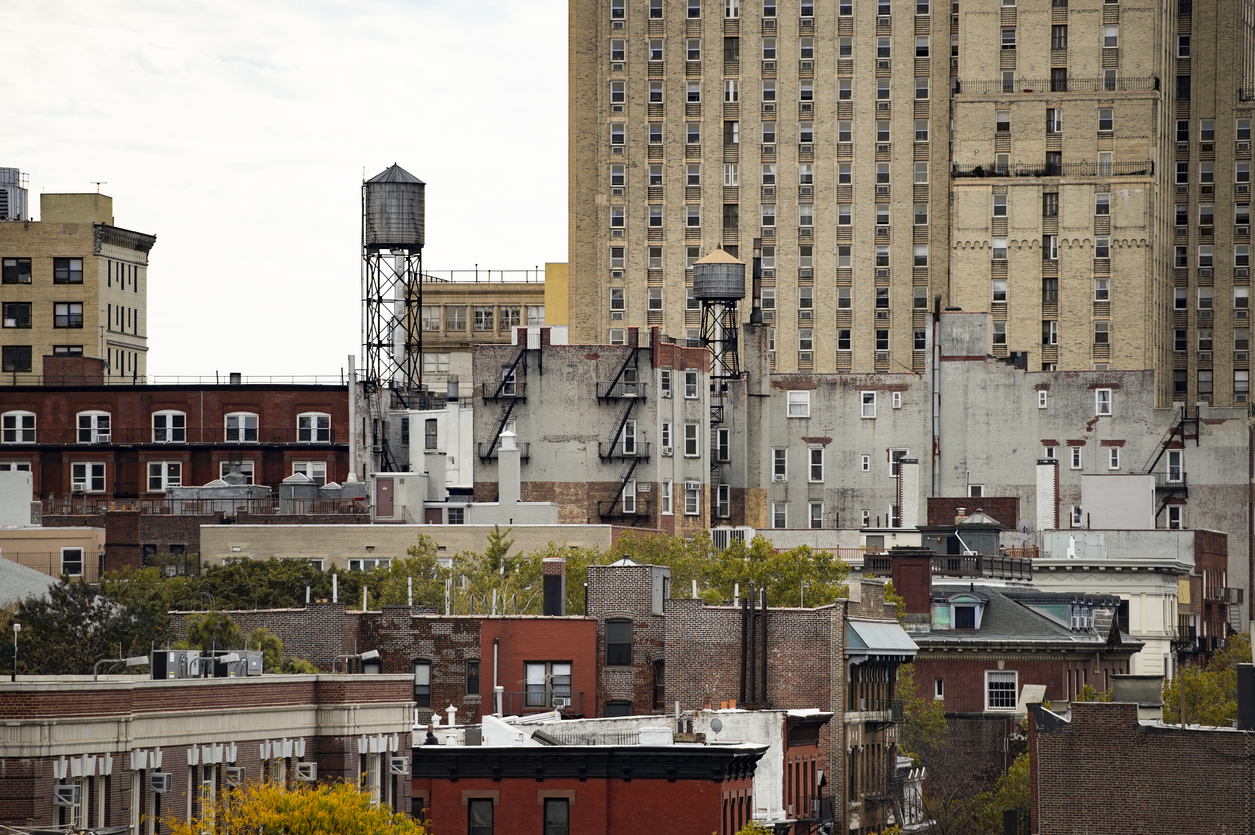
I felt lost on New York City streets. I walked for weeks to get to know the city, not knowing where I really was.
And because I didn’t know English, the beginning was very hard.
Once, when I was only here a few weeks, a manager of the laundromat started to yell at me because I poured the detergent in the fabric softener’s place.
I just didn’t know where to pour it.
The manager kept screaming at me, and after a while, when he noticed that I didn’t understand him, he continued in Spanish.
And around the first or second week I was here, I needed to take a cab to go somewhere.
I looked for a cab with the sign “TAXI” on it, like I had seen in Manhattan. I didn’t know that in Brooklyn the car services’ signs were on the windshield.
So I waited for almost an hour on the curb thinking that in my area there just weren’t any cabs.
My Street Tells a Story
Things got easier after I began to learn English.
I saw New York had some really cool places, like the East Village.
I could spend all afternoon there just walking. The people had their own personalities and their own strange sense of fashion. It seemed to me they lived in their own world, with their own rules.
I tasted foods from different cultures. I had never eaten Chinese food, but Chow Fun with Chinese vegetables became one of my favorite dishes. And I couldn’t resist if I saw a Mexican burrito.
I started to go to the same crowded, smoke-filled diner where I bought my tasty tuna sandwiches. After a while the waiters recognized me.
“Give us a smile from your collection!” one at the counter always says.
When I walked home one year ago, my street didn’t mean anything to me. But now it tells a story, and I know the people who live there, and they know me.
I Know My Neighbors
One of my neighbors is a young Spanish man who owns a hardware store.
When nobody is in his store he stands in the door watching what is going on in the street.
When I walk home with a boy and he sees us standing by my door, he always signals with his eyes to let me know that if I need help, he is there.
Once, when a boy didn’t want to leave me alone, my “guard” came and helped me out.
It’s Still Not Home
But even though I’ve started to like living here, I still don’t think I’ll ever feel that the United States is my country.
I wasn’t born here, my family isn’t here, and I’m still not that comfortable with English. My heart and my past are back in Hungary.
But when I imagine myself in Hungary again, I’m not sure it’s the best idea to go home.
I’ve tried to keep up my friendships, but it’s hard, because the letters go slowly between the two continents, and sometimes I am too lazy to write.
When I first came here, I wrote every day. But there are times now when I don’t write my mom for one or even two months in a row.
A Stranger in My Own Country?
If I went back to Hungary, I’m afraid I would be like a stranger to everybody, and they would be like strangers for me.
They would try to be polite and nice. But it would seem like I was some kind of visitor.
Sometimes I just wish to talk with my sister and laugh through the walls of our rooms every night the way we used to.
I never thought of her as my friend, but here I realized she was my best friend ever.
Where Do I Belong?
In many ways, I don’t know where I belong. I don’t see myself in the future as a New Yorker, but I don’t know if I will go back to my country.
A few weeks ago, I was sitting in the school library when Sara, our principal, came in with two strangers.
I didn’t pay attention to them until Sara said, “And this is Edith, our Hungarian girl.”
Then I lifted up my head and smiled.
Then, to my surprise, the man started to talk in my native language. It was unbelievable!
I just looked from him to the woman, then to Sara with my mouth open.
Sara encouraged me with her eyes and somehow I started to speak.
But I was so surprised that one word came out of my mouth in English, the next in German or Hungarian.
The man laughed at me, but understood my confused feelings.
Later on I became more comfortable and I talked just in Hungarian. He told me the city where he was from, and it wasn’t far from mine.
He talked about his life in Hungary and why he left it 30 years ago.
After talking to him, I felt like I wanted to cry.
Then I realized how much I missed my country, my family and friends, and my little things on my fine dark wood desk.
Destination New York: Leaving Home for the Big City
About These Stories
YC runs intensive nonfiction writing programs for teens in New York City, where they’re mentored by a professional editor to write personal stories about their lives and about issues that affect young people. Their stories are then published and read by thousands of teens, educators, policymakers, and other adults who work with and for young people.