
Lots of people mistakenly believe that gay and lesbian adults should not work with young people-they are afraid that gay staff might encourage young people in the system to become gay.
But in my case, just the opposite happened. The gay and lesbian young people that I worked with at the Green Chimneys group home in Manhattan encouraged me to come out as an openly gay person.
I had no idea there were gay residents at Green Chimneys when I was first hired nine years ago as the new program director. I remember how, on my first day, a group of gay residents came up to my office and proudly announced, “In case you’re wondering, yes, we are gay and it’s all right to be gay in this group home, so don’t go trying to change that!” I had, in fact, no intention of trying to change that.
Deep in the Closet
Looking back on those first days, I recall thinking, These gay young people are so brave, so courageous in being open about who they are. I admired them. In many ways I envied them. I wished I could have been so brave when I was their age.
I realized, too, that even at age 30, I was still not as brave as they were. I was, as they say, “deep in the closet,” and it took me another year of hiding before I came to terms with who I was. Even though I had spent my entire professional career helping people to be honest in dealing with issues in their lives, I had, sadly, not done so myself.
Although I believe that I have always been gay (in fact, I believe that I was born gay), I have not always been open about my sexual orientation. In thinking back on my life, I now know that I was different from other kids when I was about five. People in my family seemed so upset by my “differences” that I learned quickly to hide that part of myself. As a young person, I never had an intimate relationship with another person of my gender, but I knew that inside I was gay and it terrified me.
I tried to date girls in high school, but no matter how hard I tried, it just never felt right. When I’d hear all the guys talking about how girls made them feel, I thought something must be wrong with me because I never felt that way.
A Hidden Side
To avoid dating, and to avoid questions from my family, I completely involved myself in activities at my church. For me, being involved in my church was a great place to hide. I was busy all the time and I had the perfect excuse for not dating-I was too busy being the president of the Catholic Youth Organization (CYO).
On top of all this, I was very obsessed with being perfect. I never got in trouble, I never cut classes, I never got into fights, and I never smoked pot. I was a real goody-goody.
I had to be! I had to be perfect to cover up the part of me that I kept secret inside, the part that I hoped no one would ever see. Expert as I became at hiding, I was terrified that someone, somehow, could see that I was gay. I was always on guard, always vigilant.
After I completed high school, I went to college and immersed myself in studying. I continued to hide. After college I realized that I was lonely, and that work was no longer enough to fill the emptiness.
Society tries very hard to make sure that it isn’t easy for gay and lesbian people. Children learn to use the words “homo,” “faggot,” “bull-dyke,” “sissy,” and “queer” as early as in the first grade. These are hurtful names that are meant to discourage people from being openly gay or lesbian, to make people keep in line and “stay in their place.”
There is, additionally, a great deal of pressure to conform to your gender-specific roles, meaning boys should do “boy things” and girls should do “girl things.”
In my case, I grew up with three brothers constantly telling me, “You better play baseball or they’ll think you’re a homo,” or “You better stop carrying your books that way or people will think you’re a faggot,” or “You better get a girlfriend or people are going to think you’re queer.”
So the last thing I ever wanted to be was a “homo!” I thought it must be a terrible thing to be, right? Wrong!
But I didn’t know that at the time. I didn’t know any gay or lesbian adults. There were no gay or lesbian teachers in school, there were no gay or lesbian professors in college, there were certainly no openly gay or lesbian people with whom I worked in the foster care system.
A Turning Point
Thinking back now, I can identify several people who I now assume were gay or lesbian, but none of them were open. They were in the closet, too, which told me that if they were hiding, then I guess I should also. I dreamed of meeting someone who was like me. But if I had, I would have been terrified.
Like many gay and lesbian people, I got married. I was 25 and I thought that was what I should do. In some strange way, I thought that if I got married I could work this out. But getting married didn’t help, it only made things worse.
One day, on an airplane going to New Orleans, I simply had enough of the hiding! I was sick of it. I was sick of not being able to be who I really was.
At that moment, right there on the plane, I decided to deal with my gay identity and to live openly as a gay person. No matter what the cost, no matter what price I would have to pay, nothing could be worse than all the hiding I had done for 31 years.
I stayed in New Orleans for five days, knowing inside that what was ahead of me would not be easy, but that I had to change. Since that moment eight years ago, nothing has ever been the same for me.
Marriage Was a Lie
When I returned to New York, I had a talk with my wife. I told her that I knew that I was gay. (Actually, I first said that I was bisexual. Even though I knew that I was gay, saying “bisexual” seemed easier somehow.) I told her that we would have to think about what this meant for our marriage.
Separating from my wife, to whom I had been married for almost seven years, was a very painful process, filled with a great deal of indecision and uncertainty. Women always want to know what she said, how she acted when I told her. She was understandably upset and felt a loss.
Despite the fact that I was gay, I had tried to be a good husband. But living as a married person was a lie for me and it was equally unfair to my wife, who deserved to be married to a heterosexual man.
Deciding to live my life as an openly gay man was scary. I had always masqueraded as a straight man, so I didn’t know how to be a gay man. I knew that being gay was much more than just having sex with a man, but I was not sure about this new status.
The first person I told was my friend Carmen, who is a lesbian. To introduce me to gay culture, she took me to a lesbian dance. I was grateful that she was there for me and took time with me, but a lesbian dance wasn’t exactly what I had in mind.
Little by little, I went to gay bars (not the best place to meet people, but a place where many of us start) and I started to meet other people like me. Although this period of my life was not easy, it was an important time for me.
Defending Their Hiding
Just as there have always been gay and lesbian youth in group homes, campus programs, and foster homes, there have also always been gay and lesbian child welfare professionals. As gay and lesbian youth have been taught to hide, so have most of the adults who work with them. As a result, most of those who make the decisions in child welfare are unaware of the existence of both gay and lesbian young people and are equally oblivious to their gay and lesbian co-workers.
Most professionals who are gay or lesbian and work with young people are very interested in hiding. In defense of their hiding, many say, “Oh, I couldn’t come out in my agency. Maybe I’d get fired, or the kids would use it against me, or my boss would never understand,” or a million other reasons, some real, some imagined.
Myths and Falsehoods
Coming out is a personal choice and I would not deny that choice to anyone. But in a field where who we are is as important as what we do, it is important for those gay and lesbian child welfare professionals who can, to come out.
A lot of my co-workers warned me that I would be committing professional suicide if I came out openly as a gay child welfare professional. The fact is that closeted gay and lesbian people are probably more of a risk to agencies than those who are open about their sexual orientation.
Those who hide invest incredible amounts of energy into this process. Not hiding would permit them to put their energies toward more useful ends. The funny thing is, many closeted gay and lesbian professionals think no one knows they are gay or lesbian. The truth is that their “secret” is usually no secret at all.
The myth of gay and lesbian people as child molesters has been one of the very powerful forces in keeping gay and lesbian people in the closet. It is so powerful that many gay and lesbian people have, to one extent or another, internalized this falsehood within their own personal and professional lives.
In truth, the myth of molestation is a malicious lie that has been perpetrated against gay and lesbian people to discredit them and to distance them from mainstream society and, sadly, even from their own families.
What you almost never hear is that several studies have reported findings which suggest that heterosexual men are much more likely to molest children. Also, most molesters are people who are also known to the family.
In addition, adults who molest children of the same sex do so not because they are gay or lesbian, but because they suffer from the illness called pedophilia (the sexual attraction of adults to children).
Examples of Courage
After more than 30 years of hiding, I realized that I had better get on with the business of living my life honestly. Believe it or not, seeing the example of the gay and lesbian youth at the Green Chimneys group home gave me the courage to come out.
Seeing that it was indeed possible to live one’s life as an openly gay individual, seeing that there were other people who were like me, and knowing people like Joyce Hunter (who was at the time the Director of Social Services at the Institute for the Protection of Gay and Lesbian Youth, and one of the only “out” people that I knew) gave me the courage to take that first small peek out of the closet that was really, for me, more like a coffin.
I often say that after 31 years of hiding, I didn’t come out-I crashed out. But that’s not really true. I came out gradually. I first told people who I thought would be supportive. Gradually I widened that circle to include others, until eventually everyone knew I was gay.
No More Secrets
I didn’t want to be one of those people who was out with their friends, but not out at work. (It drives me crazy when I hear people say, “It’s my personal business. What I do in my bedroom is no one else’s business.”)
Well, I agree that what you do in your bedroom is nobody’s business, but being a gay or lesbian person is so much more than what we do in our bedrooms (just like being heterosexual is much more than what one does in one’s bedroom.) If I was coming out, I was going to be out as much as I thought I felt comfortable doing.
Coming out was not always some big announcement. One strategy that I found useful was dealing with my sexual orientation in a matter-of-fact way. When people spoke about their husbands, wives, or the people they were dating, I simply spoke about mine. I refused to make my life a secret. I had done that for far too many years.
I am very fortunate to be associated with an agency like Green Chimneys. Not only have they always been supportive of my work with gay, lesbian, bisexual, and transgendered young people, but they have always been supportive of me. I do good work for them, and they respect me. We have a good partnership. That could not have happened in every child welfare agency. I realize that my good fortune in working for such an agency has enabled me to be as out as I have been.
Sometimes people want to know, “What’s the big deal? Why do you have to be out?”
The answer is simple and at the same time complicated. Since society either portrays gay and lesbian people in a very negative light or completely ignores our existence, gay and lesbian young people need to see adults who are open, happy, and well-adjusted. They need to see role models.
It’s very similar to what African-American, Latino, Asian-American, and young people from other races and cultures need-to be seen and to be cared for by people who are like them.
Need for Role Models
Being a gay or lesbian child welfare professional is not really about sexuality. It is about showing young people who belong to a stigmatized group that they can live with integrity
and dignity. Gay and lesbian young people (as well as heterosexual young people) need to see positive gay and lesbian role models.
Someone once told me in an interview: “If all that gay and lesbian young people learn about their identity comes from heterosexual people, then they are in trouble. Because most heterosexual people have very limited and very inaccurate information about us.”
In sum, it is important for gay and lesbian child welfare professionals not only to be out, but to speak out on behalf of our young people. Although there are many child welfare advocates, many of whom are wonderful individuals, I have seldom heard any of them speaking out on behalf of gay and lesbian young people. It is as if they did not exist and yet, when you speak with gay and lesbian young people who have survived foster care, most have stories filled with such horror that it is amazing to me that no one has taken on their cause. They have suffered from abuse, neglect, family violence, multiple placements, going AWOL, and inappropriate treatment plans and yet-who speaks for them?
Risk and Hope
Certainly not the City, certainly not the State, and unfortunately not most child welfare agencies, either. These young people are left to their own devices, in many cases leaving not only their families, but also leaving their foster care placements when they find out their needs are not being met. Many resort to living on the streets, not because they are hard to place, not because they are difficult kids, but because they have not found safety, shelter, and concern from a system which is supposed to care for them.
That is why I came out. That is why I was willing to take a risk. Young gays and lesbians need to see that there is hope, that many of us have relationships, that we have families, and that we are good people.
One of the greatest joys that I have had in my life is to be fortunate enough to have worked with the many gay and lesbian young people at Green Chimneys. Their bravery and their honesty have inspired me and, quite literally, have changed my life. I will always be grateful to them for helping me to come out, and live my life honestly and with dignity.
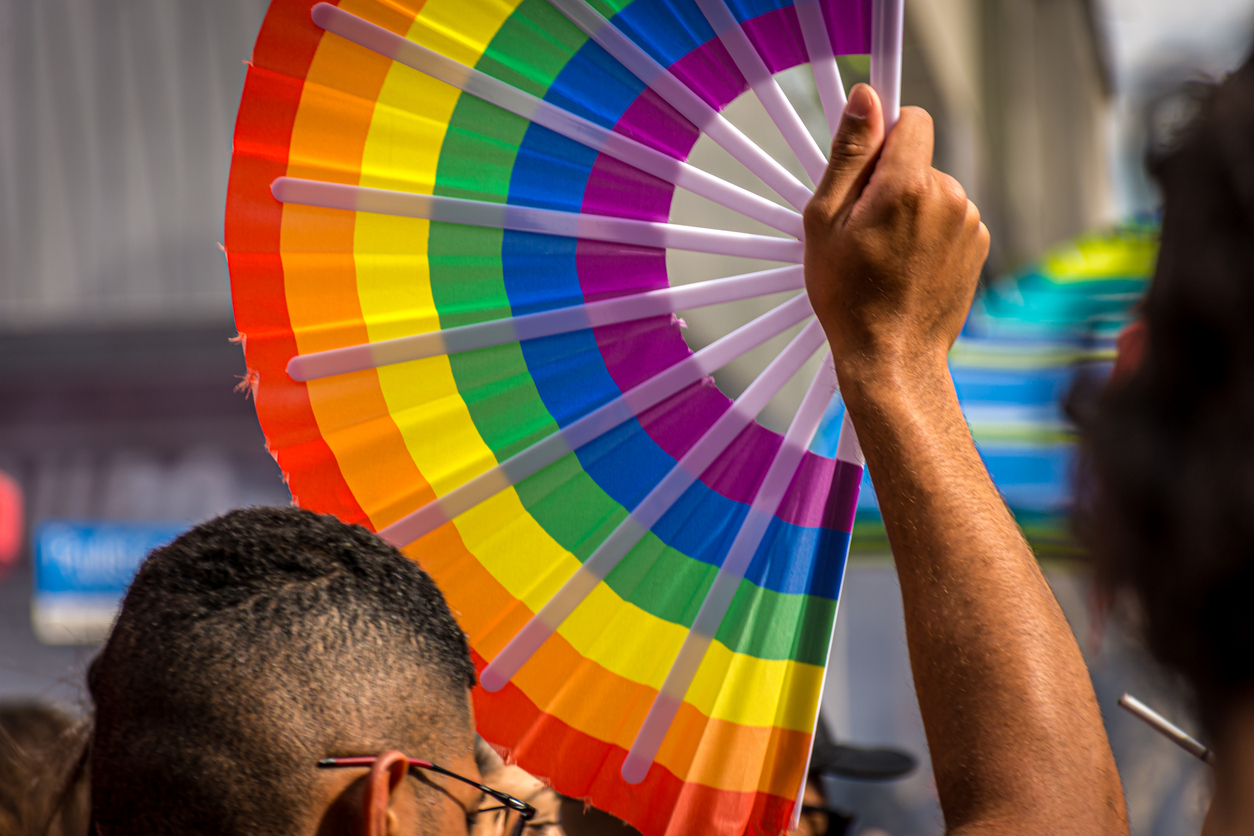
Out in the Open: A Gay Staff Member in the System
About These Stories
YC runs intensive nonfiction writing programs for teens in New York City, where they’re mentored by a professional editor to write personal stories about their lives and about issues that affect young people. Their stories are then published and read by thousands of teens, educators, policymakers, and other adults who work with and for young people.