
Fifty years ago, the United States was involved in a major war-World War II. Leon Bass was a soldier in that war. But Bass was Black, and while he was out there risking his life for his country, he and other African Americans were forced to fight in a segregated army, to sit in the backs of buses and the balconies of movie theaters, and to put up with a lot of other racist indignities.
During the war, Bass witnessed another kind of racism. His battalion helped liberate a Nazi concentration camp called Buchenwald. When he walked through the gates of Buchenwald, Bass saw piles of human skeletons and skinny, malnourished people, what he now refers to as “the walking dead.”
“Some of them had been driven insane,” he said. “Others were hopeless…in a state of shock.”
Jews, Gypsies, and Gay People
Bass asked himself, “What did they do that was so wrong?” They were Jews, Gypsies, Jehovah’s Witnesses, gay people, and others who the Nazis considered inferior. He explained that the camp was based on the idea “that one group was better than others…that [the Nazis] could dictate the terms of life and death for them.”
Sadly, today, half a century later, both kinds of racism are still with us. They may not be as blatantly obvious as they were in Nazi Germany or the segregated south, but they’re there.
After the clash between Blacks and Jews in Brooklyn’s Crown Heights section last summer, teens from the Educational Video Center (EVC) decided to try and do something about it. They are currently working on a video which explores the racial violence in Crown Heights as well as the historical relationship between Blacks, Jews, and other groups, and which tries to find some solutions.
In investigating the Crown Heights incident, the video-makers interviewed students at Wingate HS. They found that the Black youth there feel that they don’t get respect from the Hasidic Jewish community.
The teens complained that the police beat up and arrest Black youth but protect the Hasids. Why, I asked, would they choose one specific group to protect and to serve?
One possible answer, suggested EVC intern Fatimah Bennerson, 18, is that “Jews are closer to being White so they get more respect in society than Blacks do.”
The Media Make It Worse
EVC found that there were elements that only served to worsen the conflict-the media for one. “[They] only showed that all Jews are against Blacks and all Blacks are against Jews,” explained Julius Bogan, 18. “The media didn’t show the good things.”
He added that both groups have dangerous “demagogues”-leaders who stir up emotion and prejudice.
In addition to teens, the EVC group has interviewed several experts on Black/Jewish relations. They are trying to identify common bonds and struggles that have linked the two groups throughout history.
They talked to Marshall England, a representative of the Black and Jewish Workshop, a coalition of Black and Jewish leaders that formed after the Crown Heights incident to talk about ways to keep that kind of thing from happening again.
England stressed the need to unite against common enemies the way they did during the civil rights movement. “David Duke represents a good example of the KKK, whose prime targets were Blacks and Jews,” he said. “We share a commonality there.”
Bass, a former high school principal who speaks widely on the Holocaust, agreed with England. “I don’t like to measure pain or who [has] suffered more,” he said. “We all felt the heel of oppression…[Jews have also] experienced rejection…the pain when no one wants you around.”
Talking About Their Problems
Asked about the current problems, Bass compared the relationship between Blacks and Jews to a marriage, explaining that there are always going to be arguments, but that doesn’t mean you have to get a divorce.
Teens at EVC said that Blacks and Jews should begin by sitting down and talking out their problems. After sitting in on one of their planning sessions, I got into a conversation with Fatimah. She’s a Black Muslim. I’m Jewish.
I told her about the little I’d learned about Muslims in my social studies classes, about their having to pray facing Mecca (a holy city in Saudi Arabia) five times a day. And she told me about the different kinds of Muslims.
Fatimah asked me if I was religious and I explained that I only go to temple on the High Holy Days. I said I didn’t keep kosher but my grandmother does. She has separate sinks, dishes, and silverware for meat and dairy products.
We talked about the video project and how much we both hated racism. Maybe if talks like ours could go on more often what happened in Crown Heights wouldn’t ever have to happen again.
“The point that I would like to make in this tape,” said Julius, “is how people should come together instead of fighting.”
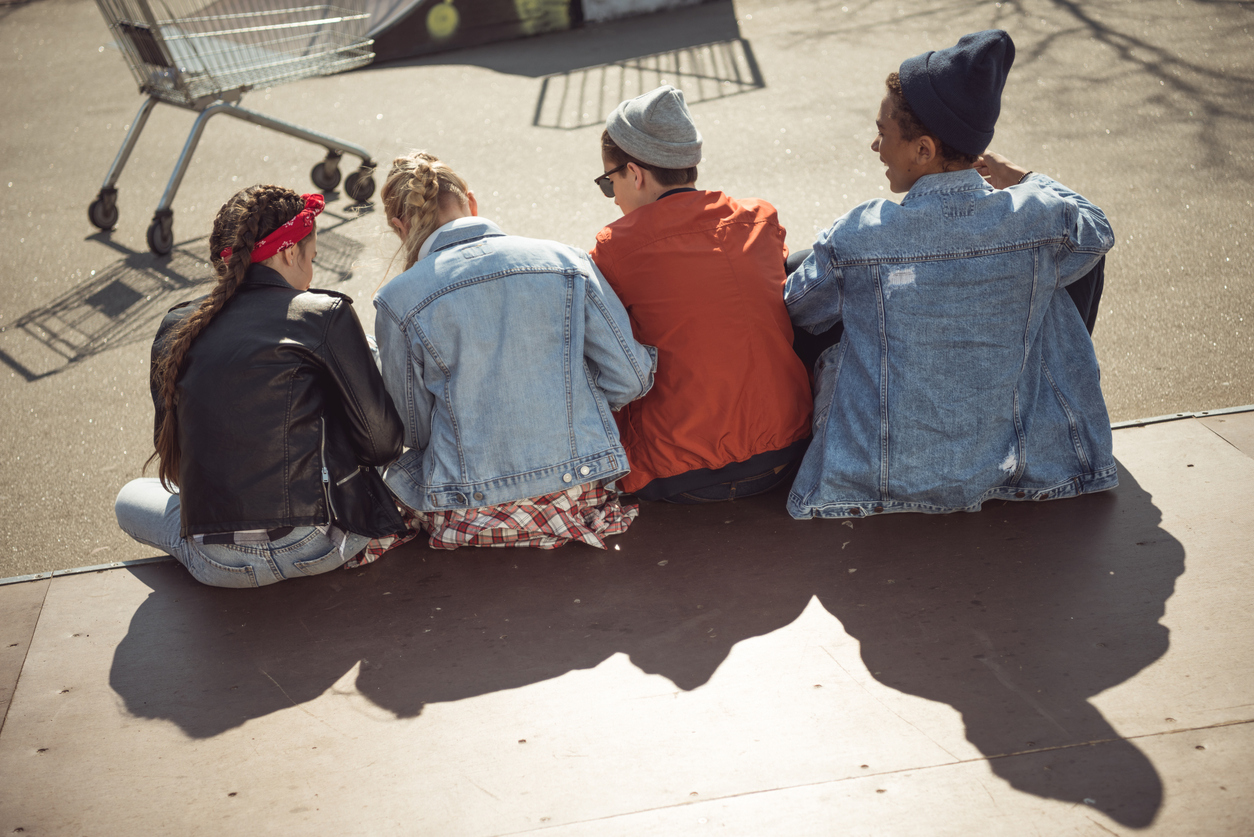
Blacks and Jews: Seeking Common Ground in the Aftermath of Crown Heights
About These Stories
YC runs intensive nonfiction writing programs for teens in New York City, where they’re mentored by a professional editor to write personal stories about their lives and about issues that affect young people. Their stories are then published and read by thousands of teens, educators, policymakers, and other adults who work with and for young people.