
Have you ever walked down a street and seen nothing but abandoned buildings? Have you ever ridden the train with a homeless person begging for spare change? Have you ever wondered why those abandoned buildings are not being renovated, so that the homeless and others can have a decent place to live?
“A lot of property is left there on purpose by the owner, so the property can go down and the value goes up,” says Jovita Nedd, director of Banana Kelly youth programs. “The city is trying to help through programs such as Banana Kelly.”
Banana Kelly isn’t Ice Cream
For those of you who think Banana Kelly is the name of a new Carvel’s ice cream cake, it is a non-profit organization that is renovating abandoned buildings in the Bronx. In order to train 18 to 21 year old youth in construction, the city gives them a building to renovate.
“Half the units [apartments] go to the homeless. The other half go to the neighborhood,” Nedd said.
Banana Kelly is not the only organization like this in existence. There’s ACORN, and the Brooklyn Neighborhood Improvement Association (BNIA).
Their mission, since they decided to accept it, is to build decent affordable housing.
“We are a non-profit community construction agency,” says Jahmal Sabah, rehabilitation specialist for the Brooklyn Neighborhood Improvement Association. “This company’s mission is to build stable, affordable housing in central Brooklyn.”
One problem is that this takes a long time. “The first building we are about to open started construction in 1982,” Sabah said. “It has eight units, and is open to teen mothers ages 16 to 21.”
Each apartment has one to three bedrooms, two bathrooms, a huge living room, and a kitchen.
“Even though it takes a long time to do this, things are happening,” claimed Sabah.
Understaffed and getting just enough money to make ends meet, BNIA is still making progress.
ACORN (Association of Community Organizations for Reform Now) is another housing development organization located in Brooklyn.
“We take over abandoned buildings, fix them up,” said Jordon Hamowy, an organizer at ACORN.
ACORN members used to break into abandoned buildings in East New York to fix them up. They would get arrested for breaking in. When they were released from jail, they would break in again. Why? Because most abandoned buildings are owned by the city. ACORN members wanted to get the attention of city officials and demand that abondoned buildings be turned into housing for people with low incomes
“We then finally got an agreement with the city to turn over abandoned buildings to use,” explained Jim Shearin, a member of ACORN. “They would give us a building and a percentage of the amount it would take to rehabilitate it.”
How Do These Groups Do It?
Re-opening an abandoned building is a lot of work and it costs money.
“What we do to get a building is we write a proposal of what we plan to do, and a letter requesting a city owned building,” said Nedd of Banana Kelly. “The city then gives us temporary site control. We train the kids in construction. One week training in a classroom, the next week working at the site.
“This goes on for about 11 months, and it takes about two years to renovate a building.”
And before you say “Man, this is just another one of those stupid projects,” the participants of this program receive $3.35 an hour for 40 hours of worksite training and $1.00 an hour for 30 hours of classroom training.
“To fix a building we need money to pay for a construction company, workers, and a contractor,” said Sabah of BNIA. “We are usually financed by government agencies and private foundations. When we can’t afford all that, we use sweat equity-regular people who do construction work for themselves.”
“Our money comes from our xerox paper business, grants from the Campaign for Human Development or from New York City,” said Hamowy of ACORN.
“The city also holds auctions every three months. They auction away buildings that have been abandoned for a long time,” said Shearin.
Can You Live There?
What are the qualifications to get into these buildings?
“People must have the ability to pay the rent, which means they must be working,” Sabah said.
“Our first priority is homeless families,” said Nedd. “The only qualifications you need is you must have some sort of income.”
By now you are probably wondering “How can I get into these buildings?” Well, sorry to say, there is a long waiting list, and it is getting longer.
“There is a long waiting list, but this is permanent housing. There’s no limitation. A lease for life,” says Nedd.
Sabah explained: “Yes, there is a long waiting list. Either we need to have more organizations like us or we need to do better.”
“The apartment goes to the people within the neighborhood. The more they participate, [in renovation] the higher they move on the waiting list,” Hamowy said.
More Housing on the Way
“We have done about 400 units over the last ten years, and we are still going strong,” boasted Nedd. “And next year we will open up about 200 more units.”
“ACORN started about seven years ago and fixed about 30 buildings. Thirty more buildings are being worked on now, and more abandoned buildings are coming in,” Shearin claimed.
“This institution will be here. Once we as people have this function in our behalf we’ll have more affordable housing for future generations,” said Sabah. “This is something that should be addressed.”
Hey! If you are interested in getting involved with these organizations, give them a call and see what you can do to help.
Banana Kelly
212-328-1064
ACORN
718-789-5600
Brooklyn Neighborhood
Improvement Association
718-622-6026
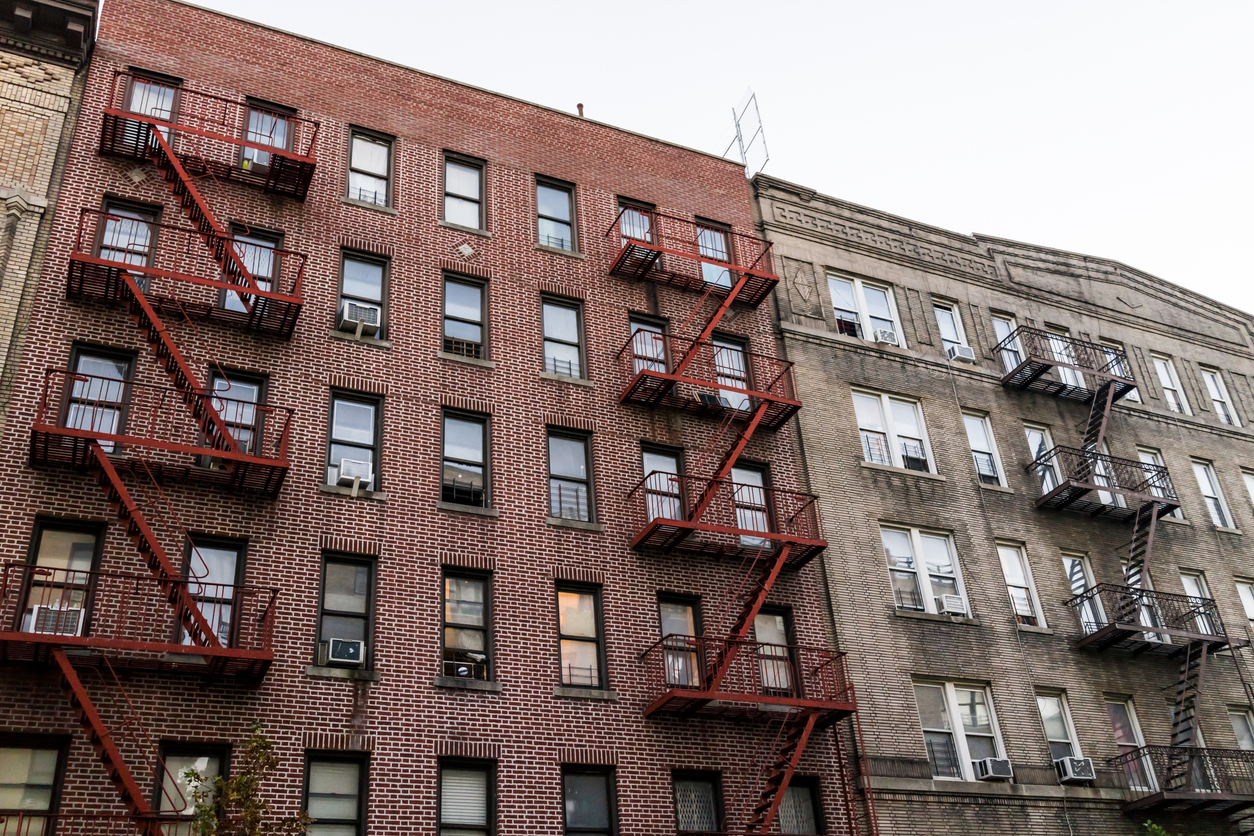
Don’t Abandon the Building!
About These Stories
YC runs intensive nonfiction writing programs for teens in New York City, where they’re mentored by a professional editor to write personal stories about their lives and about issues that affect young people. Their stories are then published and read by thousands of teens, educators, policymakers, and other adults who work with and for young people.