
Ever since I was about 12, I have wanted to be a revolutionary, fighting for what I believe in. It was around that age that I began to notice a lot of injustice and prejudice, so I decided I should be one of the people to fight for change, someone like Afeni Shakur, Huey P Newton, Malcolm X and Geronimo Pratt.
I have never been the type of person who will allow injustice to take place without trying to intervene. And when I die, I don’t want to be just another dead woman. I want my time here on earth to have meant something. If that means standing on the front lines of battle, then I’m prepared to take that risk.
The cause I’d be most willing to fight and die for would be to gain greater equality for my people, African-Americans. Many may believe that African-Americans are equal in today’s society, but that’s not totally true. Every African-American experiences injustice each and every day in New York City. Whether it’s minor or major, we all experience it.
Injustice All Around
Let’s take something which might sound minor-my chore of food shopping. I had to go shopping for some dinner meat at my local grocer, which is located a couple of blocks from my house in Harlem, a predominantly African-American neighborhood.
When I got there, I noticed that the lamb chops didn’t look fresh. It was quite the opposite when I went downtown to a White area. Downtown, the lamb chops were thicker and fresher. Why should I have to go all the way downtown for quality food? Shouldn’t all humans be allowed to buy healthy food at a fair and reasonable price?
During the winter, my neighborhood experiences other injustices. I remember one Friday morning after the snow had fallen all night long. I had to trek to the subway. It wasn’t an easy feat. There was snow everywhere. I had to jump over hills of snow. I sprained my ankle doing it.
But when I got off of the train at 66th Street, a wealthier area, I thought I was in another part of the country! There was hardly any snow around. There were a couple of puddles of slush, and a few ant hills of snow, but it was nothing like my neighborhood. To tell you the truth, it looked as if it hadn’t even snowed in that part of town, and, yes, to my amazement, when I got home from school the snow in my neighborhood was still there. Why, I wondered, do minority neighborhoods get ignored like that?
Bad Housing
Housing is another issue. Housing in the city is not as great as it should be, but uptown it’s even worse. I have stayed in apartment buildings that were owned by the city, and it was not something I’d write home about. There were many things that needed fixing, like the toilet, the sink, the paint that was peeling off of the walls.
But in the three months I was there, even after numerous phone calls and complaints, no one was ever sent to even look at the problem, let alone fix it. Why wouldn’t the city want to repair its own buildings? Is it because they don’t care about us, the minorities? Shouldn’t we get heat and hot water in the winter? Don’t we deserve to be kept warm, too?
I can’t even walk into a store downtown without the employees following me around, practically breaking their necks to “keep an eye on me.” Why? Maybe it’s because I’m an African-American teen and they feel threatened by me. Or should I say by my skin color?
In general, people fear what they don’t know. And since most people know nothing about my cultural background except for the stereotypes that have been placed on my entire race (like that all African-Americans are thieves and can’t be trusted), then I can only assume that they feel threatened by me.
Police Mistreatment
And take the situation with the police. They’re supposed to help and assist people, but I can recall several incidents where the only assisting the police did for the people in my neighborhood was cleaning the blood off of each other’s hands. This happens mostly in neighborhoods where there are minorities. I think it’s because they fear us, and the only way for them to deal with that fear is to lash out, disrespect and mistreat us.
People in my neighborhood wonder why drugs and other illegal items, such as guns, are so accessible to minorities. And why is it that whenever there is a big drug or gun bust, the African-Americans or the Hispanics are the ones to get arrested, charged and sentenced?
We’ve Waited Long Enough
Yet drugs and guns are still entering the United States. This shouldn’t be happening if the criminals are incarcerated. But it does, because we’re not the ones responsible for transporting them or making them. Why doesn’t someone work at stopping drugs from entering the United States in the first place?
Of course, racism isn’t the entire issue here. When stores with outrageous prices open in low income neighborhoods where most of the residents can’t afford the items for sale, the residents feel temptation. They may feel they have no choice but to get money the fastest possible way, which is usually through drug selling.
Now, I’m not saying that a person should fall for these temptations, but there’s a reason why they do fall for them.
When I think of all the problems that minorities face today, I personally believe that a revolution is inevitable to the survival of my people.
In my opinion, because attempts have been made by African-Americans to get our voices heard, and they have either changed nothing or resulted in more negotiations, the main purpose of the revolution would be revenge. I think that we have waited long enough, and action, even if just revenge, should be taken.
I’m not the only one who feels like this. A lot of people in my neighborhood are fed up as well. They believe that to correct all the wrongs, a revolution can and will take place.
Our Proper Place
It will be an opportunity for change in the political arena, as well as the financial arena. I think there will be some violence. To what extent it will go, I don’t know.
I would be extremely grateful to be a part of this revolution. My life and death would have meaning, because of the steps that I’d have taken for my people in the fight for our proper place in today’s society. That place would be as equals.
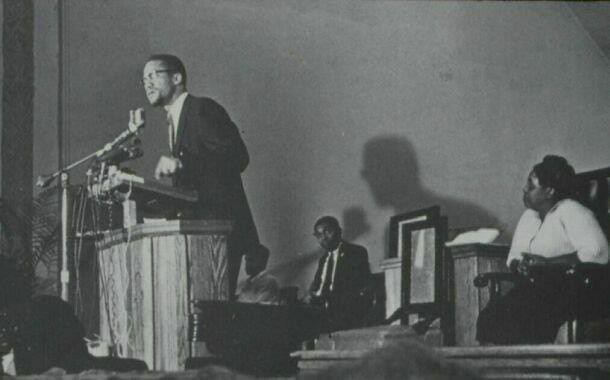
Tired of Exploitation: The Revolution is Coming
About These Stories
YC runs intensive nonfiction writing programs for teens in New York City, where they’re mentored by a professional editor to write personal stories about their lives and about issues that affect young people. Their stories are then published and read by thousands of teens, educators, policymakers, and other adults who work with and for young people.