
It’s 5 p.m. in Midtown and on top of the usual crowds, there are thousands of protesters-teens, adults and children-blocking everyone on the sidewalk and in the street along 5th Avenue. Traffic is stopped. The demonstrators begin at Niketown and march at a quick and energetic pace, smiling and laughing.
With brightly lit candles in one hand and signs reading “Nike, Just Don’t Do It” in the other, demonstrators yell, “What do we want? Justice. When do we want it? Now!”
The group stops at the entrances of Niketown and The Disney Store. Their voices grow stronger and the chants more specific: “Shame on Nike! Shame on Disney!”
All the while, surrounding shoppers watch with shock and curiosity. Some stand still in their tracks, with their mouths hanging open from sheer amazement, and ask “Why is there this crowd?” or, “What are all these people screaming about?”
The protesters say they want major companies like The Gap, Guess Jeans and Adidas to put an end to the exploitation in their sweatshops all around the world.
Workers for Nike and Guess Suffer
I was part of the crowd that day, carrying a banner and shouting slogans with my friends.
I first began getting involved with the fight against sweatshops by working at an anti-sweatshop organization called the National Labor Committee (NLC) when I was in the 10th grade, to get my school’s required community service hours out of the way.
But I was soon overwhelmed by what I learned about the hardships faced by sweatshop laborers. I found it horrifying to hear about how adults and even kids my own age were mistreated in factories with such bad conditions that they are called sweatshops.
They are also paid far less than minimum wage.
According to a pamphlet from National Mobilization Against Sweat Shops (NMASS), Nike workers in El Salvador earn only 20 cents an hour for for the production of a $75 shirt they produce. And Walt Disney’s Chinese factory employees work 16-hour days, 7 days a week, for wages as low as 12 ½ cents an hour.
That is disturbing. And on top of that, the companies paying those workers are unbelievably wealthy. When I heard about the conditions, I realized how important it was to fight against this kind of exploitation.
We Have a Responsibility
Ever since then, I have put in time stuffing NLC envelopes, leafleting and participating in demonstrations. I buy the products that companies manufacture, so in some ways, I feel I am responsible for how the workers making my clothes are treated.
If I’m unhappy with sweatshops, it is my right and duty as a consumer to tell companies that things need to be changed.
Young people all across America, especially in New York City, are beginning to speak out against the companies that rely on sweatshop labor. They are using some of the same tactics that adults have used-like protests and demonstrations-and adding some of their own, such as holding school assemblies and organizing high school activist groups.
Teens Fight Back
“Teenagers are beginning to see that they can make a difference,” said Xian Horn, a 16-year-old student who is an intern at the NLC. “They are going to be the ones to change things in the future and they know it.”
In fact, some teens are creating their own anti-sweatshop organizations. For example, in the spring of 1998, a couple of teens and NLC staff members decided to create an activist network comprised entirely of high school students. They called it The Student Coalition Against Labor Exploitation (SCALE).
Today, 15 student volunteers work at SCALE to spread awareness about sweatshop issues to other teenagers.
“SCALE tries to teach the teen community about issues surrounding sweatshops. We don’t say, ‘This is wrong’ or ‘That is bad.’ We let the teens decide for themselves,” said Vanessa Lee, one of SCALE’s original founders.
Organizing Against Sweatshops
At the Lab School, a Manhattan high school, BASE (Be Active in Self-Education) began as an AIDS awareness program, but today deals with a variety of issues.
Sweatshop exploitation is one of BASE’s top priorities, said Amy Hauser, who is one of about a dozen BASE members.
While SCALE and BASE focus primarily on sweatshops in foreign countries, another group, NMASS, sticks to a more local approach, dealing with New York City sweatshops and labor abuses.
Their pamphlet ‘Welcome to the U.S.A.’ states that “sweatshop exploitation is not an overseas problem. The worst kind of working conditions-indentured servitude and slavery-exist right here in the United States.”
Recently, NMASS organized a picket in the center of Chinatown. A local restaurant owner was forcing his unionized workers to either quit the union or be fired. With NMASS’ help, the workers were fighting back.
The Power of Protest
Partly because of the work of teens, some companies have been making changes in their factories. Charles Kernaghan, who founded the NLC, believes a 1995 demonstration by more than 200 college and high school students demanding the improvement of conditions in Nike sweatshops had real results.
He said that is why Nike stopped forcing its employees to work with toxic glues and solvents-choosing instead to work with water-based ones. Although it may not sound like much, this has greatly diminished the danger of the workplace.
Knowing that you might be making a difference is a powerful feeling. “I felt really powerful as I was walking through the streets yelling ‘Shame on Nike!'” said 16-year-old Candie Rapier, who went to the Niketown protest. “It was like, ‘Wow, I’m really involved in something important.’ And I think that feeling is going to stay with me.”
Making Small Changes
And Xian, an intern who spends much of her time stuffing envelopes or entering information into the NLC’s database, said that volunteering makes her “feel better as a person.”
Most of the teens involved realize there’s not much chance of ending all exploitation occurring in sweatshops. But they believe that their fight is a good one anyway.
“Realistically, solving all the sweatshop problems is a long shot,” Amy said. “Teenagers have the ability, maybe not to make everything perfect, but at least to give the workers a few more rights-even if that’s just the right to go to the bathroom when they need to.”
Showing the World We Care
Teenagers have a special responsibility because many major corporations target them. “Large corporations are terrified of teenagers,” Kerneghan said, since without teen patronage, companies can lose a great deal of money.
Just imagine-if all teens refused to buy Nike products, the company would probably fall into bankruptcy!
“We’re actually putting ourselves on the line and trying to make a difference,” said Xian. “Even if the solution isn’t found today, we’re showing the world that we care.”
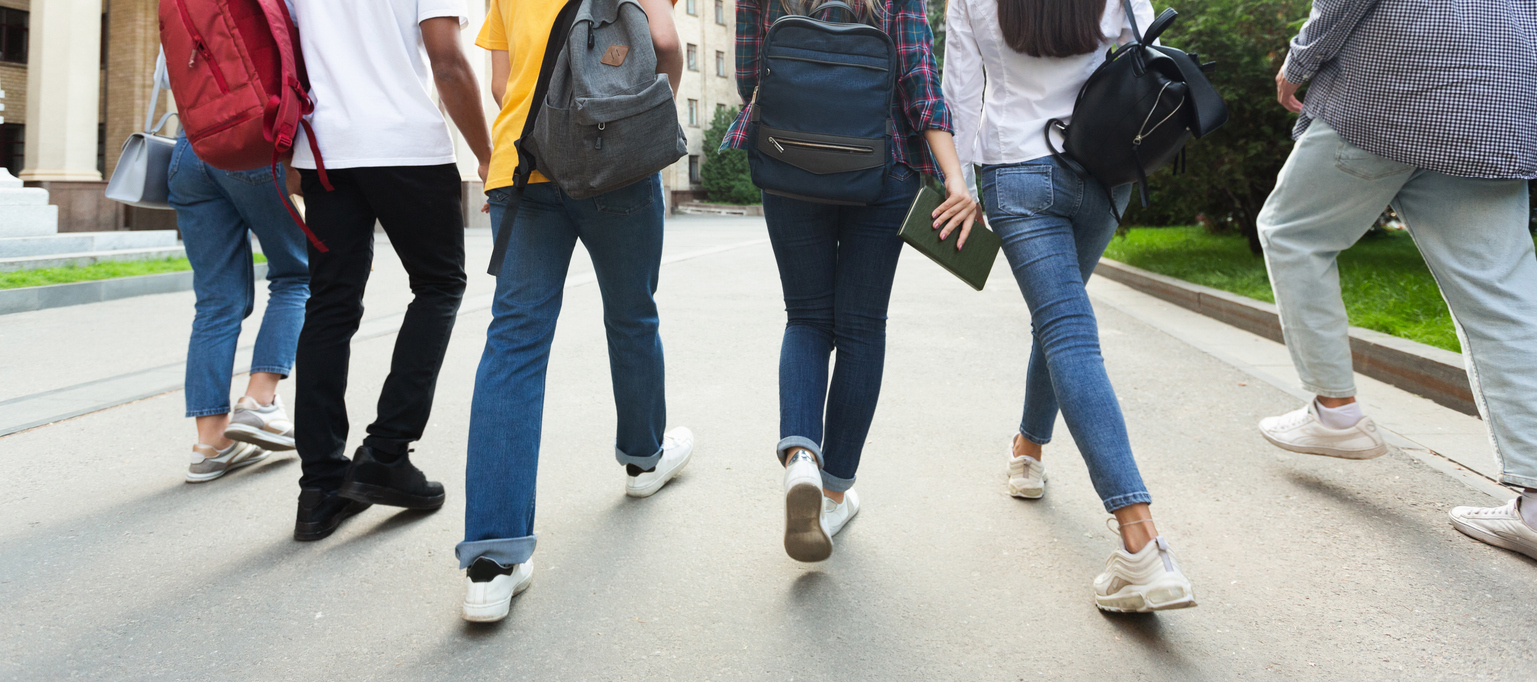
The Power of Protest: Teens Mobilize Against Sweatshop Abuses
About These Stories
YC runs intensive nonfiction writing programs for teens in New York City, where they’re mentored by a professional editor to write personal stories about their lives and about issues that affect young people. Their stories are then published and read by thousands of teens, educators, policymakers, and other adults who work with and for young people.