
It’s sophomore year and I’m in my 6th period gym class. It’s the usual scene: the girls, clustered in a corner, are passionately chattering away. The boys, on the gym floor with basketball in hand, are dribbling and panting as they attempt to pass to the open man.
At every opportunity, I glance at the boys getting their shots blocked, envying them, not because of their game (or lack of it), but because they’re playing.
I want to play. For a second, I close my eyes and imagine myself competing with these boys. With ball in hand and pure finesse, I glide past my defender for the easy bucket.
Would They Let Me Play?
“Habiba, you O.K?”
“Me? Oh yeah, I’m fine,” I say, coming out of my daze. I get back in the girls’ conversation, nodding my head and answering with a “yes” and a “ohh” and “ahh,” but not at all interested in the conversation.
I slip back into daze. I imagine myself going up to these boys and asking in my sweetest voice, “Can I play?”
The five boys suddenly size me up. They see that at around 5’9″, I can easily blend in with them. And then I see the frowns on their faces, because it hits them-I’m a girl. A girl who’s 5’9″ and can serve as the sixth person to even out a three-on-three team, can block a few shots, make a few shots, and even help them win.
But would my gender outweigh my playing merits or would these boys risk their manhood by playing ball with a girl?
I easily imagine their response: in perfect, five-part harmony, the word “NO.” They’d probably feel ashamed to be the only group of guys playing with a girl.
And I don’t think I’d be comfortable being the only girl playing on the court with a bunch of guys. The rest of the class would turn to watch.
And I worry that I’d be seen as a traitor who didn’t want to hang with the girls anymore, or who was trying to be one of the boys. Or that I was just looking to get attention.
So to save myself from the stares and the “what does she think she’s doing” remarks, I never ask.
It’s Hard Not to Care What Others Think
Being an athlete and being a girl is a struggle. Even though I know there are other girls like me who derive pleasure from playing competitive sports, I feel that society in general considers sports a guy’s activity. I struggle within to not care about what others think if I step out of that norm.
At home, my parents also believe that some activities and behaviors are more appropriate for girls and others are more appropriate for boys. For example, they don’t consider comfort wear, like jeans and T-shirts, feminine. And they consider basketball a contact sport that’s mostly played by tough, rough guys-so they’d prefer that I not play it.
I discovered basketball when I moved here from Surinam with my family, when I was in 3rd grade.
I was already tall for my age, getting close to 5′, and it seemed as if everyone, especially the boys, expected me to be naturally adept at the game. After gym, boys in my class would come up to me and ask: “Habiba, you won, right? You beat the other girls in basketball, right?”
Right. And I won the playground games of Around the World, too. So the boys challenged me. A boy would confront me, saying “You think you’re really good?”
“What?” I’d respond, usually caught off guard.
“I’ll tell you what.”
“What?” I’d reply.
“I can beat you.”
“I bet you can,” I’d reply sarcastically.
And from there, we’d bout it out until, after a heartfelt game, I emerged as the victor.
I Felt Awkward About Winning
Winning felt good at first, but then I started feeling really awkward about it. “Why am I winning?” I thought. “Aren’t these boys supposed to win?” But I loved winning too much to let anyone else win.
While the boys challenged me, though, they never asked me to play with them on a team. I didn’t know why, but it made me feel used and ousted. They wanted to compete with me when they felt like it, but they didn’t see me as an equal.
Despite this, I wanted to improve my game. I started watching NBA players like Michael Jordan and Hakeem Olajuwon. I tried to pick up on Michael’s bold and in-your-face attitude whenever a defender was on him.
More than that, I loved Hakeem Olajuwon and his footwork. He had a repertoire of moves that made him look as elegant as a ballet dancer. His goodie bag consisted of fakes and spins and up-and-unders and shots delivered from impossible angles.
Did Only Guys Play?
I also watched the guys play half-court basketball at the park near my house. They’d attempt crazy half-court shots, shoot from behind the backboard and try crazy dribbling stunts, all with their eyes closed.
I wanted to be like them. But as I got more into basketball, I started to get the feeling that it was a boy’s sport and that my enthusiasm for it wasn’t normal.
At the time, the WNBA didn’t exist and I didn’t know that there were women’s professional basketball leagues. I thought girls simply didn’t play on a level beyond playground shooting games.
At Last, Girls Like Me
But this all changed when I got to the 6th grade. The gym teacher, seeing how much better I was than the other kids, suggested I try out for the girls’ school team. I was shocked, first that there was a girls’ team at my school, and worse yet, that I didn’t know about it.
I was even more shocked to find out that the girls on the team played just as well as I did. I was thrilled, but felt cheated that I didn’t discover it sooner.
Playing basketball with girls at my own skill level was a relief. These girls were fierce competitors and some of them were taller than me.
With them, I didn’t have to hold anything back. I didn’t worry about appearing as if I was flaunting my game, because I really had to show them that I could play. The challenges that came with each game and practice pushed me and I loved it.
B-Ball’s Too Rough and Tough
My parents, on the other hand, were less than thrilled. They liked that I was involved in an activity that kept me busy, but they didn’t like that this activity was basketball.
I could tell by the way their attitude suddenly shifted when I mentioned basketball. One minute they’d be talking enthusiastically about something, and the next minute, when I mentioned my basketball practice the coming Saturday, their voices would become edgily annoyed.
My parents seemed to be fearful of the “culture” associated with basketball. Living in the Bronx, they saw basketball as a rugged, wear-and-tear sport played by guys wearing sleeveless T-shirts with nothing better to do.
‘Girl, Why Are You Dressed Like That?’
My parents were even more nagged by the idea that basketball playing was associated with appearing boyish. Ball players wear sweat pants or shorts and T-shirts to play the game. And while I wore those things when I played, I also wore them off the court.
When I started picking my own clothing in 4th grade, instead of the flowery shirts and skirts and corduroy pants that my mother used to get for me, I chose to wear jeans and T-shirts. My parents became convinced that basketball went hand in hand with boyishness.
Whenever I got ready to go out in jeans and a T-shirt, my parents got irritated and said something like, “Girl, why are you always dressed like that? Go now and change into a shirt and a skirt, something more decent.”
Because my parents kept telling me that I dressed too much like a boy, I began feeling self-conscious. I didn’t care to go back to dresses and flowery skirts because I liked the comfort of dressing casually. But at the same time, I didn’t want people to think I wanted to be a boy.
After all, I felt like a girl. I had the high, excited voice of a girl, and wore my short hair in a tight bun. I just liked dressing in jeans and T-shirts and playing basketball.
WNBA Shows Girls Can Play
It’s been a struggle for me to realize that there’s nothing wrong with being a girl and playing sports.
Even as a high school student on the school team, I still feel somewhat self-conscious about my role. After all, while sweating and wearing a basketball jersey and shorts, it’s not easy to feel completely feminine on the court.
But I remind myself that it’s how I perceive myself, not how others do, that really matters. And I know that I’m a girl on and off the court.
It’s helpful to look to the women athletes who play professionally in leagues like basketball’s WNBA and soccer’s WUSA. [See sidebar.] Women professional athletes who play nontraditional sports like basketball or football prove to themselves and others that they are physically and mentally capable of doing what guys do.
Seeing that it’s possible to be a girl and an athlete means that a girl like myself can focus on her game instead of worrying about how socially acceptable it is.
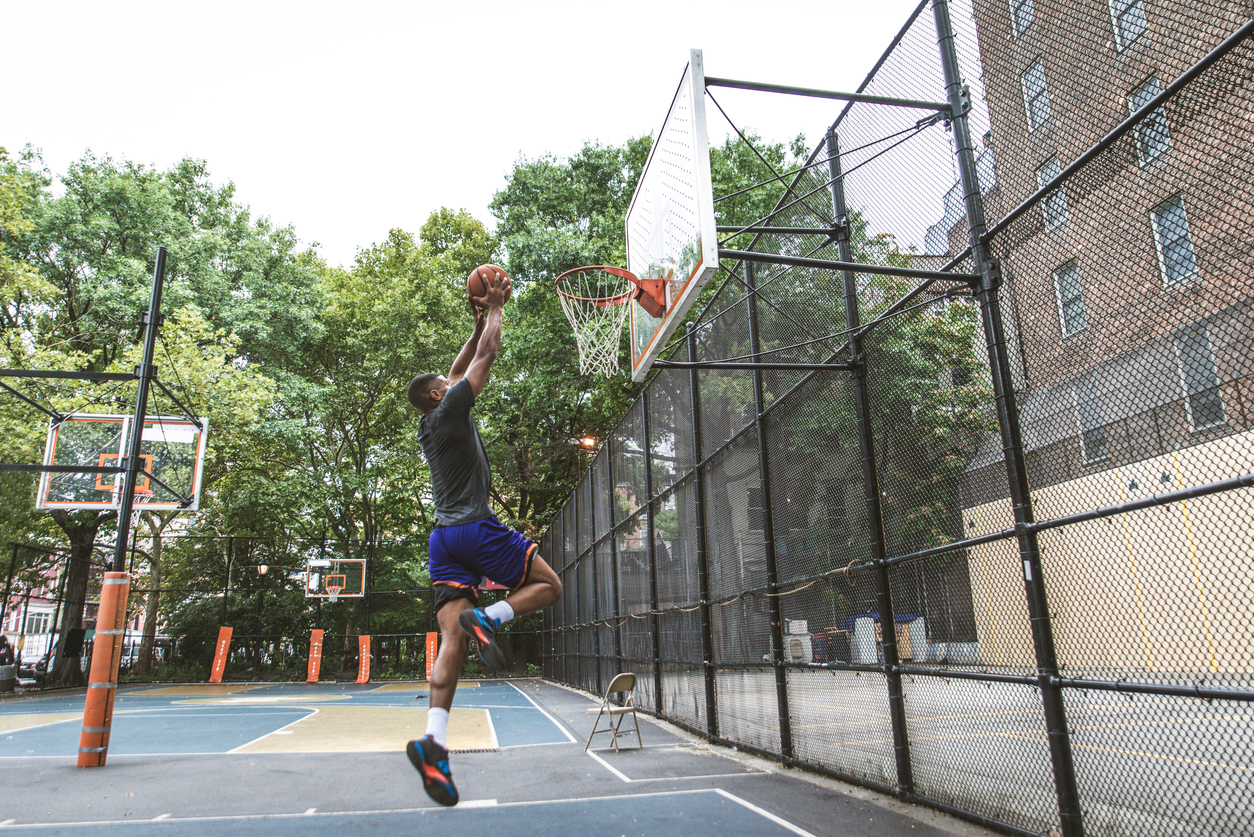
She’s Got Game
About These Stories
YC runs intensive nonfiction writing programs for teens in New York City, where they’re mentored by a professional editor to write personal stories about their lives and about issues that affect young people. Their stories are then published and read by thousands of teens, educators, policymakers, and other adults who work with and for young people.