
“What?”
“Is he crazy?”
“I’m never wearing a uniform.”
“Imagine uniforms in this high school!”
This is what my school sounded like when we heard that the Mayor wants all New York City public school students to wear uniforms.
At first I agreed with my fellow students, but when I stopped to think about it, I realized that it wouldn’t be such a bad idea.
I believe that school uniforms would eliminate the fashion competition among students, especially among high school students. I think students would concentrate more on their school work than on what they are wearing.
Start In Elementary School
In elementary school, uniforms would be an excellent idea. Between the ages of six and 11 everyone should be focusing on the basics of their education.
Young boys and girls should not be thinking about whether this yellow sweater matches with these blue jeans. If uniforms were given to first graders there would be no complaining, because from the earliest stage they would be accustomed to uniforms.
One big advantage to having a uniform is getting rid of the pressure put on you and your parents to buy fashionable clothes in order to stay with the “In crowd.”
Some students are so insecure about themselves that dressing and acting like everyone else hides that insecurity, so that they don’t try to overcome it in more mature ways.
Sometimes the pressure is so intense that students stay home because they “do not have anything to wear.” Even students who cannot afford it have to use some method of dressing to impress their “friends.”
Not a Fashion Show
Although everyone should be allowed to express the way they feel and think through their dress, the fancy dressing can be kept for weekends.
Just think how glamorous you would look on weekends if everyone dressed the same in school.
Remember, you should go to school to learn-not for a fashion show!
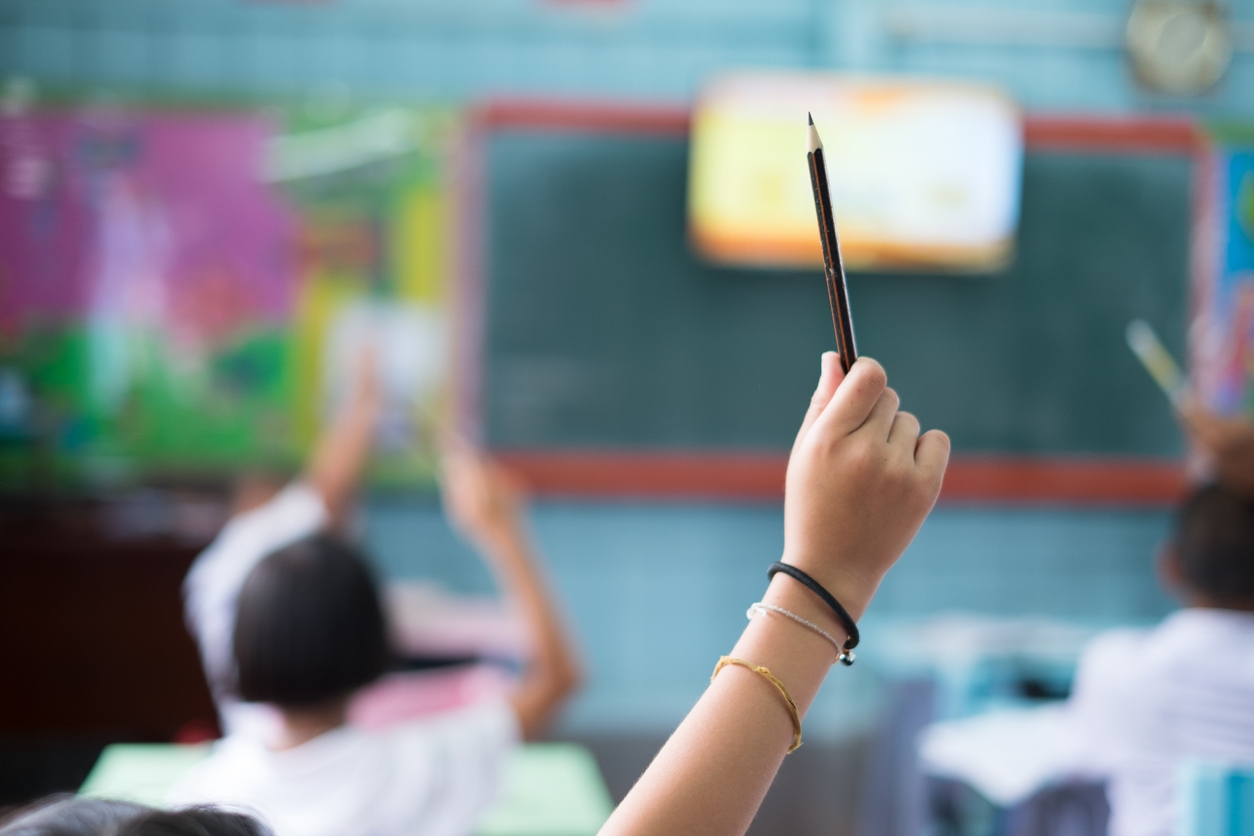
School Uniforms May Not Be a Bad Idea
About These Stories
YC runs intensive nonfiction writing programs for teens in New York City, where they’re mentored by a professional editor to write personal stories about their lives and about issues that affect young people. Their stories are then published and read by thousands of teens, educators, policymakers, and other adults who work with and for young people.