
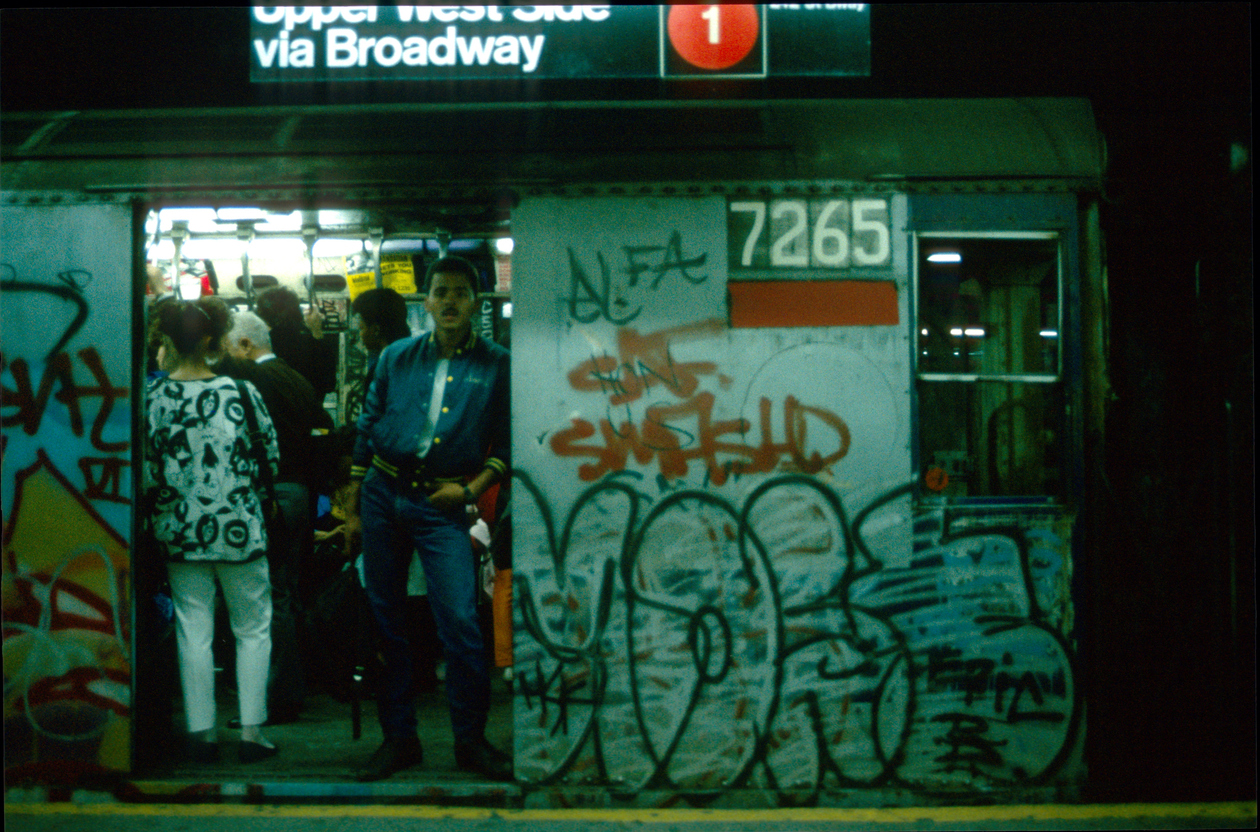
Jose Taveras, 16, of the HS of Art and Design, will never forget the night he and a friend covered a J train in Brooklyn with graffiti. On the way home they decided to paint the outside walls of an auto shop too. They thought the store was closed but the owner surprised them.
“My friend got away but I didn’t,” Jose said. “I was begging him to let me go but he called the police. I also begged the police and they asked me if I would do it again and I told them I wouldn’t so they let me go. The next morning I took the same train as the night before and what we did was written over. I thought to myself, ‘all that for nothing.'”
Seeing his work destroyed is one of the things that Jose was thinking about when he decided to join the MAGIC (More American Graffiti In Control) program at The Hub, Planned Parenthood’s South Bronx center. MAGIC provides graffiti artists with canvases, paint, training, and opportunities to show their work. In exchange, the artists must agree to stop defacing and vandalizing public property.
No More Worries
Since it was founded in 1978, MAGIC has graduated about 100 young artists. Some of them have gone on to work in television, run their own businesses, or work for Planned Parenthood. There’s still 100 more waiting to join. Gilbert Serrano, who runs the program, called it “a positive tool.” He said it gives the participants “an opportunity to learn from other artists.” It also encourages them to go to school.
For Jose, one of the best things about painting on canvas is knowing his work won’t be destroyed. “It’s a great feeling,” Jose said. “You don’t have to worry about anything, or worry about getting caught by the cops.”
The other young men in the program agree. George Morales, 22, has been involved in MAGIC for about three years. He found out about the program at a difficult time in his life. His best friend and graffiti partner had just died and he didn’t know what to do next. “If I hadn’t been in the program I would either be in jail or selling drugs.”
George said MAGIC has helped him develop his artistic talent. “I could take my time and if I couldn’t do something I had backup to help me,” he said.
It Feels Small
Still, both George and Jose said it was hard to get used to painting on canvas instead of buildings and subway cars. “When I started I didn’t think it was going to work,” George said. Now he says he gets the same feeling he did from doing street graffiti, “but without the problems.”
Jose still believes that “painting in the streets is more of an adventure” and admits that he still gets tempted to write on walls sometimes because his friends do it. “What I don’t like is that canvases are small,” he said. “It would be great to have a legal wall but that rarely happens.”
One of the highlights of the program is the annual art show and auction where the young artists get to display and sell their paintings. They donate 10 percent of the profits to an AIDS organization in honor of Ralph Gomez, the founder of the MAGIC program, who died of the disease in 1990.
Paintings On Display
George had seven paintings in this year’s show, which was held on January 31 and February 1st. His favorite was a painting of Scarface, the famous gangster. It had a half black, half white background with a white bullet on the black side and a black bullet on the white side. Written on it were these words: “Life Style of a Gangster, It’s a Crazy Life.”
Jose’s favorite of the nine paintings he had in the show was one called “Hip Hop.” It was a giant radio with many names of famous rap artists in its background.
This city needs more programs like MAGIC, which recognize that young adults who do graffiti are not just vandals, but artists with no canvas but the streets of New York.
For more information about MAGIC, call 212-292-8000.
Painting the Town (Not!) Anymore
About These Stories
YC runs intensive nonfiction writing programs for teens in New York City, where they’re mentored by a professional editor to write personal stories about their lives and about issues that affect young people. Their stories are then published and read by thousands of teens, educators, policymakers, and other adults who work with and for young people.