
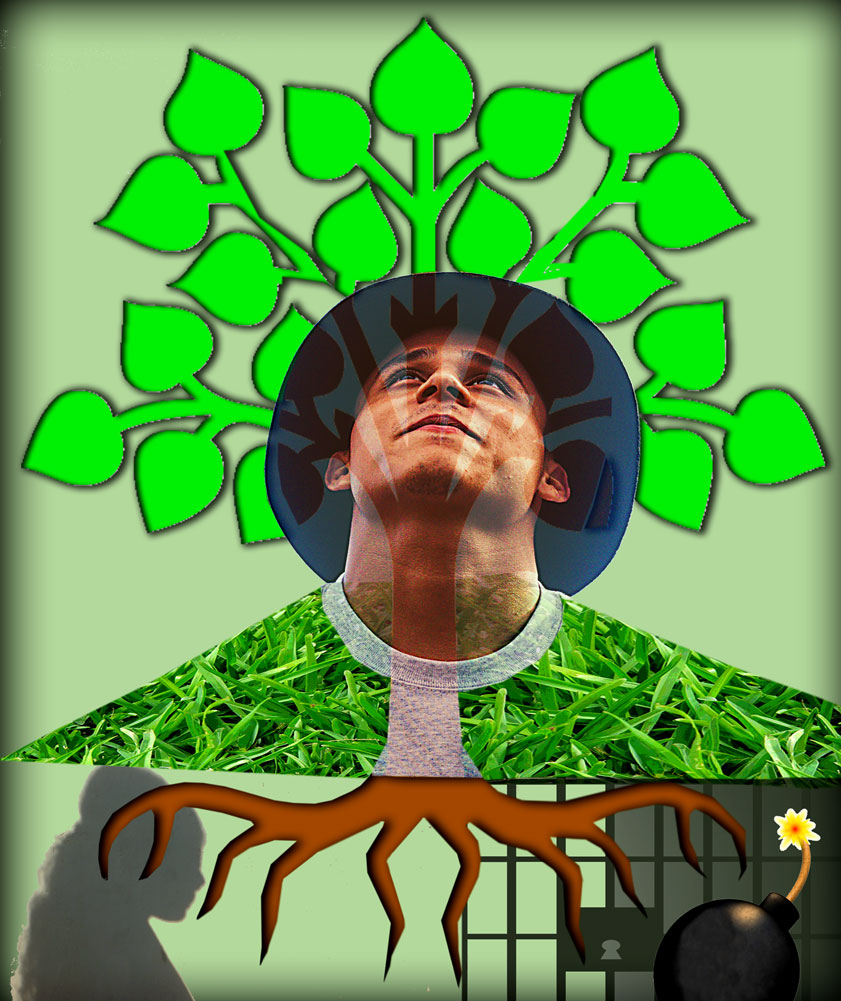
My father had affairs with multiple women while he was with my mother. He would leave for months at a time, starting when I was 8. I do not remember this, but my mother said I would look out the apartment window and point out random strangers, thinking one of them might be my father.
When he returned, I overheard him say, “Maritza, I love you. I made a huge mistake. She meant nothing to me; please give me one more chance.”
I didn’t know what “affairs” were, and I wondered, what did my father do? Soon he left again.
With my dad gone, it was just my mother, older brother, and me. My brother enjoyed spending time with me back then, but as we got older, he drifted away. He was in a gang and did not want me to get involved.
I felt alone when my brother moved out. I had my mom to keep me out of harm’s way and I was grateful to have her, but it was not the same. I needed a male’s perspective on certain situations, like how to handle a bully or what to do when I liked a girl.
I had to figure out my own way to handle conflict. If I thought I might fight with someone I would ask the person, “Is there something I said that made you angry?” I had heard teachers say that, and so I tried it for myself: Most of the time it worked. No one was giving me any advice at the time. I would just observe random teachers or family members to see how they handled situations and imitate what seemed to work.
Right when I was starting to figure this out, my father came crawling back again. I do not know why my mother always took him back. Then when I was 10, he left again, this time for a woman who lived across the street. My mom would put me in front of the television, then go into her room and lock the door to cry.
This time, he did not come back. He would call my mother and ask to speak to me, and most of the time I refused. My mother would try to convince me to talk to him, but I kept saying no.
After he had been gone for almost a year, my father was accused of molesting the young daughter of the woman across the street. He pleaded guilty and went to prison for three years.
He Didn’t Seem
I still wonder if he actually committed the crime. My father never showed signs of weird behavior like that; I felt comfortable and safe around him. I was angry at how he treated my mother, but he did not seem like a child molester. It’s confusing to have a father who seems nice, but who I know lies, manipulates people, and maybe even hurts children.
When my dad went to prison, my mom was pregnant with my little brother. (My mother must have gotten together with my father while he was with the woman across the street.) While he was in prison, my mom was diagnosed with multiple sclerosis (MS), a disease of the central nervous system. After the baby was born, she also had post-partum depression and went to a therapist.
I noticed both physical and mental changes in her. The MS made her hands shake. In addition, sometimes she would get so angry when my little brother would not stop crying, she would push the carriage into my room and say, “You get him to sleep.” I was worried about her and sometimes did not go out with my friends because I was scared to leave her alone with the baby.
When my father was released from prison I was 13, going into 8th grade. He wanted my mom to take him back again because the mother of the abused girl dumped him. He wasn’t allowed in our home because of the child abuse conviction. At first, my mom would not let him come over, but if she really needed help, she would ask him. She was starting to need more help because of her MS. He would watch my little brother every few weeks.
Not My Decisions
My mom told her therapist that she was afraid she might harm my little brother, and the therapist told Child Protective Services (CPS). My little brother and I were taken away and placed in different homes. I was 13 and he was 2. This experience was a terrible mental battle. I felt I had to be strong for him.
The person who took me in was a guy in his mid-30s. My first night in the foster home was tough. I shared a bedroom with two other boys, and I was afraid to fall asleep because I thought they would try to hurt me. I waited for them to fall asleep, and only then would I go to bed. This continued for the first two weeks.
By the third week, I was comfortable. Eventually, we three boys got along great. My foster father was a good man and taught me how to do many things. Living with him, I learned how to wash my own clothes, keep up with my hygiene, and properly clean a bathroom. Unfortunately, this did not last long; I moved to another home so I could live with my little brother.
I liked being back with him, but we were placed with an older woman who did not speak much English. She kept to herself and did nothing beyond feeding us and making sure we were clothed. I was not happy there and I missed my foster father. I asked my caseworker if I could live with him, but it was not my decision to make.
My birth father and I had regular, supervised visits. He seemed annoyed by them until he heard that I received money from being in foster care. Then his whole mood changed. I asked him to help me go clothes shopping. At a clothing store, my father complained that he needed a shirt for a job interview. I bought it for him. That was not the last time I used my foster care allowance to buy him things.
Losing Both Parents
I saw my mother during scheduled visits at the agency once or twice a week. She was using a walker and eventually she couldn’t leave her house, but I thought maybe it was her diabetes. I did not find out she had MS until she went into the hospital very sick, around my 15th birthday.
I was scared, just starting to realize I might lose the only parent who had my best interests at heart. My father did not comfort me at all about my mother’s illness. He even said, “This is her fault. I told her to take care of herself.” When I told him I was upset, he told me to stop being weak.
The last time my father and I spoke was four years ago, when I called to tell him that my mother had died. Since then, I have not heard from him. I think to myself sometimes, “Should I look for him? Is he looking for me? Why hasn’t he tried to contact me?”
What my father did to my family—lying to my mom, running off with other women and leaving us alone, not fighting for my little brother and me when we needed him to—was bad, and I don’t even want to think about how he abused that girl. During my childhood he showed me how not to be an adult. I never want to be a manipulator, cheater, or abuser.
I do not feel the urge to do those things, and yet having him for a father makes me worry that I could be like him. So far, I have not been able to keep a long steady relationship with a girl: I think part of me is afraid of making the same mistakes as my father. I worry about cheating on someone I go out with; what if I lose interest too quickly? It seemed to happen to my father all the time, and my mother got sick before I could really talk to her about relationships.
Better Role Models
Fortunately, I am blessed to have teachers and other adults to help me through all the tragedy at home. The first person who helped me was a 5th grade substitute teacher, Mr. Green. He helped me with my homework and let me talk to him when nobody else would take the time to listen. He was that person I could go to.
He has a son a few years younger than me. My mother knew him, and I went to his house when I needed advice with something at school or at home. I would observe how he made sure his son ate and had clean clothing. It made me feel sad and a little jealous when I heard him say to his son, “I will always be here when you need me.”
When my mother passed away, I would cry uncontrollably. I had thought I was depressed before, but now it was worse. Therapy has helped a lot; the therapists I’ve seen have helped me develop strategies for when I feel sad. They had me think of joyful moments with my mother and encouraged me to play a sport to take my mind off negative thoughts. All the therapists I have seen told me I was not depressed enough to need medication, so I have never taken any.
I’ve also gone to three different support groups with other young people. There I made strong connections with others who have been through similar situations. They helped me understand that losing my mom and, in a way, my dad should not affect how I am the rest of my life.
Any time I was feeling upset or depressed the other group members would try lifting my spirits by making jokes. I talked more and more openly about my feelings with the other group members. Each day I felt weight lifted off my shoulders. At the end of every session, I did not feel as sad as when I first walked in.
More Feelings Than Anger
I was also lucky enough to have a good friend by my side to help during that rough time. When I went back to school after my mother’s death, Josh noticed something was off about me. He asked me what happened, and I told him.
He was silent for a moment, with his eyes open wide. Then he took a deep breath and said, “I’m so sorry about your mom.” He kept asking how I was feeling after that. It could get annoying at times, but I liked that someone cared enough to ask.
My dad does not show his feelings until he gets mad and explodes. He told me to “man up” when I was sad about my mom dying of a terrible disease. He never respected my mom’s feelings. He insisted things be his way, no matter what she wanted. Fortunately, my mother reminded me to treat others well and be a good person.
When you are depressed, feelings can seem like the enemy. However, I persisted in staying open to emotions and struggling to understand them rather than denying them. My dad tried to make me feel weak if I showed vulnerability, but I know he was wrong. I used to not show my feelings at all, but I have learned how to express them better with my cousin, a teacher of mine who also grew up in foster care, my little brother, my friend Josh, and Mr. Green. When my little brother says things like, “Thank you for being there for me,” I cry a little bit.
The girl I dated for the longest I ended up breaking up with because I thought she deserved someone less confused than me. Dating does make me think about my father—both how awful he was to my mother and the insults he threw at me. I know I do not want to be like him, and I know I want to have my feelings, but it is still hard to know how to be a good man.
View the lessons based on this story
- Falling Far From the Tree Real Men 2.0 Unit 1 | Session 6