
Everyone knows that the public schools are failing many students. With metal detectors at the entrances checking kids for knives and guns, classrooms overflowing with 40 or more students, and a curriculum that leaves many of us feeling lost, it’s little wonder that so many New York City teens are being turned off-and even dropping out.
“I knew a lot of kids who wanted to be suspended so they wouldn’t have to go to school,” said Ryan Callender, 13, of his old school, P.S. 44.
In an effort to win back students like Ryan and his friends, the Board of Education is unveiling a small group of new schools this fall whose mission is to connect the classroom to real life. Called New Visions schools, they will give a few thousand high school students the opportunity to test a new way of learning in smaller and more secure settings.
Ryan learned about one of the New Visions schools-the Benjamin Banneker Academy for Community Development-from his guidance counselor and decided to check it out. “It sounds like a nice and safe school,” Ryan says. “I really hope I’ll get a good education.”
A Different Way of Teaching
The Banneker Academy is named after a leading 18th century African-American designer and engineer, and will focus on architecture, environmental engineering, and technology.
The Academy is being housed on the campus of Pratt Institute in Brooklyn until its own building is ready. Meanwhile, the new students are enthusiastic about going to school with college students on a campus filled with trees, grass, and water fountains.
The Board hopes that Banneker and the other New Visions schools will be the beginning of a new trend toward smaller, community-based schools. They will have no more than 700 students each, compared to traditional high schools which can have up to 3,000 students.
Other special characteristics of the New Vision schools are the teaching methods they use and the special courses they offer. In traditional high schools, subjects are taught in 45-minute periods, each one in isolation from the others. “The connections between them are never made,” said Jan Atwell, a parent and co-chair of the planning team for the Banneker Academy.
At New Visions schools, classes might be two to three hours long, but they will combine several different subjects. And lessons are not just taught in the classroom. Students will be going out into the community to do work that corresponds to the lesson being taught.
Out of the Classrooms, Into the Streets
“The teens learn best out in the streets, not in traditional classrooms,” said Alexie Torres, associate director of El Puente, a community organization in Williamsburg, Brooklyn, that designed another of the New Visions schools.
Although their focuses vary-there will be a High School for Health Professions and Human Services and a High School for Economics and Finance, for example-solving urban problems is a common theme of all the New Visions schools.
For example, many of the students who will attend the Banneker Academy are from neighborhoods like Bedford-Stuyvesant and Fort Greene that have serious problems with drugs and crime. The school will aim to teach them skills that they can use to help bring about change. “We want to channel the energies of the young people into rebuilding the community,” said Atwell.
The El Puente Academy for Peace and Justice is focusing on the issues of human rights and the need for harmony among the different-and sometimes conflicting-ethnic groups in Williamsburg.
The community has a large and diverse Latino population as well as Hasidic Jews, African, Asian, Italian, and Polish-Americans. Many of the students’ activities will involve the different ethnic groups working together for the community’s benefit.
Smaller Is Better
In addition to offering a different kind of education, the New Visions schools also hope to provide a more supportive atmosphere for students. Naomi Barber, who has helped develop the New Visions program at the non-profit Fund for New York City Public Education, feels that because the schools will be smaller they will also be safer.
The size of the schools is also part of the attraction for many students. “You know where you’re at,” says Iman Muhammad, 14, who is going to Banneker to study architecture. Iman says Banneker is different than her old school, Satellite East, in that she feels like she already knows everyone at Banneker so she feels comfortable going to school there.
Shakema Kirland, 14, says that in the past her classes were just too large. “It’s just so crowded…some kids just sit in the back and never learn.” But at Banneker, classes generally have no more than 25 students.
Another thing that makes the New Visions schools stand apart from traditional public schools is that students will have a voice in their education. Students will even have the opportunity to sit with teachers and plan out courses to be taught in the schools. “We’re gonna be the leaders,” says Jessica Burgos, 15, of El Puente Academy.
It’s Not For Everyone
But the New Visions Schools are probably not for everyone. Jan Atwell said that these schools are for students who are looking for “something different” in their education. “You have to be some kind of a risk taker,” she said.
Atwell feels New Vision schools are meant for students who feel that the traditional school system has not challenged them enough and as a result they have not fared well in school.
The New Visions schools are a sign that-finally!-the Board of Education is realizing that it’s not just the kids who are the problem, it’s also the schools. As Naomi Barber put it, “Students are not the issue, it’s the school structure…There is nothing wrong with the kids.”
This new approach-where students’ ideas are listened to and their needs come first-may be the key to getting young people to learn and succeed in school.
To get more information on New Visions Schools, call 718-935-3415 or 718-935-3475.
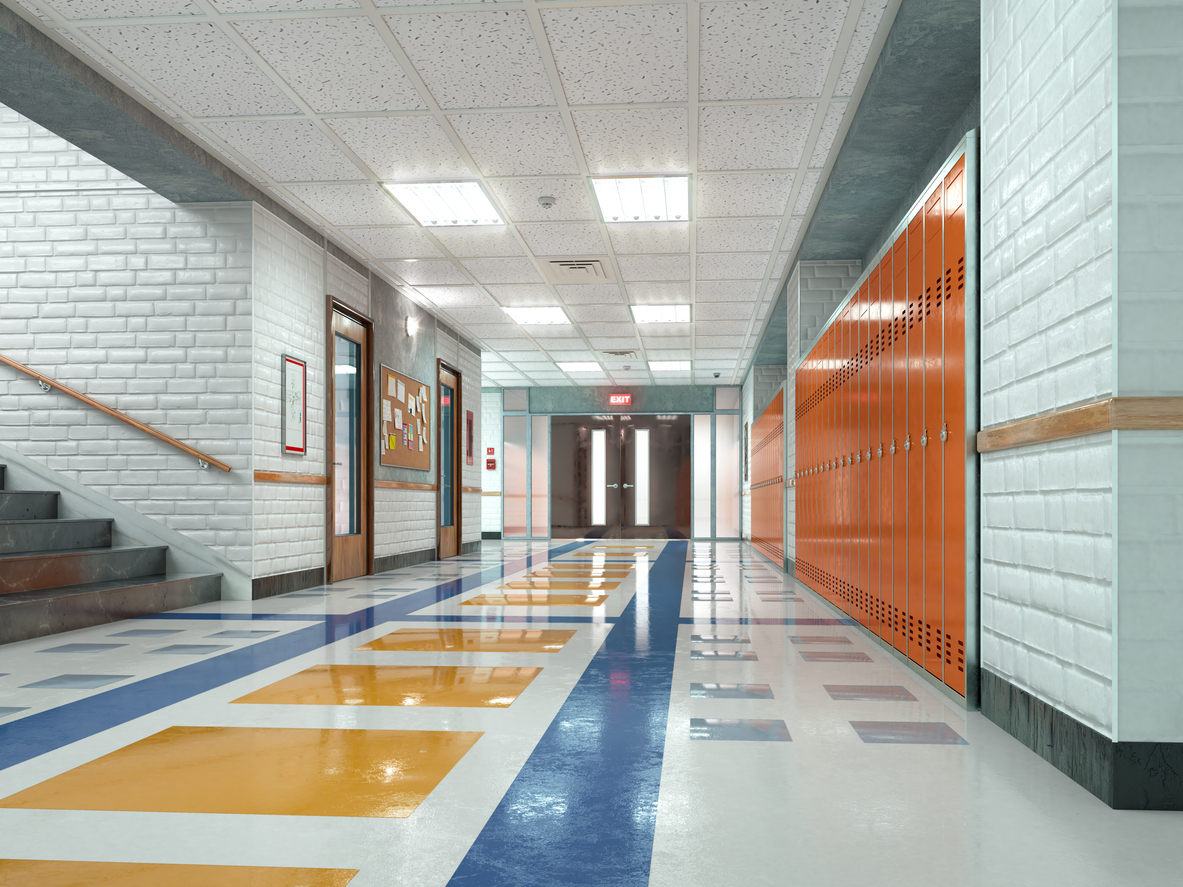
New Vision Schools: Out with the Old
About These Stories
YC runs intensive nonfiction writing programs for teens in New York City, where they’re mentored by a professional editor to write personal stories about their lives and about issues that affect young people. Their stories are then published and read by thousands of teens, educators, policymakers, and other adults who work with and for young people.