
Names have been changed.
I was talking on the phone with my friend Julian recently when he gave me a fright.
“Do you think I’m going to hell because I’m gay?” he asked.
We both go to Christian churches that consider homosexuality to be a sin. Right away I pictured him in hell surrounded by fire with other souls getting tortured day in and day out.
I tried to push the image away. I didn’t want to think about my friend going to hell. Or dying, for that matter.
“I don’t know. You should ask your pastor about that one, not me. I don’t know what to tell you. Can we talk about something else?”
“Did I scare you?”
“Hell, yeah, you scared me.”
We started talking about something else, much to my relief. I felt really uncomfortable with his question because I didn’t know the answer.
My church says that being gay is a sin, so if I follow my religion, yes, Julian is going to hell. But I know he isn’t a bad person, and I don’t think people choose to be gay.
It’s like a tug-of-war: My church pulling me by one arm, and my gay friend pulling me by the other. I feel like my arms are about to rip off.
God and My Church Are There for Me
My religion is important to me, because it is what holds me together. It makes me who I am. I get most of my values from the church.
I’ve been a churchgoing girl my whole life. When I was little, I went to Pentecostal services with my grandmother. Then, eight years ago, our pastor started her own church, which began as Baptist but now isn’t connected to any denomination.
So far in my life, what the church tells me to do and not to do has felt right to me-I don’t drink, I don’t smoke, I don’t lie, and I try to treat other people with respect.
I believe in God. No matter what kind of problems I have, I can put them in His hands. It’s a relief to me. Even though I can’t see Him physically, I know He’s still there to help me.
And when people at church know I have a problem, they pray for me. I see my church as part of my family. We all know each other. There are about 60 of us, and every week we talk and laugh after services. We’ve taken trips together, and when my grandmother was in the hospital, my pastor visited her every day.
Pastor Said,’Being Gay Is a Sin’
The last time my pastor spoke about homosexuality in a sermon, she said, “Being gay is a sin, and should be acknowledged as such.”
I’m 16 now, and until two years ago I agreed with her, just as I agreed with everything else my church taught me. I thought gay people were immoral.
My mom has lots of gay friends. (I live with my grandmother, not with my mother. My mom lives in the city and I see her often. She doesn’t go to church, but she does believe in God.)
Until I was 13, I didn’t know her friends were gay, and when I found out, I felt awkward having them around me. They’d come by the house once or twice a month and introduce themselves, but I didn’t want anything to do with them.
Still, I had to at least try to be polite and act like I cared about what they had to say. My mom tried to talk to me about it. “I saw how you were acting around them,” she told me. “don’t think I didn’t notice.” But I avoided the issue. I just didn’t want to deal with it.
Straight Talk With Mom’s Gay Friend
One day when I was 14, one of my mom’s friends and I were in the living room, and he started talking to me about being gay and the kinds of things he has to put up with.
“We live in the type of world that, in a way, refuses to accept gay people. It can be hard living in a society where the people in it look at you as being gay instead of just being you.”
Right away I felt guilty. Maybe I was acting the same way toward him and I didn’t even realize it.
We kept talking, and he started giving me advice about college and careers. He was a good listener, the kind of laid-back person who makes jokes to make you feel comfortable. I realized that just because he likes men, it doesn’t mean he’s a bad person. Still, I thought that being gay was wrong.
Teasing Each Other Over Grades
At the time, I didn’t know Julian was gay and I don’t think he did, either. When Julian first started going to my middle school, a lot of people thought that he was gay. His voice sounds a little bit like a girl’s, and people thought he wore tight clothes. But he always said no, he wasn’t gay, and after a while, people just dropped the subject.
I’d been friends with Julian since the middle of 7th grade. We weren’t best friends, but we hung out in and out of school and talked to each other on the phone three or four times a week.
We teased each other all the time, like about grades. When I was slipping, he’d jokingly threaten to beat me up if I didn’t bring my grades back up. I’d do the same to him. What I like most about Julian is that he isn’t serious about everything. He knows how to have fun.
‘I Have to Tell You Something’
About a year after my conversation with my mom’s friend, I saw Julian’s number on my caller ID. I picked up, expecting him to greet me with a joke as usual.
“I have to tell you something about me,” he said. As soon as he said that I got a little scared. We’d been friends for two years at this point.
“What?”
“Promise me you won’t go crazy.”
“Promise! What, are you gay?”
Silence. Then he said, “Yeeaaahh.”
I stayed silent for about two minutes. I didn’t know what to say. “Have you lost ya mind?” I thought. “Gay!? What you know about being gay? You’re 15. What the hell are you thinkin’, boy?”
Those were just some of the things I wanted to say to him. But I didn’t say any of it because I knew it had taken a lot for him to call me. I didn’t want to be hard on him. Instead, I told him I was surprised, even though part of me wasn’t.
Still, I kept thinking over and over, “Oh my God, I have a gay friend now.” I thought that maybe being gay was just a phase that would pass in a couple of weeks or even days.
As I started to recover, I knew I wanted to be a friend to Julian, no matter what his sexuality was. I thought about what my mom’s friend had told me about how gays are treated. To me, when you choose to do something wrong, that is a sin. But if you don’t have a choice, I’m not so sure.
As time passed, it became obvious that Julian wasn’t going through a phase. He really is attracted to men, and I don’t think he decided to be that way. Neither did two other friends of mine who have also told me they’re gay.
My friendship with all three of them hasn’t changed a bit. Actually, it’s kind of fun to tell a boy that you think another boy is cute and have him agree with you. But I also worry that Julian and my other friends will go to hell.
Now I’m confused as heck. I don’t think that being gay is completely right, but I don’t think that it’s completely wrong, either. Yet, according to my church, I can’t stay on both sides of the question.
If I Choose, I Lose
If I were to choose my church, then I’d go back to thinking that homosexuality is completely wrong. That would mean telling my friends that they need to change their lives around or else they’re risking going to hell.
Of course, they wouldn’t change, and then I’d have to stop hanging out with them. I don’t think I want to do that. I don’t want to lose friends I’ve known for so long just because of my religion.
But if I were to decide that homosexuality is morally acceptable, then I’d wonder what other church teaching I disagree with. I’d start to question my church altogether. And the more I’d question my religion, the further I’d stray from it. I don’t want to do that, because God and the people in my church have given me so much support.
I’m not ready to make my choice. For now, I’m going to keep going to church every week, and I’m going to keep hanging out with my friends. I hate being stuck in the middle. I hate worrying that my friends are going to hell. I hate feeling like a hypocrite, but I want to make sure I make the right decision.
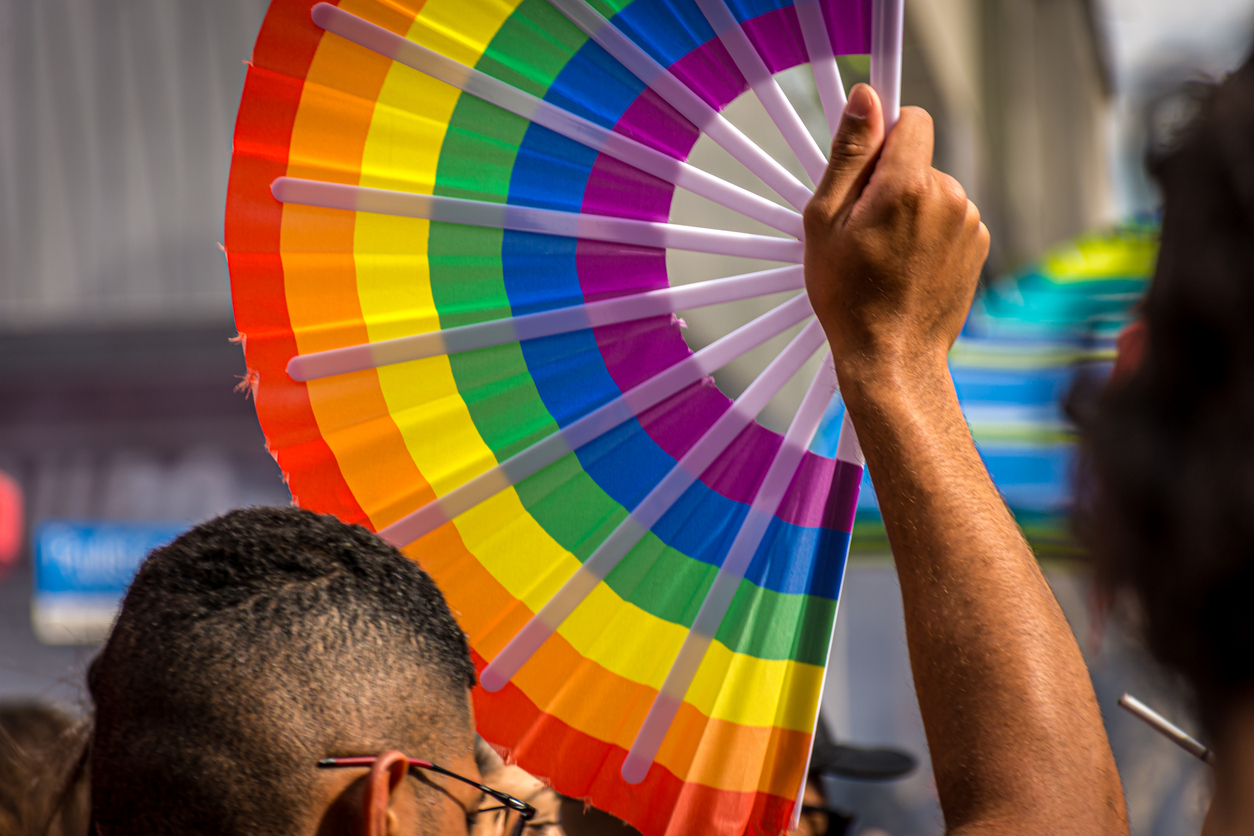
My Friend or My Church-How Do I Choose?
About These Stories
YC runs intensive nonfiction writing programs for teens in New York City, where they’re mentored by a professional editor to write personal stories about their lives and about issues that affect young people. Their stories are then published and read by thousands of teens, educators, policymakers, and other adults who work with and for young people.