
If you saw my friend Amanda at the Puerto Rican Day parade, you’d notice her. She’d be loud, wearing a rainbow dress (she loves to represent her color), pushing people out of the way, saying, “Move, you black b-tch,” with an attitude. Her girl Crystal would be trying to get her freak on with her in the street. (Crystal’s a freak.) Amanda would be yelling, “What’s good, Hattie?”
Amanda has a short temper and is always ready to pop off in a second. When I’m around her I act kind of wild. We’ll be on the train just cursing, singing, rapping and yelling like we 7:30 (a.k.a. nutty). But when we’re alone, we can be very serious.
Amanda might be telling me that she wants to run away because foster care gives her the same problems she tried to escape. Other times we’ll reminisce about when tried to teach me how to dance, or when one of my worst fears was realized-when the nuthouse came to get me unexpectedly.
My First Friend
Amanda and I met when I first came into care and she was the first friend I ever made. When I’m around her I feel comfortable and safe, like no one can hurt me. I also feel like I have someone to depend on, somebody who will be strong when I’m weak.
Before I came into care at age 13, I had become distant from everybody. I never really had friends as a kid, but by the time I got to middle school people never heard my voice. I walked with my head down to hide because I thought strangers were judging me. My paranoia made me so nervous that my hands and legs would shake.
I think I was scared mostly because my mom has schizophrenia and thinks people are trying to drive her crazy and are looking at her strange. Her ideas rubbed off on me.
I Was a Loner
My family also said a lot of hurtful things to me, like calling me a “fat beast” and “fag” (even though I’m not gay). That really hurt, and I felt powerless to object to what my parents said. I believed the hurtful things my family said because I heard them over and over again.
I was teased at school, too. One teacher gave me some positive comments, but many teachers and other kids called me “retarded.” I believed them because my mother used heroin and everything else in the book while she was pregnant with me.
So instead of playing with friends, most of the time I was home playing the PlayStation. I got used to not having friends, but I didn’t feel good about it.
When I came into my first group home, I was diagnosed as having “social phobia.” That means I’m unusually fearful around people.
At that time, I was feeling particularly shy and nervous because I had no clue what foster care was. All I knew was I was 13, scared, lonely, with no family to save me. Separated from my parents I felt all alone, and without my brother I had nobody to talk to. I cried day and night.
The first week I didn’t eat or come out of my room. I felt scared to meet the other girls. I thought I wouldn’t fit in. Since I’d never had friends, it seemed like me and people weren’t compatible.
Locked in My Room
Locked in my room I thought about my life. The mirror seemed to reflect back to me how unhappy I was. My attitude was always, “If you don’t talk to me then I’m not talking to you.” But I knew I needed to start opening up.
Then one day a girl named Krystal came to my room and told me to come down to the recreation room so we could talk. I don’t know why I went downstairs. Maybe it was because she looked like a nice person with a warm smile, or maybe I was just tired of being lonely.
Krystal told me she was just like me when she was little and that she felt my pain. She said, “I’ve been raped and I have more problems than you, but I’m still happy and you should be too.”
Opening Up
I could see the pain in her eyes even before she started crying. It meant a lot to me that she even started crying, because that’s something a psychiatrist would never do. That helped me start talking to her. Besides, it was difficult to hold my feelings in for all those years. It felt good opening up, like a shadow cast over me was released and I felt refreshed.
After that I realized that my group home was to my advantage because the girls had had similar experiences to me. Finally I had people to talk to who didn’t treat me like I was weird or crazy. I started being more friendly and listening to other people’s problems, and developed a more positive outlook on life.
I found that I liked listening to friends’ problems. Hearing somebody else’s life story satisfies my taste buds. Their life becomes a little escape from my own reality, which is sour.
Not long after I went into care, Amanda became my new roommate. To become her friend, I had to pass a series of tests. If she tells you something and you snitch or don’t stand by her side, you fail. I passed with flying colors.
Over time I told her my life story and she told me hers. It touched my heart that she trusted me when she usually doesn’t trust anybody. We cried together and everything. It felt good to get close to her. I finally had somebody other than my brother to confide in.
Amanda and I also gave each other solutions to our problems. If staff got on her nerves, I’d tell her, “Just ignore them.” She taught me how to stick up for myself and not to flip out on my mother when I’m angry. From her, I learned that I’m intelligent and beautiful, but confused.
The group home staff even started calling her my mother, because she’d teach me cooking, cleaning, and how to maintain myself when I was stressed out. In school, she’d sometimes walk me to class to make sure I didn’t cut. Whenever I’m with Amanda I feel OK about being around other people, too, because I trust her so much.
Working Toward Confidence
Having Amanda as a friend gives me confidence, but she can’t make all my fears just go away. My social phobia still affects my everyday life. When there’s more than six people in my group home’s living room I leave. I rarely make eye contact. On the train I sometimes shake or feel like I’m being watched. In school I sit in the back and try to blend in the surroundings so nobody says anything to me.
I want to be a woman with self-confidence, diligence and integrity. As an adult, I want to be successful, not trapped by poverty. That’s why I forced myself to go back to school and earn an 85 average, and to come downtown to write for Represent. My will power helped me change a little bit.
But I know I need help because I still feel uncomfortable around most people. I think in order to heal I need to let all my feelings out, but I don’t know many people that I can depend on or feel comfortable talking to. Even though deep inside I hardly trust people, I’d like to see a psychiatrist because I don’t want to have social phobia forever.
My Friend’s Support Helps
For now I have Amanda’s support. It’s easy to confide in her, because if I start crying about something, she’s usually been through it too. One day I told her how I feel about my mother. I told Amanda that my mom is a crackhead, and I had to take care of her
emotionally.
In return, Amanda told me that her mother was a crackhead when she was alive and would do crack in the corner while Amanda fed her sisters any food she could get her hands on. After that, she and I just cried, feeling each other’s pain. It felt good to let it out.
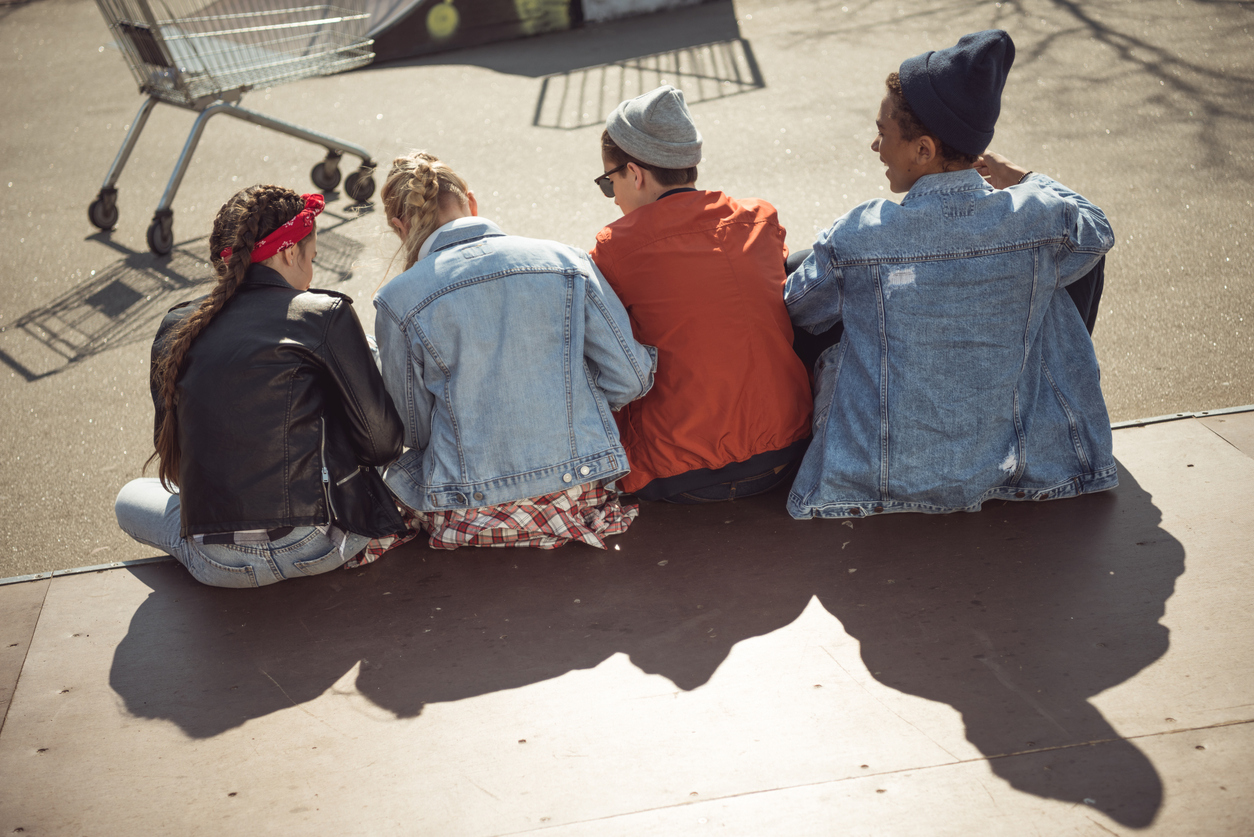
My First Friend
I avoided people, then I met Amanda
About These Stories
YC runs intensive nonfiction writing programs for teens in New York City, where they’re mentored by a professional editor to write personal stories about their lives and about issues that affect young people. Their stories are then published and read by thousands of teens, educators, policymakers, and other adults who work with and for young people.