
I used to think my parents didn’t love me because they seemed to value money more than they valued me. Maybe I was wrong, but when I was little, all I noticed was that they weren’t around.
When I was young, my parents worked up to 14 hours a day, so my grandparents raised me until I was 7. They worked so hard because we were poor. The Chinatown apartment I shared with my parents, brother and grandparents was extremely small, with just two rooms and a kitchen.
The bathtub was in the kitchen and the bathroom was in the hallway outside the apartment. My grandpa taught me to kill the roaches that were everywhere by pouring hot water on them.
The refrigerator was never cold enough, the stove was covered with grease and the kitchen wall was so spattered with cooking oil that my parents had taped calendar paper over it. My grandparents slept in one bedroom, which doubled as the living room, and my parents, brother and I slept in the other.
Home Alone
At the time, it didn’t bother me that we had so little, or that my parents were always at work (my father was a chef in a Chinese restaurant and my mother made clothes in a factory). My grandparents gave me everything to keep me satisfied. They took my brother and me to the park, school and McDonald’s. They bought us picture books and crayons, washed our hair and even potty-trained us.
But when I was 7, my parents had saved enough money to move. My parents, brother and I left my grandparents’ apartment in Chinatown and moved to a big three-bedroom house in Brooklyn. It was nice at first because my parents were able to buy a new stove, TV and new furniture.
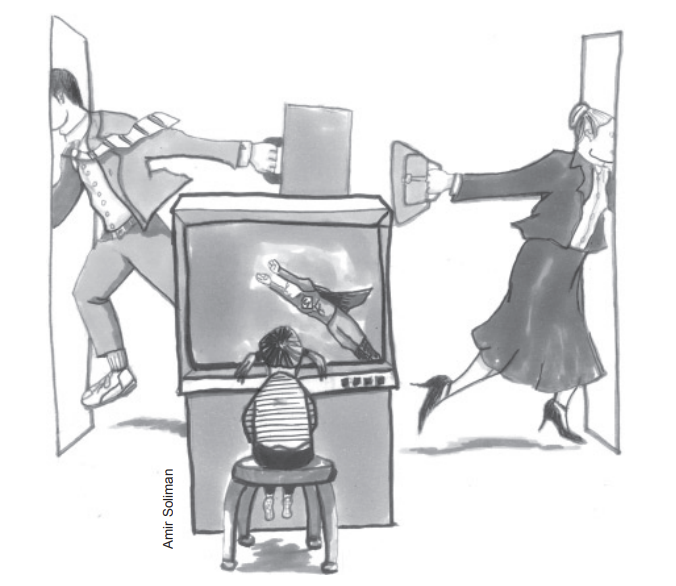
But without my grandparents around, I began to notice the long hours my parents worked to pay rent and to buy the furniture. They had only one day off a week, and they usually spent it paying bills or shopping for things they needed. They didn’t talk to or play with my brother and me.
When my mom was around, her role seemed to be to keep me out of trouble and make sure I did my homework. My relationship with my father was no better. He just gave us money and bought us food. It seemed like money was the only form of communication in that house.
I Needed Love, Not Money
I tried to come up with things to do on my own. I played with my Barbies, watched TV and built tents in the living room. I would’ve given up the big house and TV and gone back to live in Chinatown if I could have my parents around. I was lonely. My parents had given me money, clothes and food. But these were poor substitutes for love and attention.
Last summer, when I was 16, I finally realized just why they were so focused on money. We took a trip to China and went to visit their childhood homes. That’s when my feelings about them began to change.
I’d always known my parents had a rough childhood. They’d told me things like, “If there was food on the table, then it was a good day.” But their constant reminders had never affected me. I couldn’t imagine their childhood until I actually saw where they grew up.
When we got to the farm where my mom grew up, in a small town near the city of Guangzhou in southeastern China, I saw that the ground was nothing but dry soil. It was like a desert with leaves, trees, and roads of endlessness ahead.
There were old gray brick houses and roosters making cock-a-do-da-do noises from wooden cages. The heat was unbearable and made me itch. I kept swatting flies off my skin, and everywhere there was the sound of insects. I wanted to get away fast. I wished I’d never come.
Then I entered my mom’s old house. It had two bedrooms, a kitchen in the living room and a second floor dedicated to praying. The beds were made of flat wooden planks. There were no couches, just a row of chairs.
Roosters in the Living Room
My mom said they’d leave the door open every day because they lived in a deserted area, and dogs and roosters would come in and walk around the living room.
The stove was a box of gray bricks and there were logs under two huge holes where they’d build a fire and put a pot over it to cook. There were no machines to make things like ladders, pots or chairs, so they made them by hand instead.
They had to kill animals and grow vegetables to eat. It was like living in the 17th century. I was amazed. I thought, “This is what poverty looks like.”
My mom told me how in the mornings she’d go to school and learn how to read and write Chinese characters. When she got home, she’d scrub the kitchen walls or help her mother make dinner, peeling off chicken feathers and putting her hand inside the chicken to remove the insides.
Or she’d wash her clothes on the porch, leaning over a bucket of water and a bar of soap on the floor. Afterward she’d make a fire and cook for my grandmother. There was no TV, CD player or computer so her days were spent doing things to get by. That was my mother’s childhood.
It was worse than I’d expected. I wanted to look away because I felt guilty about my childhood compared to my mother’s. I hoped my mother was too busy catching up with her relatives and friends to see my reaction. We visited my dad’s house nearby too, and it was even smaller than my mother’s.
Giving Me a Better Life
I thought about my own home. I had my own room with my own TV, computer and a comfy bed. I had lots of clothes to wear. I had an education. Suddenly I realized why they’d risked everything and left their relatives behind to come to a new country where they didn’t speak the language, and get jobs working 14 hours a day. They did it to give me all the things they never had. Maybe they did love and care about me after all.
There’ve been times when I’ve dreamed of one day getting away from my parents and living independently. I’ve imagined not inviting them to my wedding or sending them money when I grow up, thinking that then they’d realize how much they hurt me. I wanted to use money against them since it seemed to be more important to them than love.
But now I see that the money they worked hard for six days a week wasn’t for them, but for me. I’m grateful for the long hours they worked and the money they saved to give me a better life. I hope I can pay them back when I get a job. I hope one day I can buy them something big like a car or a new house.
A Few Hours of Closeness
Still, I think in trying so hard to save me from the life she had as a child, my mom overlooked something. She told me how hard she worked growing up. But she also said how she worked alongside her mother and had long conversations with her.
I think that’s how they developed the bond they have now. Today, my mother talks to her mother about almost everything. They joke with each other and talk for hours about work, friends and movies. My father has a good relationship with his parents too. They read the newspaper together and talk about the news.
I hardly talk to my parents at all, and I can’t imagine laughing with them the way my mom does with her mom. Sometimes I wish I could trade in some of the things she gave me as a child for a few of the hours of closeness she and her own mother had.
One Thing Missing
I don’t think my mother realizes how important love and affection is to me. I think she and my dad thought that by working and buying me things, they were showing their love for me.
My parents grew up in poverty, and they worked hard so I wouldn’t experience the same thing. They did a good job-I grew up in comfort and didn’t struggle to survive. I had so many things. The only thing missing was my parents.
Money Can’t Buy Love
My Parents Gave Me Everything-Except Themselves
About These Stories
YC runs intensive nonfiction writing programs for teens in New York City, where they’re mentored by a professional editor to write personal stories about their lives and about issues that affect young people. Their stories are then published and read by thousands of teens, educators, policymakers, and other adults who work with and for young people.