
We were in Guatemala, our usual vacation spot, in the summer of 2005. We had visited our relatives and seen many ancient ruins, beautiful lakes and mountains. It was so much fun I asked my mom if we could stay longer.
“No, your father only has three weeks’ vacation,” she said.
“But we’ve still got two more weeks before school. Can we at least stay without him?” I begged. “Dad won’t mind paying for our flights to be changed.”
My mother laughed. “Go try and convince him,” she said.
I easily persuaded my father to let my sister and me stay an extra two weeks with our family. Had I known this was going to be our last vacation, I would have asked to stay forever.
A Good Provider
When I was younger I thought of my father as a very good person. He did everything he could to support my mom, sister and me. He helped all his friends and family when they asked him for it. He worked long hours as a limousine driver. I didn’t see him much and we never really got a chance to talk because he was often asleep when I left for school and I was asleep when he came home from work. But I didn’t mind because I knew he was working all those hours to provide for us.
My mother told me the reason he came home so late was because after work he would go out and drink. Then he would come home and not be able to sleep because he was throwing up. My mother hated to see him drink, but she told me she thought there were many reasons why he did it, like never getting over the death of his mother, and being treated unfairly as a child.
Drunk on the Couch
It didn’t really bother me because I rarely saw him drink, and his alcohol use never seemed to disrupt his work or the family. At least not until the beginning of 2006, when I started to see changes in him.
My father began to drink more often and for the first time I began to witness it. I would come home from school to find him sitting on the couch watching TV, drinking a beer or already drunk. At first I thought he was just working an earlier shift, until it became a frequent habit. My father had always worked every day and only took his vacation in the summer, so why was he home more now?
I began to worry about money, as I was seeing less of it, but it wasn’t something I spoke to him about. We hardly ever talked, and when we did, I felt he always tried to highlight the negative stuff I did and didn’t acknowledge the good stuff. So I kept conversation to a minimum.
Dad Moves Out
One day my parents had a huge fight. My mother said she was tired of putting up with him and she asked him to leave. So my father did just that. That night he told us he was going to live in his friend’s basement and he would give us our money weekly. I felt relieved that I wouldn’t have to come home and see him drunk anymore.
Later that night my mother told me the truth. My father was sick. he’d been diabetic since his youth, but because of his alcohol consumption he’d developed other illnesses associated with diabetes. His main problem was his sight. He was no longer able to see clearly from his right eye, even with his glasses, which is why he hadn’t been working as much. My mom had kicked him out because he kept drinking and he wasn’t contributing much toward the bills.
My father stayed away for about three months before my mother allowed him to come back. He could no longer work because with his bad eye he was now a threat on the road. My mom didn’t have a job and we were just living off savings. It was only a couple of months before my parents had another huge argument and my father left once again.
Eventually, his problem spread to the other eye and he was forced to sell his car for money. He began losing weight and every few weeks when I dropped off mail for him, he looked worse. But he refused to move back in with us.
At first, I felt sorry for him. But then I found out that alcohol is a depressant and its users often turn to it because they want to get away from other problems. Even though I knew that alcoholism is a disease, I still felt the only one to blame was him. I was angry that he didn’t seem to think of the trickling effect his alcoholism would have on his family.
Sometimes I wanted to express my feelings toward my father, but deep down I feared it would turn into violence, so I didn’t. I thought to myself, “How could he just drink this whole time, knowing that it would be a time bomb that would eventually explode?”
What really got me mad was that nobody seemed to be doing anything about the situation. We had no money. Every day I would hear my mother talk about another bill that had come up. Meanwhile, my sister acted like nothing was wrong and seemed to be in denial about the fact that my father was no longer going to provide for us.
Slamming Doors
One day I started thinking about it and when my sister got home from school, she found me slamming doors. She came into the living room and asked me, “What’s wrong?”
“Your father! Who does he think he is? Why would he do this to us?” I said.
“I don’t know, but he still gotta take care of us,” she said.
Her words of ignorance infuriated me more. “You must not be getting it. He is never going to be the same, never!” I yelled.
I punched the wall with all my strength. My adrenaline must have been high because I didn’t feel the pain, or the blood coming from my right hand a couple of seconds later. My mother heard the noise and quickly came into the room. “What happened?” she asked.
“Nothing, I just can’t stand my father!” I replied.
“Stop being stupid and come to the kitchen so I can clean it,” my mother said in Spanish.
I Needed a Job
While cleaning my cut, my mother said, “I know you’re mad, but if you should be mad at anyone, it’s me. I chose him to be your father and couldn’t see that he had a problem.”
“No Ma, it’s not your fault. It’s his fault and his only. How could he call himself a man? What kind of a man has kids and just gives up? Because that’s what he did with us,” I said, walking away.
I was mad for a week until I realized I could not afford to sit around blaming my father, because it would get us nowhere. What I needed to do was get a job.
A Prisoner of My Age
The day after my 16th birthday, I began looking for work after school. I dressed in an oxford shirt, slacks and shoes to show my seriousness and I went into store after store, asking for a job. But no one seemed interested after I told them my age.
That made me even more mad at my father. If it weren’t for him I wouldn’t be in this position in the first place. I was legally old enough to have a job, but too young to spark interest from hiring managers. I was constantly stressed because all I saw were bills and my mother’s worry. It was one of the worst feelings in the world, knowing what I had to do but not being able to because of a number. I felt like a prisoner of my age.
My father moved back in with us last summer. He had nowhere else to go and needed help to do daily tasks. So now we have one more person taking up space in the house. He can no longer drink because he takes medication that can’t be mixed with alcohol. We still don’t really communicate so I’m not sure how he feels.
Sometimes I can see his frustration when he can’t do something on his own. But I can’t tell what’s making him more upset: that he can’t work and provide for us, or that he can’t drink anymore.
It’s not easy dealing with a loss like this. My sense of security and being taken care of is gone. I can no longer look at the man I once called Daddy, and I don’t think I can ever forgive him. Maybe when I’m an adult I’ll understand his logic, but right now I can’t.
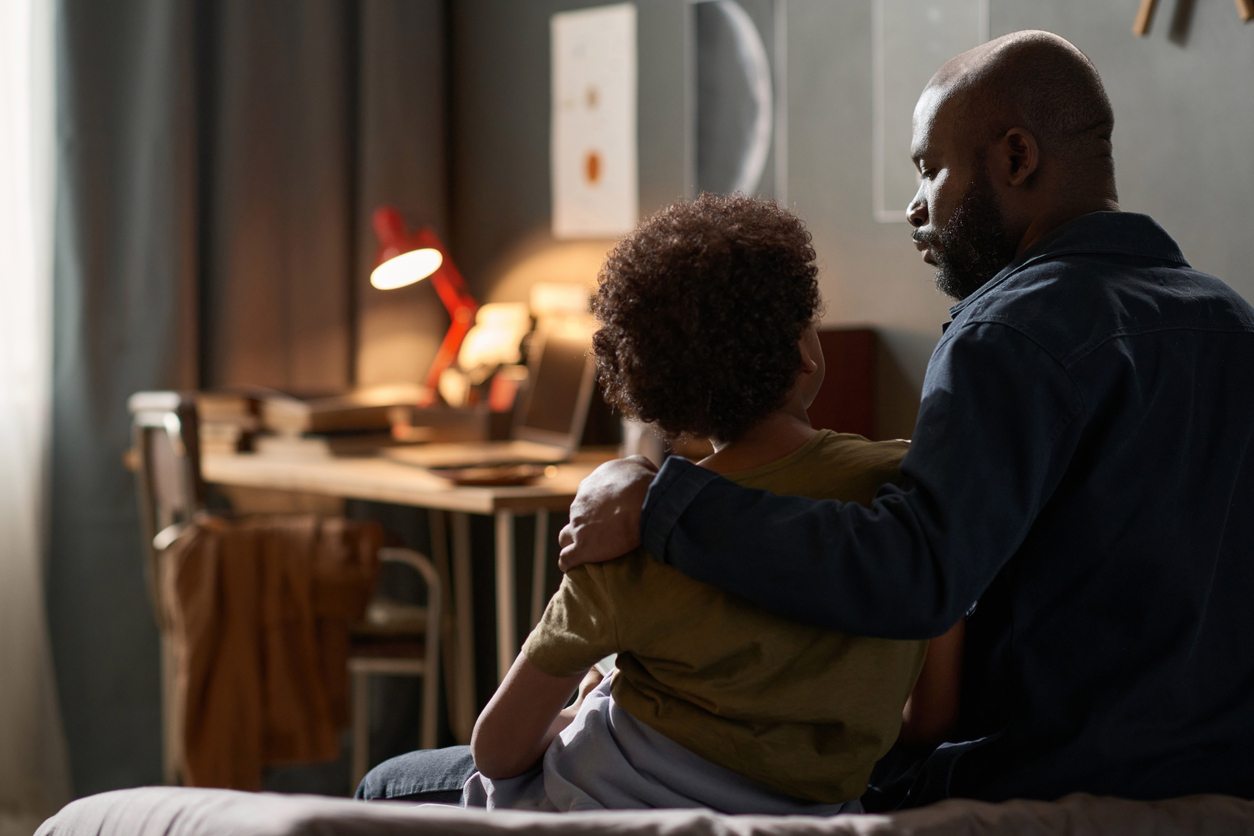
Man of the House
My father's addiction left us struggling, and I feel powerless to help
About These Stories
YC runs intensive nonfiction writing programs for teens in New York City, where they’re mentored by a professional editor to write personal stories about their lives and about issues that affect young people. Their stories are then published and read by thousands of teens, educators, policymakers, and other adults who work with and for young people.