
I was born a Jew and then I wasn’t a Jew and now I am (I think).
Ever since I was a little kid, my parents have been religious. When she was younger, my mom, a Reform Jew, wanted to be a rabbi, but she was told that women couldn’t be rabbis (although later Reform Jews changed that). My father’s family was atheist, but when he had my brother and me, fatherhood moved him to take up Judaism and a belief in God.
My Father’s Late Bar Mitzvah
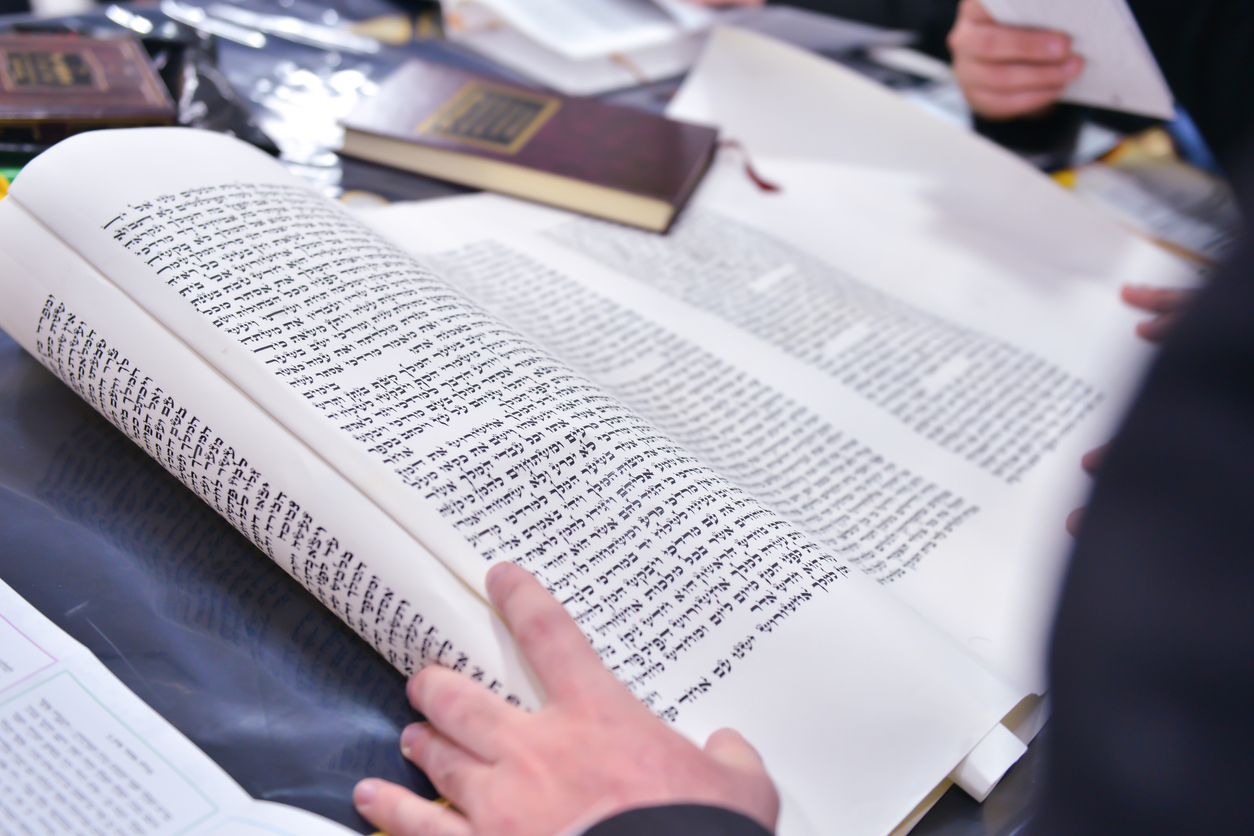
In Judaism, when a boy is 13, he has a religious ceremony, called a bar mitzvah, to mark his passage to manhood. In the ceremony, he has to read from the Torah in Hebrew and usually write a speech to read to the congregation in temple. A party usually accompanies the bar mitzvah, which can be as elaborate as a wedding.
When my older brother was 12, preparing to get bar mitzvahed, my father decided that he wanted to get bar mitzvahed with my brother.
During the long process of preparation for my brother’s and father’s bar mitzvahs, our family befriended a Hebrew teacher who I’ll call Miriam.
Cool Miriam
Miriam was one tough Israeli; she was a bazooka woman and tank driver in the Israeli Army. Miriam was very culturally Ashkenazi (Eastern and Central European Jews who speak Yiddish, eat bagels and were killed by the Nazis).
She didn’t seem religious, in the sense that she told Jewish jokes more than she ever talked about God. My family and I thought she was so cool.
Through our friendship with Miriam and the arduous preparation for my father and brother’s bar mitzvah and then mine, our family became more religiously and culturally Jewish. I don’t think I ever went to temple until I was 6, but by the time I was preparing for my bar mitzvah, we were going every week.
Preparing for My Own Bar Mitzvah
My father and brother both spoke of their bar mitzvah experience on the same level as marriage or having children, and I wanted to go through the spiritual experience myself.
Since the age of 9, I’d been going to Hebrew school to prepare for my bar mitzvah. But I hated Hebrew school, especially because I had trouble learning Hebrew in a class setting.
So when I was 12, I made a deal with my synagogue’s cantor (the person who leads the congregation in singing the prayers and usually prepares kids for their bar mitzvahs) we agreed that I could stop going to Hebrew school and learn the Hebrew I needed for my bar mitzvah through lessons with Miriam.
My parents decided that I was going to get bar mitzvahed in Israel; it would be an occasion for the entire family to go to the land of the Jews.
Questioning My Beliefs
But, after several months of preparation for my bar mitzvah, I came to a realization. A thought that had been in the back of my mind for a long time just came forward one day: I just happened to be born Jewish. If I was born into another family, most likely I wouldn’t be Jewish but some other religion.
I’d probably automatically believe in whatever religion I was told to believe in. If I was born Christian, I’d believe in Jesus as the son of God, like I did briefly when I was 6, and I was told about him by my friend in day camp.
I thought about how we just believe in what we’re told without questioning it. I thought about how the belief in God is a feeling, not based on facts or evidence. I came to the conclusion that God does not exist.
No Bar Mitzvah for Me
I’d known for years that my uncle, who’s a major influence in my life, didn’t believe in God. Around the time of my bar mitzvah preparation, he talked to me about his belief that organized religion is basically b.s. and dumb. I respected his belief but didn’t understand why he felt this way.
Looking back now, I realize that his beliefs probably influenced me and had a lot to do with my conclusion that God doesn’t exist.
I wrestled with my thoughts, trying to find meaning in a bar mitzvah, but in the end decided it couldn’t be meaningful for me since I didn’t believe in God. So several weeks after my realization, I told my parents I didn’t want to be bar mitzvahed.
It was hard to tell them knowing how much it meant to them. But being bar mitzvahed had to be about me and I couldn’t lie to them about my beliefs. Many people who don’t believe in Judaism or God get bar mitzvahed just for the money that they get as presents from friends and relatives, which I think is wrong.
Even though they told me it was OK, I know it disappointed my parents a good deal that I didn’t want to get bar mitzvahed. I felt it in their tone of voice and saw it in their faces. But they made sure I knew that they still loved and accepted me for who I am; after all, my father did come from an atheist family whom he loves.
I felt disappointed too, when I watched my friends get bar and bat mitzvahed (girls have bat mitzvahs), but I didn’t feel as bad as I would’ve if I’d gone through a meaningless process for me.
I stopped going to temple and gradually, throughout the years, my parents stopped going too, except on the High Holidays.
We don’t see Miriam anymore, either. I’m not sure why but I’ve often felt it had something to do with my not being bar mitzvahed.
I Thought Religion Was Stupid
Over the next three years I became a hard-core atheist, denouncing all religion as stupid cultist behavior. I felt no connection to any belief structure, except a belief in Marxism, on which I did a semester-long project in 9th grade.
What I liked about Marxism was its belief in a system without social classes where wealth is divided more evenly than in capitalism.
I also agreed with Karl Marx’s comment that “religion is the opiate of the masses,” meaning that religion keeps people from thinking critically about the inequality of society, so they don’t get angry enough to try to change these inequalities. That worked for me, since what I cared about most was injustice.
Visiting the Anne Frank Museum
But the summer of 2000, when I was 16, I had a life-changing experience which made me rethink my connection to Judaism.
After spending the summer in Africa, my brother and I spent four days in Amsterdam. We were there to have fun and go to bars and “coffee shops” (which is a misleading reference because they serve crappy coffee, but do sell potent pot and hash).
We woke up early one day to go to the Anne Frank museum. I wanted to go because I’d read Anne Frank’s diary, and the museum is the building where she and her family, who were Jewish, hid from the Nazis for 25 months during World War II. The Nazis eventually found them and put them in concentration camps, where only Anne Frank’s father survived.
(I recommend reading the diary, regardless of your religion; it shows a normal young girl-Anne was 13 when she started it-who has to cope with a drastic life of fear and boredom.)
Wasted in Amsterdam
I was moved by my visit to the museum, but its full impact didn’t hit me until later. My brother wanted to go to the Heineken brewery, and because we had such a limited amount of time, we worked it out that we’d go after our visit to the Anne Frank museum.
So after we went to the museum, we went to the brewery and got drunk. Then we went to a bar with people we met at the brewery, and got even more wasted. Then we went to a “coffee shop,” where we had even more to drink, and got high smoking hash and pot (which I no longer do).
Somehow, I got into a big fight with my brother that day, and stormed off. I ended up wandering aimlessly around Amsterdam for hours, out of my mind, thinking about the Nazis and the Holocaust and that I was in the middle of what was Nazi Europe.
An Urge to Go to Auschwitz
Something happened in my mind, like a calling, and I decided that I was going to visit Auschwitz, a concentration camp in Poland where over a million Jews, plus additional Poles, Soviets, Roma (Gypsies) and homosexuals were gassed by the Nazis.
The only money I had was pocket change, so I looked for my brother and found him in a Burger King near where I last saw him. I begged and begged for a few dollars, enough to get me to Poland, but he refused my plea.
I bought a phone card with the little money I had and called my mom across the Atlantic. She was upset that I wasn’t getting along with my brother, and also refused my request.
My mom told me I wasn’t allowed to travel alone, even though I felt like I’d already proven myself as an independent traveler after being with just my brother that summer. A few days later, I returned to New York with my brother, as planned.
Going to Amsterdam and the Anne Frank museum blew my mind. It made the Holocaust real to me, and I realized how recent it was.
Being in the actual building made it possible to imagine the extraordinary boredom Anne Frank went through, where she couldn’t even peek out the windows for fear of being spotted. I had nightmares about the Holocaust after my visit. I still do.
After visiting the museum, I felt a new-found connection to my heritage. It shocked me to think that I would’ve been killed by the Nazis just because of my ethnicity. Until that moment I thought that what my grandma said-“You’re Jewish because Hitler would’ve killed you”-was stupid, but now it made so much sense.
Feeling Holocaust Fears
I realized my family comes from a tribe, the Ashkenazis, that has a unique history and culture. There’s no separating that history or, for that matter, the history of the Jews, from the Holocaust, where 6 million Jews were murdered.
When I told my mom about how I was feeling, she explained to me something called the Jewish consciousness, which is the fear and recurring nightmares of the Holocaust that some Jews have, and with such intensity we feel as if we’ve experienced it.
The horror of having your people exterminated like cockroaches leaves psychological damage that’s passed on from generation to generation. Before the Holocaust, 9 million Jews lived in Europe, but by 1945, there were only 3 million left alive.
Using History to Help Others
I now feel a connection to Judaism. But through that, I feel connected to other cultures as well.
I feel it’s important to learn and imagine what the Holocaust felt like, even if you’re not a Jew, and to use that knowledge to sympathize with the Tutsi in Rwanda, the Albanians of Kosovo, or the Shiites and Kurds of Iraq, who have all experienced genocide recently.
I feel that one of the great teachings of modern day Judaism is to never again allow genocide to occur. That teaching is one of the major influences in my life.
Sadly, I feel that many Jews have not used our shared experience for the better. I think that too many Jews support the Israeli government, which has been persecuting the Palestinians, and I believe this is wrong.
Now I’m an Agnostic Jew
My cultural connection to Judaism has made me reconsider how I feel about religion. When I think about it now, I realize that every tribe or ethnic group believes in a religion or spiritual structure-and perhaps there’s a reason why all cultures have these beliefs.
I now consider myself an agnostic Jew (someone who isn’t sure whether God exists or not). I feel that I’m a deeply moral person and want to devote my life to doing good work. I just doubt that any being created the world or has any connection to human existence, although I think it’s possible.
I now accept that there are different ways of being a Jew and that Jews hold different beliefs. I can be a Jew without being a Zionist (believing in the right of Jews to have their own land in Israel). I can be Jewish without believing in God or Moses or any of the biblical stories.
I’m a Jew because I hold onto my Jewish culture. My Jewishness now has meaning for me.
Losing My Religion
About These Stories
YC runs intensive nonfiction writing programs for teens in New York City, where they’re mentored by a professional editor to write personal stories about their lives and about issues that affect young people. Their stories are then published and read by thousands of teens, educators, policymakers, and other adults who work with and for young people.