
“Stop acting White. You’re Black, just like the rest of us.”
That’s what I was told by my friends. Yet my mother stressed the fact that I was different because I am a Native American (American Indian). Confusion struck me when I noticed that on numerous forms, my mother would check “Black” instead of “Other.” She explained that we would be looked at and classified as Black.
Easier said than understood by a child who didn’t know what a Native American was.
Was it those stereotyped guys in the John Wayne movies? Or were they the “savages” that were named by “civilized people” in the books I would later read?
No matter what, I was destined to unravel this mystery that boggled my mind with curiosity.
A Costume Contest
I think I finally learned what a Native American was when I was in a costume competition in grade school. I wore a traditional Native American tribal dress.
When I won, it turned out to be the best feeling I’d ever had. I learned who I was from the pride that evolved from that experience.
Unfortunately, my confusion returned when I discovered another hidden trait. I found out that I was also descended from Hispanic people through my father.
For a while I was unsure of who I was or what group I was a part of. I could have made a choice between the two races, but instead I developed a strong feeling that if I didn’t admit the traits that existed inside of me, then I wouldn’t really exist.
Then I discovered another interesting fact: I had a Jewish great-grandmother. Though it came to me as nothing peculiar, since I already had a complex heritage, it was still a shock.
I had a curious feeling that there was more to my racial makeup. So for once in my life I paid close attention to my mother when she explained the family melting pot to me.
The Family Tree
My mother told me about our racial background in detail. My mother is one of nine children (six boys, three girls), and she identifies herself as a Cherokee Indian.
The confusion starts when I start looking back at my family tree. My great-great-grandfather, a Jewish man, owned a plantation with slaves. My mother isn’t thrilled about that, but that’s not her personal flaw.
He had a child named Effi who would not only be the creator of who I am today, but would also have to pay a price for the man she fell in love with.
Effi was taken care of by a Black lady she called “Sister B.” My family calls her “Aunt B.,” although there is no relation.
Effi’s mistake came when she fell in love with a dark-skinned man, a Mexican, by the name of Josh. Effi’s father disinherited her when she married Josh.
Josh and Effi had a son named Herbert. Herbert was therefore Jewish and Mexican. Herbert fell in love with a lady named Deary, who was a mixture of Cherokee and Black. Herbert and Deary got married and had a child named Barbara.
Barbara had four children, two boys and two girls. She named them Crystal (29 years old, a Jehovah’s Witness), Lonnie (25 years old, a Christian), Joseph (22, a Moslem), and me, aadia (16).
Now, I’ve been told by someone who specializes in racism that if I don’t identify myself with one race, then I could wind up with mental problems when trying to discover who I am.
But identifying myself with only one race would be choosing one race and rejecting the others.
And as far as I’m concerned, I’ll settle for a racial mental block instead of making a decision that would violate the security of my racial pride.
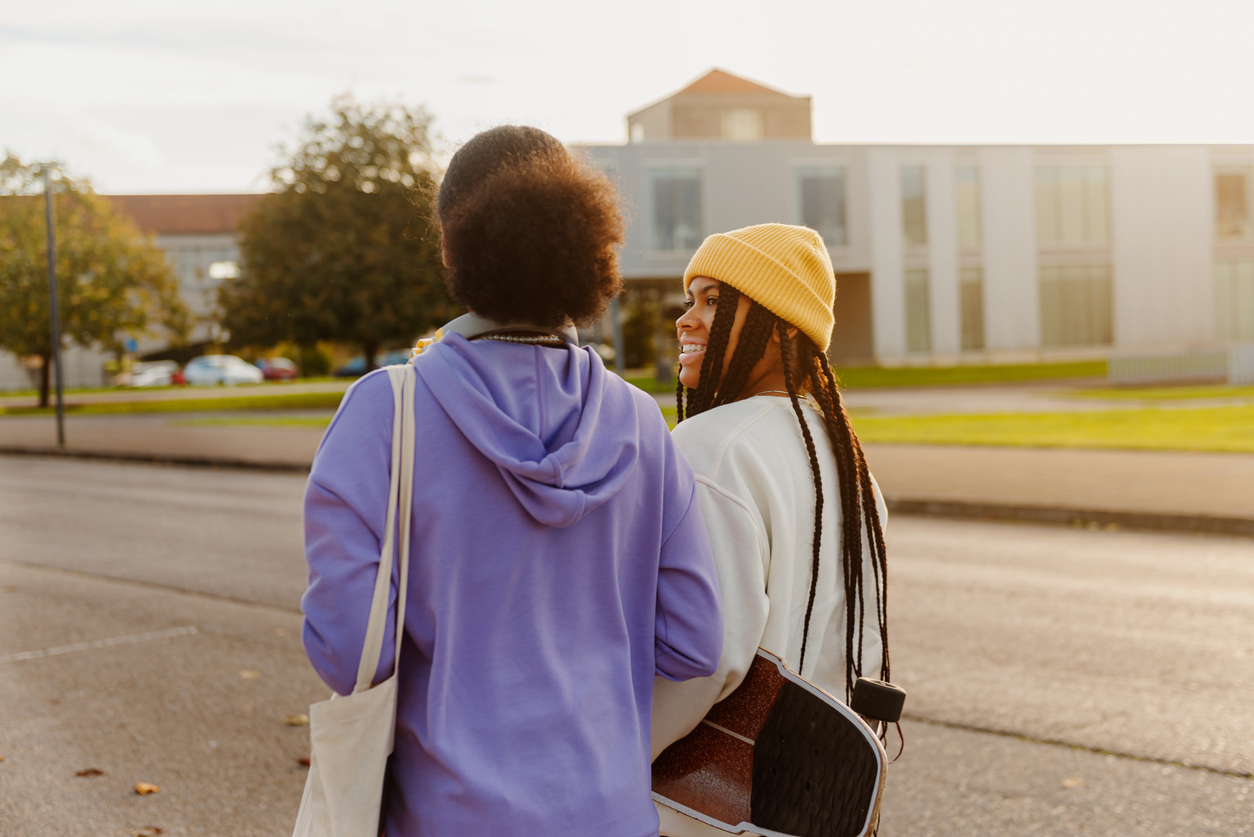
I’m Secure Under the Branches of My Family Tree
About These Stories
YC runs intensive nonfiction writing programs for teens in New York City, where they’re mentored by a professional editor to write personal stories about their lives and about issues that affect young people. Their stories are then published and read by thousands of teens, educators, policymakers, and other adults who work with and for young people.