
Just one year ago, news from another country made me question whether I believed in God anymore.
In September 2004, a group of Chechen terrorists went into a school in Russia and held more than 1,100 students, staff and parents hostage on the first day of school. Russian security forces raided the school to free the hostages, but 331 people died during the gunfire and explosions.
As I watched the news, I thought, “If terrorists can go into a school and murder innocent elementary school kids and their parents, there can’t be a God. There just can’t be.”
For the past few years, I’ve been really torn about whether or not God exists. It’s been an ongoing source of tension between my mother, who is Jewish, and me. Recently, I finally decided to address the issue by meeting with my rabbi and talking to my parents about my religious beliefs.
A Very Religious Boy
I used to believe in God. When I was 8, I was very religious. I think it’s because I looked up to my mother’s father, who survived the Holocaust, immigrated to a new country, learned a new language and became a successful father and businessman. He took his religion seriously so I tried to be like him.
Starting at age 9, I became more kosher than my mom. I convinced her to buy only 100% kosher meats (slaughtered and prepared according to Jewish religious law with a rabbi’s supervision). Previously, she had only followed some of the kosher rules, like not eating pork and not mixing milk with meat.
I stopped going to McDonald’s with my friends since I knew the meat wasn’t slaughtered correctly. If a friend’s parents served food that wasn’t kosher, I wouldn’t eat it.
My mother was overjoyed. Her dream of passing Judaism on to her kids was coming true. Since her parents had survived concentration camps and most of her aunts and uncles were murdered at the hands of the Nazis, raising Jewish children was very important to her.
Different Traditions
Her father had survived Mauthausen concentration camp in Austria, but was left with nothing. He moved to Vienna, Austria and opened a synagogue, where he served as the cantor (who sings and leads the congregation in prayer). To get a minion-a minimum of 10 people needed to pray and hold a service-he’d pay homeless people to sit in the synagogue and buy them lunch after the service. He kept kosher and he was a religiously committed man. My mother was raised in this religious environment.
Converting to Survive
My father’s history is quite different. Although he’s a Jew by blood, my father was raised as a Christian in Vienna. His family converted to Christianity to survive World War II. When the war ended, my grandfather wanted nothing to do with Judaism.
My dad and his sister were raised Christian, although they knew that by blood they were Jewish. When his sister married a Protestant, his mother said, “Thankfully, now my grandchildren will grow up with only one Jewish grandmother.” She was referring to herself.
When my dad moved to New York City, some friends in Vienna told him to call another friend of theirs in New York-my mother. She’d moved here because it had always bothered her that Austria had participated in the Holocaust. They eventually fell in love, got married and started a family.
They raised their three sons to be religious because although religion isn’t important to my father, it is to my mom and he wants to make her happy.
Starting Out Faithful
When I first started Hebrew school in the 2nd grade, I was looking forward to learning how to read Hebrew and later, learning how to speak it. But Hebrew school soon became boring, because every year we’d review the same holidays every time they came around. I got fed up with it. I was looking for a place to learn more, not to hear the same things over and over again.
When I tried to tell my mother, she refused to believe me. I gradually began to despise my religious education. By the time I was 11, I’d started to question my faith.
Over the next five years, it got worse. I went from unhappily attending services to completely dismissing them and revolting every time we had to attend.
I began to question my mother about the existence of God. Our arguments started with me asking, “How do you know God exists?” and escalated to “Why do you go to pray to something that you’re not even sure really exists?” I upset my mom and she responded with generic replies that didn’t answer my questions.
One time though, she became very upset and blurted back, “My parents didn’t survive an attempt at genocide for you to just toss your religion to the wind.” Talk about a nice spoonful of guilt.
A Difficult Holiday
After my mother’s father died of cancer a few years ago, things got even worse at home. In spring 2003, for the first time in a long time, our family didn’t travel to Vienna to be with relatives for Passover (a Jewish holiday commemorating the liberation of the Jews from slavery in Egypt).
We were home in Manhattan, sitting down to say the Kiddish, the blessing over the wine. My parents, my two younger brothers and I took turns reading the translation in English, passing it around the table.
I could see tears welling in my mother’s eyes. When the paper made it back to her, she began to sob. “What’s the matter?” my father asked.
“The Seders used to be so beautifully done, but now that my father’s gone, they don’t seem the same,” she said.
No’Real’ Jews
She was right. Now there was really no bona fide Jew in the house who could lead a Passover Seder (the ceremonial Passover meal) in Hebrew from start to finish. We were a Jewish family, but my dad didn’t know anything about Judaism and my 10-year-old twin brothers were too young to lead the Seder. Although I could read some Hebrew, I couldn’t read anything more than a choppy prayer and I didn’t have a clue what I was actually saying.
I felt horrible for my mom and I still do. She’s trying with all her might not to break the chain. I think the only way I could help would be to go along with her religious beliefs, but that would be dishonest. I’m very curious and I don’t settle for simple answers.
The Dreaded High Holy Days
So the fights have continued. The worst time of year for us is always September, when school starts, the weather starts to cool down, and the dreaded High Holy Days-the holiest days of the Jewish year-begin.
This past September, I once again found myself standing in the Brotherhood Synagogue in Manhattan, my knees shaking with hunger from fasting all day, another Yom Kippur almost come and gone. (Yom Kippur, also called the Day of Atonement, is a Jewish holiday observed with fasting and prayer.)
I saw hundreds of people singing songs, reciting words in Hebrew that I knew most of them didn’t understand, for a God that I’m not sure exists.
I hated everything about it. I hated rising every time the ark was opened, I hated sitting down and listening to the prayers. I hated facing the ark, which contains the Torah (the Jewish bible or Old Testament), which in my view was a fat scroll full of fictional stories.
This year, like years before, I told my parents I wasn’t going to attend services. It took some serious threats of grounding from my dad to get me into my suit and out the door.
‘Brainwashing My Brothers’
My parents pressure me because I’m 16 and I’m the oldest. They want me to set the tone and be a good example for my twin brothers, who are now 12. When I argue, they accuse me of brainwashing my brothers, telling me that my arguments about God are disrespectful to my mother’s parents’ memories.
My twin brothers do seem to hate Hebrew school and services, too. That may be because of me, but I believe that most 12-year-olds hate services, just because they’re boring.
My Rabbi’s Words
To help alleviate some of the pressure on me, I decided to learn more from my parents and my rabbi. First I interviewed my dad, who confirmed that he supports my mom’s way of raising us. But he also was happy to listen to my concerns.
“we’re Jewish and the knowledge should be passed on,” he said. “What you make out of it is your cup of tea. Whatever you want to say about religion, say it to me, but leave your mom and your brothers out of this. It just further agitates everyone.”
He really just wants peace in the family, but I was glad he was willing to listen to me. He understood my predicament. I felt as if there was someone in my corner who would hear me. It wasn’t me against the world.
Then I went and talked to my rabbi, Allison Berlinger. We talked for four hours. She allowed me to vent about my concerns with religion, and she helped me by sharing her story. Before she entered rabbinical school, she was looking for answers about God, too.
She said she became a rabbi because she discovered that God doesn’t need to be transcendent (up above in heaven). She found that God can be internal, meaning God is within individuals.
“My active belief is that God dwells in each of us,” she said.
This was very enlightening to me and made me feel a lot less pressure. I didn’t have to try to impress some God above, but could instead live life for myself. And I felt freer to define God on my own terms, as she had.
Even if I eventually decide not to believe in God, I learned from the rabbi that according to Jewish law, I’m still Jewish, just because my mother is.
I also felt good because I felt I was right. No one, not even my rabbi, can be sure about God. With my confidence built up from my interviews with my rabbi and my dad, I decided to talk to my mom. I’d never had a calm discussion about religion with her and writing this story was a great excuse to talk with her.
My Mother’s Feelings
My mother told me that she feels a strong devotion to her parents, who survived the Holocaust and fought to make a living after World War II. She wants so badly to pass their religion to her kids, and she feels shattered that it’s not turning out that way.
Now I feel like I understand her thinking about religion. I didn’t know until we talked that she was always pressured by her dad to be more religious. He even thought that the Hebrew school I was attending wasn’t religious enough.
One of the saddest things in her life was that her dad didn’t live to see me be a Bar-Mitzvah (a Jewish boy who reaches his 13th birthday and has a ceremony to declare his religious responsibilities). He was really counting the years for that.
She Hopes I’ll Be Religious
She feels crushed by the fact that every time we go to temple there’s a fuss. But what keeps her going is her hope that one day we’ll all snap out of it, learn to appreciate our religion and pass it on to our children the way she’s trying to do.
She said, “My parents were persecuted for their religion, and as the Jews have done for generation after generation, they escaped and survived and that’s why it’s so vital for me to pass down the religion to my kids and for you three to keep it going,”
She’s extremely pleased that I’m still interested in exploring my faith. It makes her feel like she hasn’t completely failed and let her dad down. She still hopes that when I grow up I’ll go to temple on the High Holy Days and Bar-Mitzvah my kids.
Talking to her didn’t change my thinking, but I have more respect and compassion for her.
Deciding for Myself
My struggle to learn if God exists hasn’t been easy. It’s caused many fights between my mother, my father and me over the past five years. I appreciate what my parents have been through, and how much their families sacrificed for their religious beliefs.
But I think I have to figure this out for myself. No matter how much I upset my mom, when it comes to religion I have to act based on what my heart tells me, not what anyone else says.
I know it’ll be easier to figure out what I believe when I’m out of the house and can make my own decisions without my parents’ influence.
I’m currently leaning towards believing that there is no God. I want to make a decision about God’s existence, but if I don’t, my rabbi taught me that not coming to any conclusion about God is also OK. Her spiritual journey is still continuing and mine can, too.
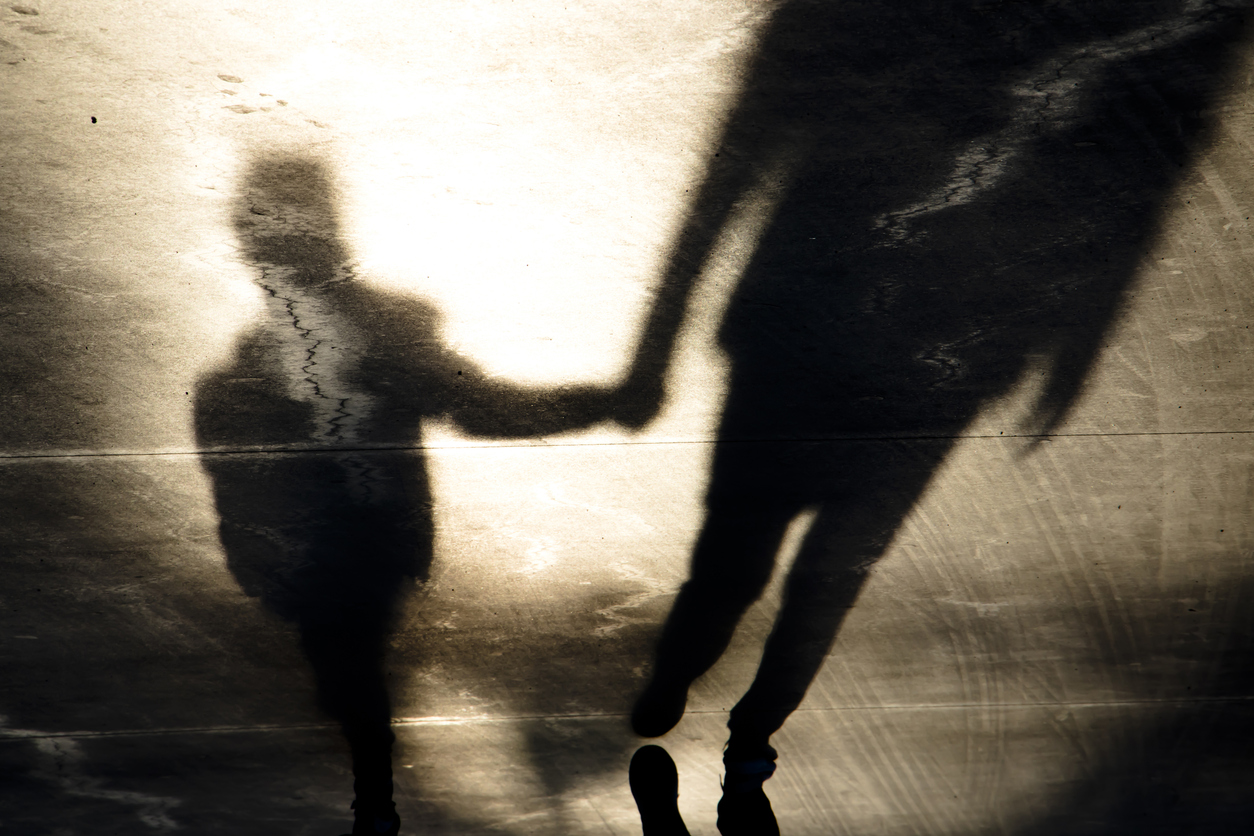
Does God Exist?
My Family Sacrificed for Our Religion, But I'm Not Sure I Share The
About These Stories
YC runs intensive nonfiction writing programs for teens in New York City, where they’re mentored by a professional editor to write personal stories about their lives and about issues that affect young people. Their stories are then published and read by thousands of teens, educators, policymakers, and other adults who work with and for young people.