
I won’t lie: I’m a big fan of technology. Like most teenagers, I love my iPod, cell phone, and laptop. I also love checking up on my celebrity gossip and reading interesting news stories online.
But when I read a recent Boston Globe story, I thought, “This time the tech revolution has gone too far.”
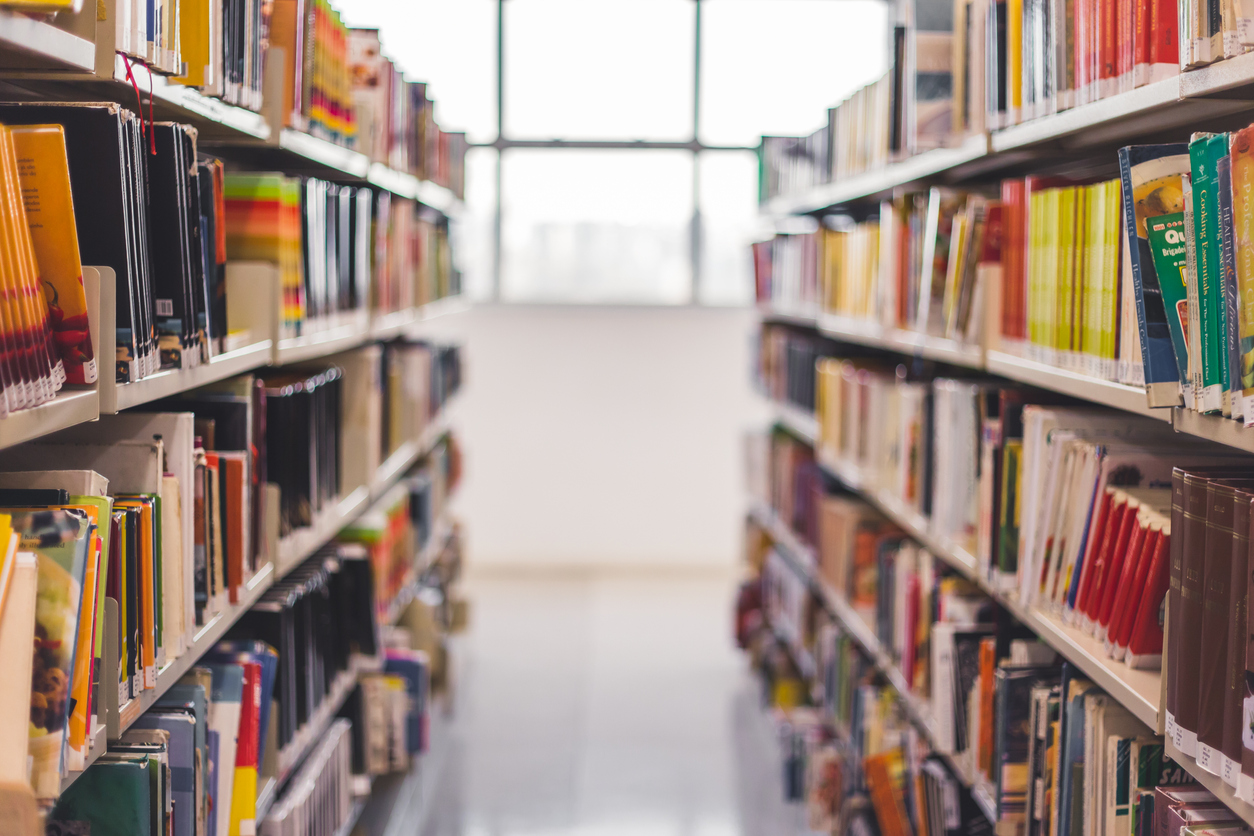
The story was about a New England prep school planning a library without books. The leaders of Cushing Academy have decided books are a little outdated for them. They plan to get rid of their 20,000 books and are spending nearly $500,000 creating a new “learning center” to replace their 144-year-old library.
The learning center will have flat-screen TVs to display Internet data, carousels for studying with laptops, and a coffee shop instead of a reference desk. The school is also spending $10,000 to stock the learning center with 18 electronic readers (like the Amazon Kindle).
Cushing’s headmaster, James Tracy, explained that he just wants the school to be more modern. “When I look at books I see outdated technology, like scrolls before books,” he told the Globe.
Sensing History
I think computers are great for research, but if my school got rid of books I’d go ask the principal what’s wrong with him. I see books as pieces of history we can carry with us. By getting rid of books, Cushing Academy is getting rid of its history. A computer cannot replace that feeling you get when you can say, “Wow, this very book I’m holding was around back in 1950-imagine all the people who’ve held it in their hands.”
And a book doesn’t have to pre-date you to be part of history; a book you own is part of your personal history. You can always take a book you own off the shelf and be reminded of the time in your life when you read it. A real book can even be signed, and then it’s a piece of the author’s history, too. Your favorite author can’t sign your Kindle.
I imagine everything you read with an electronic reader feels generic, but an actual book tells a story beyond what the author has written. If you have a wrinkled book and some imagination, it can feel like you went back in time and found it. A brand new book appeals to me in a different way; I feel as if it’s my special possession since I’m the first to read it.
There’s something about just turning pages that a laptop or an electronic reader can’t replace. You feel like you’re holding someone’s personal journal and it involves all your senses, even smell. With a new book it’s as if you can smell the ink hot off the press, and if it’s an old, musty one it’s like smelling something from the 1800s or whatever era is the setting for the book.
Maybe because they spark imagination, books are especially important to children. My dad used to take me to the library all the time, and it was so much fun to pick out my own book and look at all the others. I remember one book I used to read to my mom’s stomach when she was pregnant, about a dog named Spot. I loved its bright, colorful cover and the pictures inside.
Tough, Cheap, and Portable
There are also plenty of practical reasons why books are hard to replace. Technology can be so delicate, even throwing a device in your bag can mess up the screen. On the other hand, through snow, rain, and harsh conditions, a book will always be there for you. You can take it with you wherever you want, whether it’s on the train, the bus, or a plane. Do you really want to carry a laptop everywhere?
Electronic readers are OK to travel with, but imagine you’re just getting to the really good part of a novel when-uh-oh-the battery of your reader dies. A book will never run out of batteries, and besides this, you can stop reading whenever you want, save your place, and later go right back to where you left off. You don’t have to download anything or wait.
And of course, not everyone can afford an electronic device for downloading in the first place. Most Cushing Academy students are wealthy, but what about kids who aren’t? A book can cost as little as a couple of dollars secondhand, whereas an electronic reader right now costs $259 (plus $8-$10 for each book you download). Especially at a time when so many people are struggling financially, old-fashioned books are the obvious choice for most.
Before he calls them “outdated,” the headmaster at Cushing should take into consideration that not everyone is in a position to forget about books. In less fortunate parts of the world, kids may have barely seen one. I think getting rid of thousands of books shows no feeling for all those who still depend on them to learn.
Warm Memories
I’ve always liked books, but I never noticed how much I appreciate them until I read about Cushing Academy. I think kids in the future should be able to go to their library and discover what it feels like to turn a page, touch an illustration, or hold a piece of history in their hands.
Maybe in the future people will have happy childhood memories of electronic readers, but I don’t think they will be as warm. Everyone says reading is so important, but I think what and how you read also matters. A piece of technology is a cold, hard thing, but a book feels personal. It represents thoughts that have gone from ideas in someone’s mind to words on paper-to something real that can be touched and shared with everyone. I think a book is irreplaceable.
Books Byte the Dust?
About These Stories
YC runs intensive nonfiction writing programs for teens in New York City, where they’re mentored by a professional editor to write personal stories about their lives and about issues that affect young people. Their stories are then published and read by thousands of teens, educators, policymakers, and other adults who work with and for young people.