
I held onto an old black inner tube in the middle of a deep, dirty river. Behind me was Mexico. In front of me was Arizona. When I looked to my left or to my right, I couldn’t see the river turn. It just went on and on with no end. I feared letting go of the inner tube and ending up in the bottom of the river because I didn’t know how to swim. I was 8 years old.
I kept looking around to make sure that my two little cousins were safe, but they were just fooling around in the water. They didn’t seem to understand the danger.
“On the other side, that’s where your mom is,” said the man who was smuggling us across the border. I looked toward the Arizona side of the river where he was pointing and saw trees and green grass. I knew my mom wasn’t really waiting for us right there. She was far away in New York, and I was on my way to see her for the first time. But all I wanted to do was go back home.
Memories of Home
I was born in Honduras. My parents were very young and poor when they had me; my mother was 18 and my father was 15. When I was nine months old, my mother decided to come to the United States for a better life. She left me behind.
I grew up with my grandparents and cousins. My father lived in the capital and my grandparents were in a small town, so I did not see my father so often.
I remember that my grandparents’ house had an enormous backyard. We had a lot of trees of different fruits like mango, apples, pears, oranges, and coconuts. Coconuts were my favorite. Every time my father came to visit me, we would spend time in the backyard bringing down the coconuts, or I’d climb the mango trees and fill buckets with them.
My grandparents also had many different kinds of animals. We had cows, horses, pigs, chickens, rabbits, geese, and even more. Every morning when my grandfather woke up to milk the cows, he’d wake me up, too, because I really enjoyed having the first cup of milk.
What I liked the most about my childhood were my first years of school. I had a lot of friends and my 1st grade teacher was my godmother, so I had many privileges.
In school I would always talk about my mother. I would show off everything she sent me from the U.S., like my dolls and my school bag. I would always tell my friend that soon my mother was going to come back. I imagined myself living with my mom and my dad in our own house, having brothers and sisters from both my parents, and just being like the other kids in school who had their mom and dad.
An Incredible Journey
When I was 8, my grandmother told me and my younger cousins that we were going to move to the United States to be with our mothers. I was surprised that she’d decided that from one day to another, but she said that’s what our moms wanted.
I was really happy that I was going to meet my mom for the first time, but I was also scared because I didn’t want to leave my father. I knew it was going to be hard for my father that I wasn’t there anymore. Even though I got to see him only once or twice a month, I was really attached to him. I was his first daughter. He was so young when I was born that he didn’t know much about babies or how to treat me, but he loved me a lot.
It took us a few months to get to the United States. At first my grandmother, cousins, aunt, and I traveled together by cars for many days, but once we got to Mexico, we got separated. I went with my two younger cousins and the men-the smugglers-who would make sure we got across the border.
I was scared. I didn’t want to be away from my grandma and just go with a stranger, but she told us that everything was going to be OK and that we were going to be together in a few days. We went from house to house and stayed in different places all the times. Being the eldest, I tried to take care of my cousins, who were 6 and 8.
After we crossed the river we stayed with the guy’s family in a house in Arizona for about a month until my grandmother and aunt came to meet up with us again. From there we went to Houston, Texas, and stayed with my uncle for three days before taking the Greyhound bus to New York.
A New World
It took us another three days to get from Texas to New York. We arrived at the bus terminal at 6 o’clock in the morning. My other aunt was waiting for us when we got there. She started crying when she saw us, and she started hugging my cousins, her kids. I recognized her as soon as I saw her because she’d come to visit us in Honduras once or twice, and I was really happy to see her.
But my mother wasn’t there, and that made me feel bad. I had thought that she would be there crying and telling me how happy she was to see me. It really disappointed me that this was the first time we were going to be seeing each other and she wasn’t there when we arrived.
My Mom Was a Stranger
My mother showed up at my aunt’s house by noon. She was wearing a red and white skirt with a red blouse, her hair was blonde, and she was a little chubby. As I remembered my mother from pictures, she had black hair and was very skinny. This new person was so different.
She was crying and wanted to hug me, but I acted like I was meeting a stranger. I didn’t know who she was and didn’t feel that mother-daughter connection. I wanted to hug her and called her mom, but I wasn’t feeling those emotions. I looked at her and all I saw was a woman standing there crying.
Then she introduced me to my little brothers and sisters. I stared at them for a minute thinking to myself, “Where did they come from?” Then I ran to my grandmother, because for me, my grandmother was the only mom I ever had. I was frightened to think I was going to be separated from my grandma and my cousins, who to me were like my brother and sister.
We stayed at my aunt’s house that night. With her I felt comfortable. The next morning we went to my mom’s house. My mom introduced the whole house to me, then took me to a room to play with my cousin. My little sister came to the room and wanted to play with us, but I didn’t want to play with her because I didn’t know her.
I started to close the door to keep my sister out. Right when my fingers were in the door frame, my sister slammed the door. My whole nail came off and I cried a lot, but it wasn’t only the pain that I felt in my finger that made me cry. It was also the feeling that I wasn’t welcome there, that my sister didn’t want me in her house and that if I stayed there, we would spend most of the time fighting.
Loneliness
I missed my grandmother, my father, and the different way of life that I’d had in Honduras. I missed the freedom of walking around the streets without shoes, and knowing everyone in town, the hot weather all year round, the animals, and, most of all, climbing the fruit trees.
Unlike being with my family back home, with my mother I felt very lonely. During my first months in my mother’s house, my brothers and sister were in a summer daycare, so they weren’t home very much. I just stayed home with my mom, who mostly spent time in her room watching TV or on the phone. I’d be in the living room watching TV, usually soap operas, or telenovelas, as we call them. That really made me feel lonely and made me miss my grandmother and cousins even more.
I started to learn English in school, and after a few weeks I started making new friends. Each of my friends was different, with different personalities and nationalities. I’ve always been a shy person, so it was hard making friends. But people would come up to me and start a conversation.
Getting Closer to Family
Learning English also helped me grow closer to my siblings. I started speaking more with my brothers, who understood Spanish but didn’t speak it. Once I could speak English, I was able to communicate better with them. I could tell them what to do or not to do when my mom was at work, or just have a conversation with them.
Spending time with my siblings, stepdad, and my mom helped me get to know them better. My aunt would come often with my cousins, too. All these things helped me feel like I was at home.
Eventually I started to have a better relationship with my mother, especially once I accepted that I was never going back with my grandma, who had returned to Texas.
My mom and I built our relationship by spending more time together. We would go out shopping or she would take me out to eat. She treated me like an adult, so that made me feel like I could trust her. She would tell me anything that she was going through and give me responsibilities. She would also tell me stories about her job at the restaurant and the crazy things that happened there.
Even though I have a good relationship with my mom today, in some ways there is still a distance between us. I never got used to calling her mom and to this day call her by her name. I always saw my grandmother as my mom. With my own mother, it felt awkward.
But things are better now. We can talk about anything, and she’s a person I can really say I trust.
Roots in Two Countries
Now I’m 18 years old, and I’ve been in the United States for about 10 years. I’ve never gone back to Honduras. The fact that I’ve been in the United States longer than I lived in Honduras make me feel more American than Honduran.
I have memories from Honduras, but I was very young. Most of my important memories now are about my life here in America, such as the first time I rode a bike, the first time I went to the beach, making new friends, birthday parties and Christmas, and all my fights with my sister.
What If I Hadn’t Left?
As I was growing up, I would ask my mother why she left Honduras. And why didn’t my dad and I go to live with her? She would reply that she came here for a better life. I never really understood why. I would have preferred her staying with me and my dad in Honduras.
But now that I am older, I thank her for bringing me to the United States. I realize that I do have a better life and a better education here. I go to school for free, I learned English in school, and I have food on the table every day, something that not everyone in Honduras has. People in Honduras aren’t as lucky as I am in the United States, and if it wasn’t for my mom, I would not have those things.
But if we’d all stayed in Honduras, maybe my way of seeing things would have been different. Maybe I would have more connection or affection toward my mother.
Now that I am soon to be a mom myself, I know what it feels to care for someone else, and to want the best for them. But regardless of my situation, I would never leave my daughter. Everywhere I go, she will come with me. I wouldn’t want my relationship with her to be like the relationship I have with my mom.
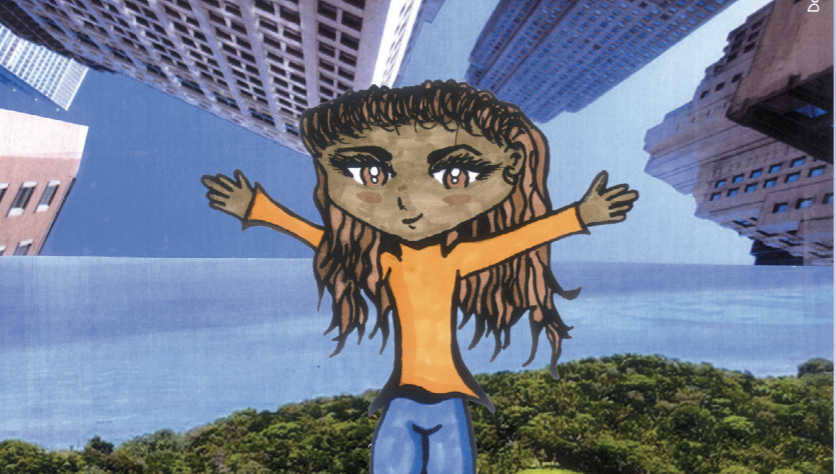
Between Two Worlds
I said goodbye to my father and started life with a mother I didn't know
About These Stories
YC runs intensive nonfiction writing programs for teens in New York City, where they’re mentored by a professional editor to write personal stories about their lives and about issues that affect young people. Their stories are then published and read by thousands of teens, educators, policymakers, and other adults who work with and for young people.