
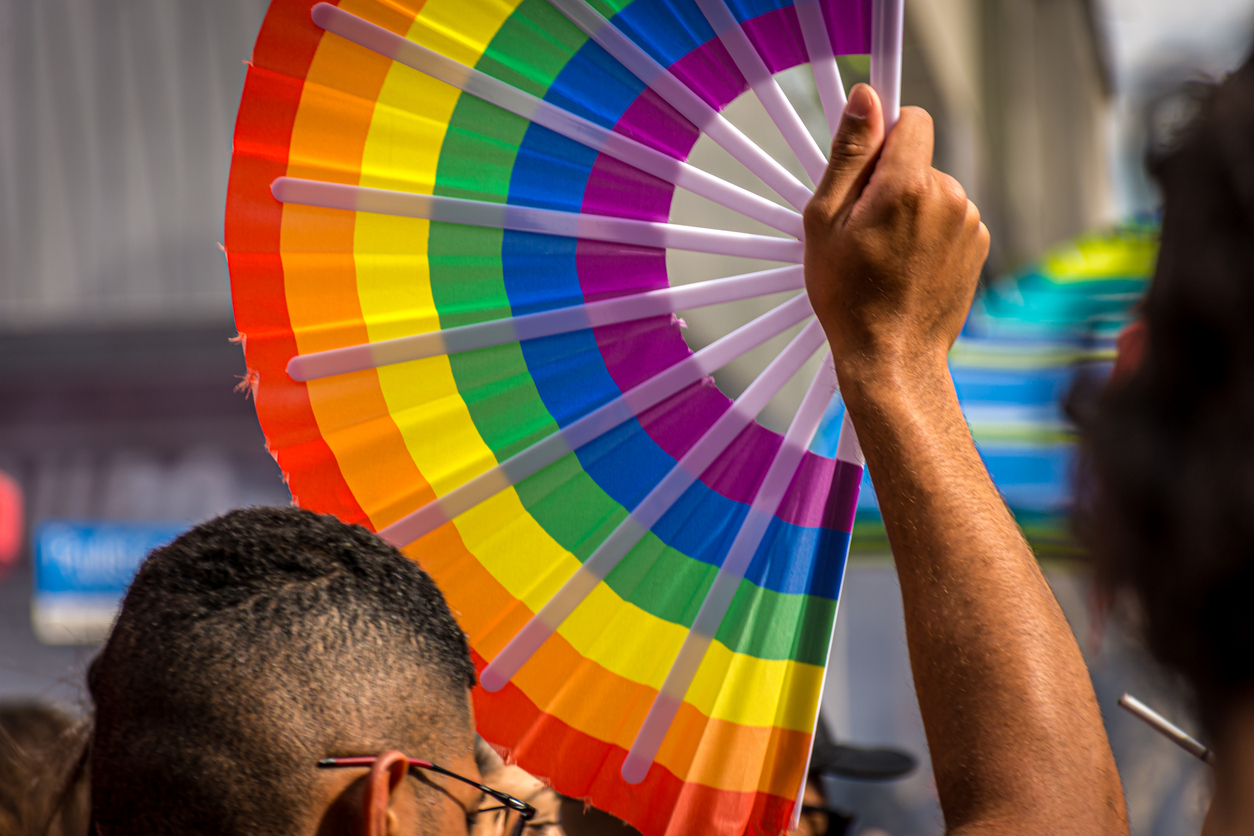
As the writer of Keepin’ the Faith conveys, the conflict between religious beliefs and sexual orientation can be painful and confusing. To offer a different point of view, we interviewed Reverend Edgard F. Danielsen-Morales, of the Metropolitan Community Church of New York. The Reverend is gay and his church welcomes people of all sexual orientations.
Q: The Bible says homosexuality is a sin. What is your take on that?
A: The Bible was written thousands of years ago and our cultural norms, what we find acceptable in society, have changed and continue to change. The original Hebrew says, “You shall not lie with a male as with a woman; it is an abomination.” But it also says, “Slaves, accept the authority of your masters with deference, not only those who are kind and gentle, but those who are harsh.” And, “It is shameful for a woman to speak in churchâ[she] should be subordinate, as the law also says.” These days, we don’t believe in slavery or that women should be subordinate to men. So it’s important to put these passages into context and not to take them literally.
Q: What would you say to people who were raised to believe the Bible says marriage is only between a man and a woman?
A: There are many family structures described in the Bible-even some that would be considered adultery today. For instance, Abraham had two wives: Sarah and Hagar, who was one of Sarah’s slaves. And King Solomon had hundreds of wives. So did King David, who also had a close relationship with his friend Jonathan. After Jonathan dies David says, “Your love to me was wonderful, passing the love of women.” Does that mean David was bisexual? That is up for interpretation. When you look at the Bible through a different lens, you begin to see different meanings.
I grew up in a religious, conservative family. When I came out at 16 years old, we all struggled with the interpretation of some of the language. Saying I was gay was an opening for my family to explore a different way to see God and the Bible.
Q: What would you say to a teen who doesn’t have parents who are as accepting as yours were?
A: I spoke to a teacher in school a year before I spoke to my parents. I remember telling him, “I’m going through the most horrible thing that someone can go through in life.” He helped me understand that I could not change my sexual orientation and that God would accept me as I am. It was through a long process with this teacher that I gained the strength to come out to my parents. So although not everyone will be supportive, you can find counselors, social workers, or other adults you trust. Coming out is a tough thing. And it is an ongoing process. I came out to you today.
Q: Why did you?
A: I feel like I have a responsibility to tell people I’m gay and a minister and it’s not a contradiction to be both. I’m also a husband. I’m a grandfather. I’m all those things.
Q: When you were younger, did you go to church? How did your church feel about homosexuality?
A: I grew up in Puerto Rico, which is a very religious country. I was raised in an American Baptist tradition. I became a teacher and church leader in a congregation with 2,000 members. I could be myself there. Their definition of the gospel was rooted in treating all people with love.
Then I was invited to help in a church with only 100 members. I was very active politically outside of church, working for gay rights, human rights, civil rights. And that smaller church was not happy with me. So they pushed me away. I thought church was a place where you were among friends and family who accepted you but that church showed me a different face of Christianity, a face that I don’t like. It’s a face that pushes you away because you’re different. It took me a while to heal from the hurt of being rejected, but that process happened because I found a community that was supportive of me as a gay man. There are many places of worship that will welcome you with open arms. (See list below.)
Q: If Jesus came back today, what do you think he would tell those who say it’s a sin to be gay?
A: I’m reminded of a passage where Jesus is making a farewell prayer to his friends. He says, “In my father’s house there are many dwelling places.” That is one of the most comforting texts for me. In my view, Jesus is saying heaven is a place where people from different nationalities, sexual orientations, religious paths, and gender identities all fit together in the same house, the same church, the same society.
There are many places to worship in New York City that welcome people of all sexual orientations. Here’s a partial list.
Metropolitan Community Church of New York
mccny.org
446 W. 36th St.
New York, NY 10018
212-629-7440
Congregation Beit Simchat Torah (CBST)
cbst.org
57 Bethune St.
New York, NY 10014
212-929-9498
Metro Baptist Church
mbcnyc.org
410 W. 40th St.
New York, NY 10018
212-594-4464
The Church of the Village
churchofthevillage.org
201 W. 13th St.
New York, NY 10011
212-243-5470
Church of Saint Luke
in the Fields
stlukeinthefields.org
487 Hudson St.
New York, NY 10014
212-924-0562
Unity Fellowship Church
[email protected] (e-mail)
2578 Atlantic Ave.
Brooklyn, NY 11207
718-385-2406
You can reach Reverend Edgard at: [email protected] or call him at
212-629-7440, ext. 223.