
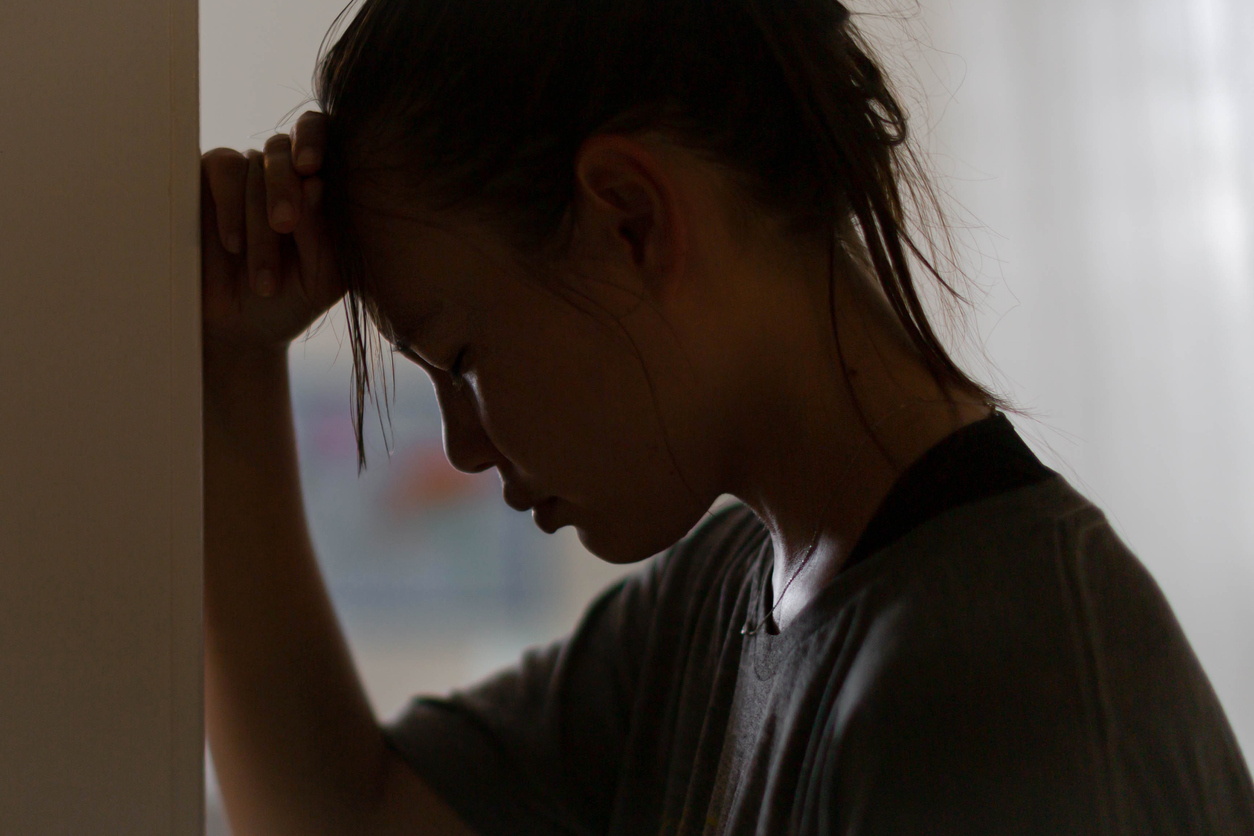
“I swear, I’m so bipolar.”
The long-haired blonde teen said it into her phone, and my fists curled in my lap. We were on the bus on the way home from school, and the girl was telling her friend that she’d ignored her boyfriend’s texts all morning but wasn’t really mad at him. She just couldn’t decide whether she wanted to be with him or not. And then she said it. That ignorant phrase.
It wasn’t the first time I’d heard someone use the word “bipolar” in place of “Indecisive.” I was in middle school when it caught on. Hearing her say those words in reference to something so trivial, I realized that this was a thing, a word people threw around, blissfully unaware that bipolar disorder is actually a destructive disease that has nothing to do with being indecisive or moody.
I was so mad I almost missed my stop and I stomped all the way home, my feet striking the concrete like thunder. What made me the angriest was that I would never be able to explain to that girl what it’s like to be bipolar. You can’t really understand unless you are. Unfortunately, I do.
Smiling on the Outside
To the uninformed observer, I am your average girl. A little introverted, but wild around my friends. Book smart, but generally nave about life and hardship. I am usually smiling and laughing. No one would have any cause for concern when looking at me.
But if you look deeper, you’ll see that I am more complicated. As far back as pre-K I can remember spending most of my nights crying. Being around other people outside of my family and best friend made me unbearably anxious and sad.
When I started middle school, the anxiety became worse. When I was around others I’d feel abdominal pain and nausea. I put myself out there anyway because I knew people took shyness for weakness and I refused to be a target for bullies. (My best friend had been bullied a lot.) But when I was home, I barely uttered full sentences. When my mom woke me up for school, I would have panic attacks.
Even scarier, I kept seeing things that weren’t really there. I felt imaginary people looking at me. I got physically ill the night before standardized tests and school group projects. All of these things happened to me on a regular basis before I was diagnosed. But for the most part, no one knew.
I had been introverted and moody at home for a long time. At first, my mom dismissed it as common teenage depression that would pass. But I hadn’t told her about my hallucinations. This went on until the beginning of my junior year. I was temporarily in home schooling because both my abdominal pain and depression were so severe that on some days I couldn’t get out of bed. But then I’d also have days when I was on such a high I would probably have cartwheeled off a building if someone had dared me to. In October, after about a month of this, my mom brought me to a psychiatrist.
My Illness Has a Name
After talking with me, the psychiatrist said, “You have bipolar disorder. And it sounds like you’ve been struggling with it for a while.”
I felt relieved to finally know what was wrong with me. I wanted to pretend I was normal, but the diagnosis was no surprise. The wannabe doctor in me had been researching mental illnesses for years. I started doing that when I realized that no, staying up half the night crying is not just “girl stuff,” and it isn’t just an overactive imagination that makes me see things that aren’t there. I’d seen shadows and faces that I knew didn’t exist when I was alone in my room reading or washing the dishes after dinner.
It got so bad that I couldn’t sleep alone. I’d sleep in my mom’s room, using the excuse that I couldn’t fall asleep. I didn’t want to tell her about seeing shadows and faces because I didn’t want her to think I was insane.
“Bipolar disorder is extremely treatable and you should respond well to some low doses of medication for your hyperactivity-which we call’mania’ in psychiatry-and an antidepressant. You might experience some unpleasant side effects, like dizziness and weight gain and drowsiness, but this is a process and we’ll eventually find the right combination of drugs for you,” the doctor told me.
It took me one month of medication to start to feel the difference.
What Is Bipolar Disorder?
Having bipolar disorder isn’t some crazy rollercoaster of feelings that makes you switch between euphoria and depression throughout the day in spans of hours or minutes or seconds. Episodes of highs and lows usually last weeks or months, not hours and days. And they aren’t as obvious as some people imagine. People who suffer from bipolar disorder can seem perfectly normal to everyone around them, like in my case.
There is some truth to the stereotype though. Manic episodes (when you feel extreme happiness or euphoria) can be enjoyable at times. I feel like I can do anything when I’m in the middle of a manic episode. They are usually characterized by impulsivity, which means people are prone to do things they wouldn’t normally do because they aren’t thinking straight, like hurt others, hurt themselves, steal, spend large amounts of money and have promiscuous sex.
Thankfully, I’ve never done any of these things, since my manic episodes are usually just filled with hyperactivity. I usually clean, write, and read obsessively, tremble a bit, and just wait them out until they’re over. Sometimes, I take multiple showers. The water helps calm me down.
By my 17th birthday in March, I was almost ready to return to school. I still felt some side effects of the drugs, including some unwanted weight gain. But I was able to be outside and not want to hide from everyone.
After getting good reactions when I told my family and my best friend that I was bipolar, I decided it was OK to tell my school friends.
Why Would I Make This Up?
We were in my room, scattered about. Three friends were on the floor, looking shocked. My other friend who was on my bed with me studied my face for signs that I was lying.
I could feel my friends getting farther and farther away from me, yet none of them had moved an inch. “I’ve read about bipolar disorder in bio. You’re not bipolar. Whoever diagnosed you should be fired,” Kathy said in a low voice.
“Well so have I,” I replied,” And I know he’s right. I’m depressed half the time, the other half I feel like I popped ecstasy and I’m always anxious. I see things that don’t exist and sometimes they feel so real I have to sleep with my mom because I can’t stand to be alone.”
“You never act like any of those things are happening. No one ever sees you acting depressed or loopy or anxious,” said Kathy.
“You don’t act like any of those things! You just are! Every day I have to act like nothing is wrong when I feel like nothing is right!”
They said many things, but none were worse than this: “Are you serious? No, you’re not. You’re you.”
We sat in silence for a while before I asked them to leave.
They never came back. I heard later that they thought I was an attention-seeking b-tch going through a mid-life crisis at 16. One day, I should thank them for not pretending to sympathize with me. It made it a lot easier to get a real support system together. That’s what my psychiatrist told me to do: Seek a support system, people who would make adjusting to life on medication and knowing my limitations easier.
Getting Better Every Day
My family and my best friend are the reasons why I’m able to write this, why I’m able to document something this negative.
When I told my best friend of 12 years, she gave me a hug. Something so simple made me feel accepted, loved, and happy. My heart swelled with gratitude that Amber was by my side.
I’m grateful to have her, my mother, and my older sister.
My mom asks me if I feel OK every day. It might sound annoying, but you’d be surprised how good it feels to have someone make it a point to ask how you’re feeling.
I’m still not completely well. I haven’t found the perfect dosages for my body yet and there are days when I feel depressed and other days when I feel manic. All of it still happens, though my hallucinations are now rare. Through therapy, I’ve learned to feel like a whole person who isn’t afraid of the world anymore.
When I’m having a bad day, it’s hard not to feel bitter about having bipolar disorder. I get angry when people like the blonde girl on the bus use phrases like “I’m so bipolar” to describe their indecisiveness. But I try not to let it get me down. After all, not everyone knows what bipolar disorder is, and even fewer know what it’s like to live with it: the sadness, the mania, the stereotypes attached to it. By writing this, I’ve done my part to spread awareness about bipolar disorder. And that makes me feel pretty great.