
Names have been changed
I really don’t know what a father is because I never knew mine. I’ve never even seen a picture of him. I met a half-brother of mine who didn’t know our father, either. I don’t know how many children my father has, or if he stayed around for any of them.
But I know one thing: A father should be there for his child. If you have the time to make a child, you should have time to raise the child. I know many fathers do leave, maybe because they don’t know how to handle the responsibility and they get scared, but that’s still how I feel.
My mother was 13 years old when she had me. My father was a grown man, and he went to jail for statutory rape after my grandfather took him to court. I’ve heard that from different relatives, but when I tried to get more details from my mother recently, she kept trying to switch the conversation to something else. It seemed like she didn’t know anything else or else didn’t want to tell me.
I haven’t lived with my mother ever; I got taken away from her soon after I was born, and I live with my aunt. My mom and I used to talk about once a month, but lately it’s been more like once a week. She’s getting her life together and she contacts me more now. Getting to know my mother helps me solve the puzzle of my life, although she won’t tell me much about my dad.
I asked her, “What did you see in my father?”
“That he was light-skinned and older. I like older guys. And that he loved me.”
“If he loved you, why didn’t he stay? And why were you so young?”
“I don’t know why he didn’t stay, Shateek. It just happened that way.”
When doctors ask me about my father-“Do you smoke? Did your father smoke?” or “How tall is your father?”-I have to say, “I don’t know.” That’s embarrassing-I don’t want my doctor to look at me differently or feel sorry for me. And being embarrassed makes me mad.
Pretty much everything I know about dads comes from the movies. Until I was 9 and my grandmother died, I thought I was going to have a perfect family like the movie Richie Rich, which I saw when I was 6. I loved it because the parents were there for the son and gave him everything. Every Christmas, birthday, New Year’s, and Father’s Day, I would think, “My father is going to come and I’m going to move with him.”
When I was 12 years old, I saw a movie called Daddy Day Care. I watched it in my room by myself with a cup of soda and pizza. In the beginning of the movie, the father (Eddie Murphy) was working too much and never coming home on time. But he realized that his son was getting sad, so he did something about it. He made a day care center just to be near his son. I don’t really think a father would up and leave his job to make his son happy by starting a day care center. Still, I cried because the father and son relationship was so beautiful. I wanted a father who would be around to tell me “Do this, do that, come home on time.” I want him to take me to the movies and cook with me.
A Brother and a Phone Call
A few months after I saw Daddy Day Care, my older cousin Ebony and I were walking down the street in Brooklyn, laughing and talking. Ebony stopped and said to a boy who was about her age, 17 or 18, “Yo, Michael, wassup, ugly? Where you about to go? Remember I told you about my cousin Shateek? Here he go now.” I looked up at Michael-he was about 5’10, lighter skinned than me, but we looked similar.
I knew who he was: Ebony had told me that she thought I looked like him, so she’d asked him what his father’s name was. He said “Michael Norman.” That’s my father’s name.
“Wassup” Michael said to me. “So you my little brother, huh?” I said “I guess.” He left then, but later he took me out to eat and we talked more. He told me that he hated our father. He didn’t say why, but I guess it’s because our father left him too. I tried to ask him a bunch of questions: “How did it feel to know I was your little brother? Why did our father leave? Why do you hate our father? What does he look like? Was he there for any part of your life? Were you ever close to him, and if you were, what was it like?” I need to know these things to help understand my father’s life and why he left. I might be less angry at him if he wasn’t around because he didn’t have money or was in jail.
Michael told me that he didn’t want to talk about my father ever and that I shouldn’t worry about him, because he isn’t worried about me.
Then, when I was 13, I was at a restaurant with my aunt and her boyfriend, and some other relatives. My aunt’s boyfriend pulled me aside and said, “Somebody wants to talk to you,” and put me on the phone. I walked away from the table and said “Who is this?”
A voice that sounded sad and angry said, “Wassup?” I asked again who it was, and he said “Michael Norman.” I couldn’t speak for a moment, and my father started saying that he was going to start acting like a father, start being there for me, and that he was sorry. He kept repeating that.
I wanted to ask him, “Why didn’t you stay? Why didn’t you act like a father?” but I was too afraid of letting somebody in my life who would leave. Then my anger rose up. It seemed like he was just telling me that to make me feel proud of him, but I didn’t believe him. How could I, when he’d never been there for me before? If he left me once, he could do it again.
Over years of wishing for him to come into my life, I had gotten angrier and angrier, especially with every Father’s Day that passed without a word from him. I started to think he was never coming, so why should I pour my feelings out to a person who wasn’t paying attention to me? Now that he was on the phone, promising me things I’d hoped for in the past, I felt sure he was lying. I said, “Shut the f-ck up and stop lying!” I was just mad. I said really fast, “You know damn well you’re not going to be a good father,” and then I hung up. After I hung up on him, I felt lonely as well as angry.
Only my aunt’s boyfriend (he was an old friend of my father’s) knew I was talking to him. My other relatives thought I had gone to the bathroom. My aunt’s boyfriend asked, “How was it?” I said “Good” just to end the conversation and eat. Later my aunt’s boyfriend said he’d put me on the phone with my father because he thought it was time I speak to him. I didn’t think that was the time, but I appreciated that my aunt’s boyfriend cared about me.
Filling in for Him
My mother is in and out my life. I’m mad at my mother for not being there for me, but at least I know her. Because she’s making contact with me more, I’m starting to trust her a tiny bit. But my dad hasn’t tried to contact me again since that time on the phone.
I wonder sometimes if Michael Norman would turn up if I become rich. When I was 14, a Tyler Perry movie called Madea’s Family Reunion came on BET. It was about a boy whose father wasn’t there for him and his mom. The boy played basketball and made it to the pro level. The day of the draft, the boy’s father came and tried to make it seem that he was there the whole time. I felt like, “Damn that’s really messed up; he just wanted the money.” The Madea movie seemed more realistic to me than Daddy Day Care.
I’ve also been thinking about the men around me who at least try to be decent fathers. My grandfather was like a father to me in some ways. I lived with him for seven years, and when I got in trouble, he would talk to me and listen to me. He made me feel like I was his. But he didn’t take me places; he didn’t play with me; he didn’t come to my sporting events, or cook with me. I do appreciate him taking care of me, but he wasn’t the father I imagined.
My cousin may be the only good dad I know now, even though he doesn’t live with his kids. His two boys, ages 6 and 1, spend every weekend at his apartment. They have their own room. He buys them things, sees them a lot, and shows that he cares for them. They act hyper because they’re kids and always want to play, but they know how to calm down. The older son is very respectful. I think this is because he’s got a dedicated father.
Now that I’m almost 16, I feel like it’s too late for that father-son relationship I used to hope for. In two years, I’ll be a man. Maybe I would have accepted him if he showed up when I was 10, but if he contacted me again now, I don’t think that would work. I’m too old and I don’t need him, even though I’ve been waiting for him my whole life.
Now when people ask about my father, I say “I’m my own father.” I first had that idea when I was 13 years old. I realized I was already filling in for him. Since then, when I look in the mirror I see that the father I was always looking for was me. I’m older and I stand tall. By helping others, coming to Represent to write stories, and just living a kid’s life instead of being angry all the time, I am the kind of man a father would want his son to be.
I want to raise my own family one day with love and joy. I want to say to my children, “Look, my parents weren’t there, but that doesn’t mean I’m not going to be there for you.” I’d hold my baby with a warm loving hug and just sing him or her to sleep. I’d help my kids with their homework, watch TV and play with them, take them out, buy them things, go on trips with them, and be there for them the whole time, even if their mother and I don’t work out.
I know how it feels to not have a father and I know all the anger that can build inside of you. I feel like I should forgive my father, but really I’d just like to say to him “F-ck you and have a nice life.” I made it this far without him and I don’t need him to make it further. The only good thing I can say about him is that I’m grateful that my father made me. If he had never met my mother, I wouldn’t be here, so I bless him for that.
That’s how I feel about the person that I always wanted to meet and get to know. I’m old enough to forgive my father, but I would be afraid to let him back in my life.
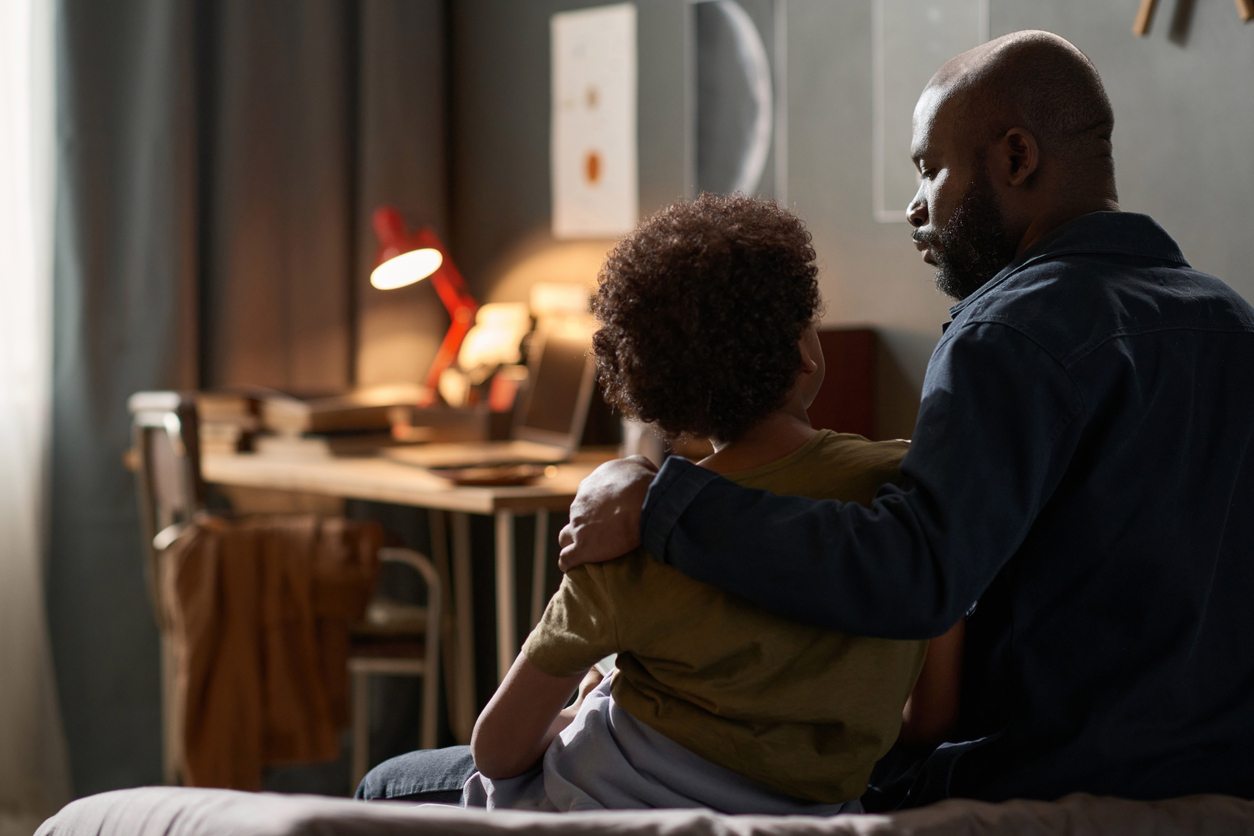
Too Late, Father
About These Stories
YC runs intensive nonfiction writing programs for teens in New York City, where they’re mentored by a professional editor to write personal stories about their lives and about issues that affect young people. Their stories are then published and read by thousands of teens, educators, policymakers, and other adults who work with and for young people.