
On Valentine’s Day, 1995, my stepdad came back from the hospital with tears coming down his face. He told me and my two big brothers that my mom had died in her sleep. My brothers started crying a river, but I went back to my room and continued to play my video game.
My brother Alex came in my room and turned it off, and I took a hammer and smashed it in anger. This is how it’s been ever since: Alex tries to be like a father to me, but the things he does are more controlling than supportive, and they make me mad.
My stepdad was sick, too, and he died a week later. I was 6, Alex was 10, and Hector was 11. The three of us stayed with my grandmother in Florida until I was 10. Then we all moved to a foster home in Brooklyn. A bunch of brothers who were in gangs lived downstairs and Hector, Alex, and I hung around them.
I always wanted to be like my brothers. I imitated the way they dressed, the way they acted, the way they moved, everything. One time some kids were bullying me on the basketball court and I went and told my brothers. When we came back, my brother punched the head bully in the face and we got the court back.
If our foster mother was out, my brothers would cook. If I needed something and my brothers had extra money, they’d buy it for me. They both helped me with my homework, but Alex was the one who’d ask me about school. Alex tended to give better advice than Hector; he was the one who thought more into the future, about how things would work out down the road. Alex would always say, “Remember where you came from,” and he’d remind me that I was the only one who could overcome all the obstacles we all faced.
On My Own
Then when I was 11, the three of us got split up. I went to a foster home, while Alex and Hector went to a facility upstate. Then a year later, I got sent to a different facility, also upstate.
For five years, I was in this bullsh-t place. It was always cold and boring, and the only thing I did for fun was play basketball. I had to listen to strangers telling me when to get up in the morning, when to eat, what to eat, when to wash my clothes, when to watch TV, and even when to turn off my room light.
I was not used to this type of structure, so I didn’t always listen and I got in trouble a lot the first few months. And I missed my brothers. I missed playing basketball with them and I missed when we used to go to the arcade and play racing games. I missed their support. I felt like a puzzle missing a piece.
Throughout this time, the courts and agencies decided when my brothers and I could visit each other, and at first it was once every few months. Not seeing your siblings was a punishment, and it seemed like one of us had that restriction a lot. When we visited, we always ended up playing basketball in the gym.
When I turned 16 I moved to a group home back in New York City. It was like jail; I had to take care of myself by fighting, and I got in a lot of trouble. I had to deal with the stress at my group home by myself. I had to do my own paperwork for the system and for getting into college. I had to find a part-time job on my own. I realized that soon I would have to take care of myself and my life.
No Right to Boss Me Anymore
After all of those years of people who weren’t my family telling me what to do, I didn’t want anyone, including Alex, to start telling me what to do or how to do it. When I was younger I didn’t mind him asking me to do things, but as I got older it sounded more like telling or even demanding. I told him, “Look, we’re brothers and you are older than me, but I’m a man, and you can’t keep talking to me this way.”
When I graduated from high school, Hector was in Puerto Rico and Alex just didn’t show up. I still don’t know why. When I showed Alex the diploma, though, he was happy that I accomplished one of my goals. He hugged me and said, “That’s my nigga.”
But even after I proved myself by graduating high school, Alex still tells me what I should do or not do. Sometimes I resent it because some of the advice he gives me is bullsh-t-it has more to do with him than with me. For example, when I was first looking at college options, all Alex could tell me is “Go to Coby”-SUNY Cobleskill, where he went until recently (he stopped when he couldn’t pay for it anymore). If I brought up any other school, he’d say, “Its basketball team is wack and it costs too much money.”
Alex is still always bossing me around. He acts like I have to listen to him, but now I’m 20. I wish he would just let me make my decision and learn from my mistakes. Alex has a way of making it sound like he thinks I can’t do anything right.
Separate but Connected
I love the fact that I’m not alone in this world and that I have the same blood as my brother. I don’t have to feel like it’s me against the world, me against the economy, me against life. I love my brother no matter what happens in my life. I just want to see him be happy that I’m happy. I want to see him in my wedding; I want him to be there when his nephew or niece is born. I want him to see me walk up on that stage and receive my college diploma and then throw my cap in the air.
I’m 20 now, about to age out of the system, and I don’t have a job or any college possibilities now. In this economy, I’m worried. I got a roof, but I don’t know if I can get a job. Fast food places aren’t hiring now. Temporary agencies can’t even find you a job. It’s crazy.
It’s not his fault, but Alex wasn’t there when I was a kid, so he can’t boss me around now. He’s not good support, either. Telling him my worries is no fun, because he starts with the lectures and even tells me “If you’d listened to me, you wouldn’t be here.” What I wish instead is for Alex to be there when I need help and to understand my feelings and thoughts. I want him to treat me like an adult.
Alex has been right about some things, but it doesn’t help me when he says, “I told you so.” But he can’t seem to stop saying that or to stop telling me what to do, even though our lives have been separate since I was 11 and even though I’m a grown man now. I’m afraid in 50 years we’ll be in our rocking chairs, watching SportsCenter, and he’ll be telling me to get my cholesterol checked, where I should buy my Viagra, and where my grandson should go to college.
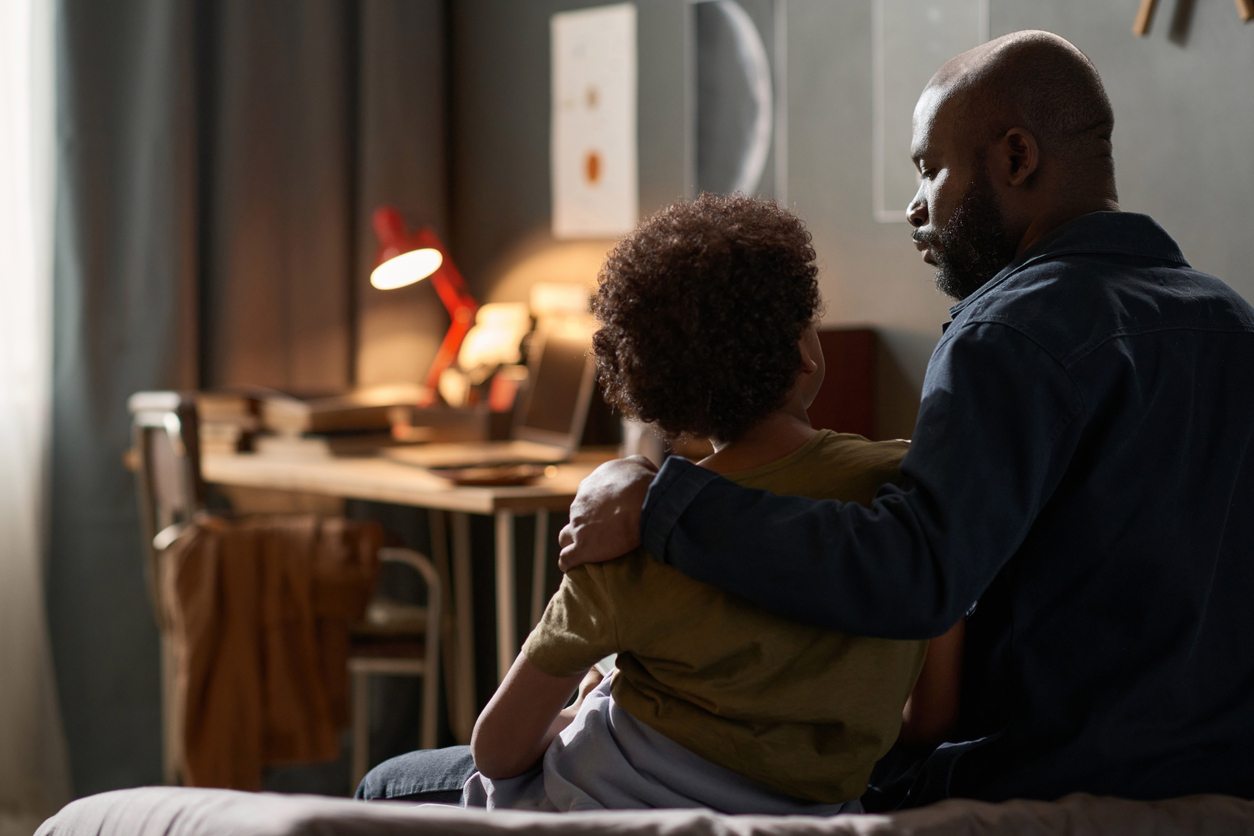
My Brother can’t Replace My Father
His support feels more like control
About These Stories
YC runs intensive nonfiction writing programs for teens in New York City, where they’re mentored by a professional editor to write personal stories about their lives and about issues that affect young people. Their stories are then published and read by thousands of teens, educators, policymakers, and other adults who work with and for young people.