
I joined the Navy because I wanted to feel the thrill of combat. I wanted to travel and be a part of something everyone respected. I also wanted the perks you can get from giving a few years of service-a college scholarship, medical benefits and a better shot at getting most government jobs. But mostly, I wanted to prove to myself that I could make it through boot camp.
Boot camp, or basic training, is where you’re taught survival skills and how to act in the military. You also get physically trained. Though I’d seen boot camp in the movies, I had no idea what I was really getting into.
I Failed the First Drug Test
I had decided to join the Navy branch because I love the water and their uniforms. (Blue and white are my favorite colors and I knew I would look good in them.) To join the Army or Navy you have to be 18, or 17 with a high school diploma or GED. You also have to pass some tests, like drug and alcohol tests as well as some written ones, like in school.
For most of the branches of the military, it’s OK if you’ve been in trouble with the law, or have used drugs in the past as long as it’s not in your system when you take the test. I smoked weed, but I thought it would be out of my system by the time I took the test. It wasn’t. I failed and had to wait six months before I could take the test again. That time I passed.
I was 23 when I finally boarded the plane to boot camp. It was the middle of January when I landed in Chicago’s O’Hare airport with the other Navy recruits from New York.
On the Bus to Boot Camp
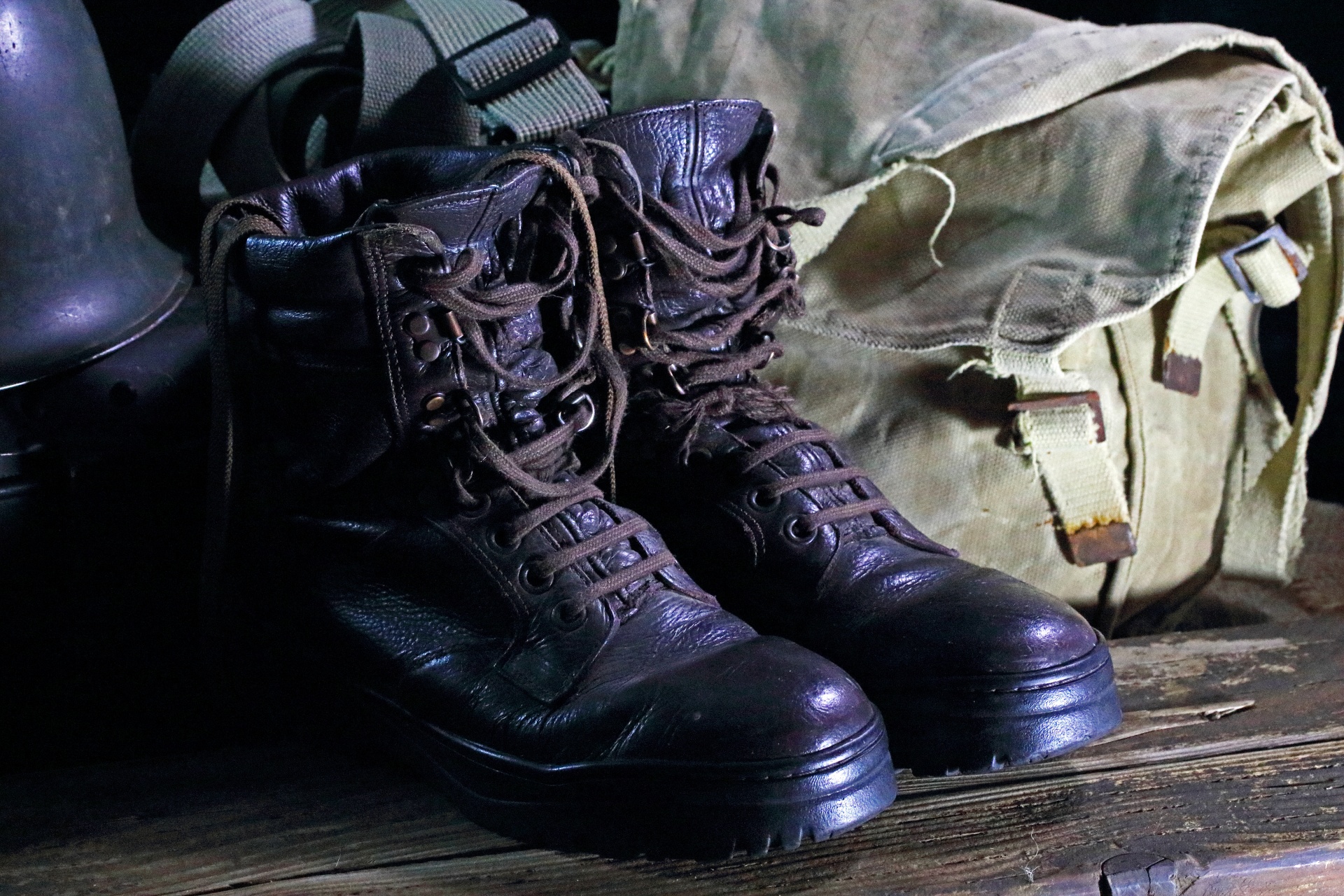
On the bus to the Recruit Training Center, I looked through the frosty window and saw divisions marching by. They were all dressed the same, wearing their blue uniforms with combat boots. No one looked too jolly. There was no laughing, no joking around, and definitely no lagging behind.
I found it hard to hold my face together when one of the thugs among us got yelled at for not walking straight as we made our way to the base. When all of us had to call out the single digits of our social security numbers, one girl kept saying “nineteen” instead of “one” and “nine.” She got screamed at badly.
I quickly learned that I needed to listen carefully to what I was asked to do and then do just that. Otherwise, I would get screamed at or forced to do push-ups until my toes ached.
Everyone was issued military clothing, sneakers and boots. Everything we came in with, down to our drawers, was put in a box and mailed to our homes.
In the Navy there are five different uniforms and they had to be placed in the lockers a certain way. Our metal bunk beds had to be made a certain way in a certain amount of time. Uniforms had to be folded and worn properly, and all these things were inspected. Even our underwear had to be folded right.
Folding Underwear Like Sissies
One day after classes we found half the beds flipped over and most of the lockers emptied and turned upside down. It seemed that there was a surprise inspection and we had failed miserably. We had thought we were going to be firing rifles, jumping out of planes and playing war games. Instead, we were folding underwear like a bunch of sissies. But I started to understand why the officers were so tough on us recruits. They got on us about every little thing because out in the fleet any little detail you overlook could cost you your life and the lives of those around you.
Those first few days, while they drilled all the rules and ways of Navy life into us recruits, we didn’t get a chance to sleep. Our day began at 5 in the morning and lights out was at 10. It was exhausting. Some of us learned how to sleep while standing.
We were bombarded with physical and medical tests to make sure we were able to handle what lay ahead. When the tests came back, three guys who got high in the hotel the night before the tests were sent home with dishonorable discharges.
Because I had a GED instead of a high school diploma, I was placed in a special division where I had to spend 10 weeks in boot camp instead of eight like everyone who had a high school diploma. Our division was thought of as troublemakers because we didn’t have the patience to last through high school. Also, some of us had either used drugs or been in trouble with the law.
To the frustration of the officers overseeing us, we lived up to that reputation. When we got sent to self-esteem and anger management classes, we were all pissed off and swore we didn’t need them.
Getting Pumped?
Some of our days were spent practicing marching formations, but the majority were spent in classes. We had two chances to pass the test of each week or we got washed back. At first I couldn’t believe it. If I had wanted an education I would’ve just gone back to college. I wanted to get pumped and blow stuff up, not sit and study. But I began to understand that being mentally prepared was perhaps a human’s best ammunition.
That’s not to say we didn’t do a lot of physical work. We did. We often ran first thing in the morning. There were three physical training phases that we had to pass, or get washed back. First we had to run about a mile and a half in less than 12 minutes, and we weren’t allowed to stop once we started. I started out at a good pace, but by the third lap I was out of breath and my legs felt like they were going to pop. I wanted to stop and ask for a glass of lemonade, but I was determined to not spend an extra week in boot camp. I made it.
I realized for the first time that running fast was not a matter of strength or energy, but of will power. I saw that my mind had more power than I thought.
On Sundays we were allowed go to the church on base or write letters and study. But no sleeping. If anyone was caught sleeping they got a penalty. Too many penalties got a person “washed back” to a group of recruits that was a week or two behind them. That meant more time in boot camp.
I Hit a Navy Seal
In week three we learned how to swim. We had to jump off a 20 ft. platform into a deep pool and swim to the edge. I was one of the cocky recruits who lied about knowing how to swim. I said I could swim “a little bit.” But really, the only way I could move in the water was if I walked along the bottom.
When I jumped off the platform into the pool and didn’t feel my feet hit the bottom, I panicked. I started flapping my arms frantically and hit one of the Navy Seals (they were our instructors for that phase) in the head. He pulled me out of the water and I got away with only a lecture. (That was a lot less painful than what I had expected.) Not everyone can say that they smacked a Navy Seal in the head.
Soon, I knew what would get me in trouble and what wouldn’t. That made me a little more sure about myself and the days started to fly by. I started looking forward to the runs and reading my manuals on Sundays instead of lounging. I also started feeling confident about doing “watch,” which is where you guard a post for two or four hours and challenge everyone who comes near it.
In week six, after we had enough practice shooting at moving targets, we were allowed to let loose and have some fun at Captain’s Cup. It’s a one day event where divisions compete against each other in physical feats like running, swimming, push-ups and sit-ups. Our division would’ve won but we had team leaders who were real knuckleheads and couldn’t lead a river downstream. I think our officers purposely did that to test our patience and get us in the habit of taking orders from people who piss us off.
Stuck in a Gas Chamber
In week seven, we learned about lifesaving techniques, tools and gas masks. We also had the pleasure of spending a few minutes in a chamber filled with tear gas. We thought we were tough and could handle it, but we were crying with our noses dripping and drool coming out of our mouths. It felt like my eyes, nose and lungs were burning up, but I managed to crack a smile when a section leader (a short, cocky guy who no one liked) panicked and tried to run out of the chamber.
In week eight came Battle Stations. A loud siren and whistles blowing woke us up in the middle of the night. The lights were blinking off and on, and a loud threatening voice told us that we had 10 seconds to get our gear on. Until the following morning, we had to do everything as if our lives depended on it. There were six tests set up for us, all at different locations on base. In one, we had to race through a battlefield getting casualties to safety without getting shot. It was a night I’ll never forget.
Worthy to Protect the U.S.A.
At 8 the next morning we got a congratulatory speech from the officer-in-charge. It was graduation day. It felt good to hear. We had proven ourselves to be worthy enough to protect our country. People’s families and friends came to witness our graduation ceremony.
I had no one to invite but I had become so close with my division that it wasn’t a problem. Two months ago we were at each other’s necks. Now everyone was introducing mothers and fathers. We took pictures of ourselves holding each other’s kids.
Hello to a New Me
Boot camp was just the beginning of military life, but it was an important part. It was like giving birth to a new me. I had always been disciplined and respectful, but now I knew how to discipline my mind and body. Before boot camp I could hardly run three blocks before stopping to catch my breath. Now I could run 3 ½ miles in under twenty minutes.
I became more focused and I learned not to panic despite the situation. I also found people I could count on in an emergency. I made friends who I stayed in contact with even after some of them got stationed overseas. I feel like those qualities will help me a lot, hopefully for the rest of my life.
Anchors Aweigh!
About These Stories
YC runs intensive nonfiction writing programs for teens in New York City, where they’re mentored by a professional editor to write personal stories about their lives and about issues that affect young people. Their stories are then published and read by thousands of teens, educators, policymakers, and other adults who work with and for young people.