
(Some names have been changed.)
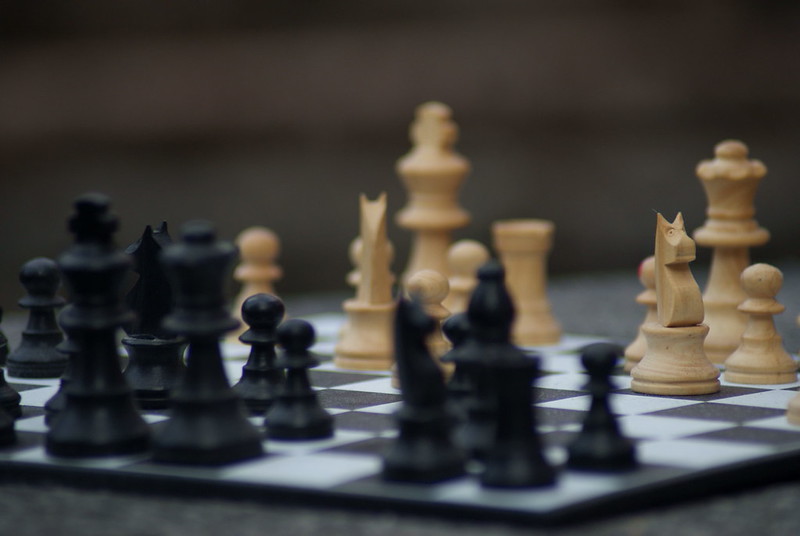
I’ve played competitive chess for six years now. It’s made me feel better about myself, but has also worn out my mind at times. Sometimes, I had a hard time dealing with defeat and let my rivalry with my opponents consume me.
I first heard of chess when I was 8 after my 6-year-old brother Stefan started going to a chess club at P.S. 6 in Manhattan. I didn’t have much interest in the game because I figured chess was too complicated for me. I had little confidence in my ability to master new things that seemed hard.
But one day, I fell into the game. After his first month attending the club, my little brother showed me and my pop how to move the pieces. Each kind of piece moves across the board differently and some are more powerful than others. The goal of the game is to capture the king; that’s checkmate.
Felt Like Commander
What amazed me about the game was how each piece had its own unique ability, but could also work together. I felt like a commander in control of a cavalry, knights, castles and regular soldiers. I was inspired by the drama.
But I was new. The result of my first game was a quick, smashing defeat by Stefan. A couple minutes later, my groan echoed through the house as I suffered another devastating blow, this time from Pop.
I was the trio’s weakest link, which I found humiliating because I’m very competitive and never appreciate last place. But I figured that instead of complaining about it, I should practice.
Wanted to Play More
So I played Stefan whenever I could. And every time Pop came home, I was eagerly tugging at his shoulder, begging him to challenge me to a match.
“Oh please, Pop! Oh, please,” I begged, eyes opened wide like an oyster shell. “Just one game of chess.” Occasionally, Pop gave in to my pleading, and that really made my day.
My father beat me easily, but at least I was able to play the game. I refused to give up this newfound passion.
For the next few months, I played with my family and friends. After four months, I no longer felt overshadowed or intimidated by my pop. During one game, I used some of my major pieces to massacre his armies. At one point, he thought he checkmated me, but he was wrong. I captured his rook. And then I checkmated him.
Talk about an energy boost of self-esteem! My cork blew off and I lost my mind, laughing and tripping over the living room rug because I was so excited.
Winning at chess was a way of proving to myself that I was smart. It was pretty scary doing better than my own pop at something because adults are the ones who set the example and are considered wise. Pop seemed deeply disappointed that I beat him, especially when I went on one of those Yankees winning streaks against him that sometimes lasted for 15 games.
I was ready to compete in a bigger environment and learn more. So I joined my brother’s chess club.
I went once a week after school. The class was run by Michael, a Russian chess master who wore thick glasses and was very strict. He criticized students harshly if we blundered in a game. He was rough, but I’m glad that he took the game seriously because I learned a lot from him.
Passion for Whipping Butts
Michael had us study famous games, find checkmating moves, figure out which pieces were most important and learn how to begin the game (the opening) and end it (the endgame). To my surprise, I discovered that I had a great endgame.
I adored solving the problems of my daily chess assignments. Being in a chess club made me feel dignified and gave me a beautiful knowledge of how the game should be played.
But my real passion was playing other people and whipping their behinds. My competitive streak had started to come out when I played my brother because each of us wanted to prove we were the best in the family. (Stefan had started beating my father before I had.)
By the time I turned 9, the chess club inspired me to compete in neighborhood, city and state tournaments. I was becoming a serious chess player.
At tournaments, I began to earn points, which are given for every match a player wins. My pop told me not to get intimidated by kids with high rating points. But I still felt like my first year in tournament play went badly because I never felt the magic of carrying my own trophy. I won some matches and earned points, but I was still disappointed.
New School, New Challenges
At this time, I also started 4th grade in a new school, Churchill. Churchill had its own after-school chess club, which I decided to join so I wouldn’t have to trudge 15 blocks to get to P.S. 6.
But I had some problems in my new club. I became a perfect target by a few wise guys because I was a new kid. My name was easy to make fun of and some club members referred to me as “Babio” or “Fatio,” or even worse. I felt like an outsider. I shyly said helpless little words like “Stop.”
I sometimes ignored them and soon figured it was better to say nothing. They usually got frustrated and bored when I didn’t say anything in response to their teasing.
Crushed Best Players
I felt my best response would be to beat them in a match. I became more determined. So, one day during a match, I crushed the school’s second best player, Jessica. And then, the same day, I crushed Maurice, the school’s best player and the #1 wise guy who’d insulted me.
The shy outsider had made them look like fools. They still teased me, but at least I knew they’d never forget the talents I displayed that day. In my eyes, I’d proven myself worthy of being there.
Over the next year, I beat Jessica and Maurice many times, but they got tougher, so I wasn’t able to win all the time. I wanted to diminish their confidence and make them feel like I was invincible.
But my rivalry with Maurice became World War II. He became my worst enemy and we got into a lot of conflicts, on the chessboard and elsewhere. Sometimes we got into physical fights.
Fist Fight!
Once, he commanded his friend Joe to steal my shoe while I was focused on a serious game. Joe got my shoe off my foot and then started running around, showing it to other kids at their tables.
I ran after him to get my shoe back. I was furious. I was so mad that I punched Joe in as many places as I could. Maurice jumped in, and he and Joe pounded on me while I hit them back. It was a brawl. Our chess teacher had to break us up.
My fights with Maurice lasted through 5th grade. I thought that Maurice took our rivalry so seriously because he didn’t want an outsider like myself to
suddenly claim his title and steal his glory.
This rivalry started to make me feel very unhappy because I didn’t want to fight outside of chess or defend myself every day. I wanted my chess wins to help me gain honor, respect, loyalty and friendship. Even though I gained some of these things, I wanted to have peace with Maurice.
Sore Loser
During my rivalry with Maurice, my parents said I should ignore him when he mocked me. But I had little self-control and took things too personally, so that was hard.
Still, I had some achievements. By the end of 5th grade, I’d made friends in the club. I’d also met Light Buggiani, who became my personal tutor (see sidebar), and I continued to earn points in tournaments as I entered 6th grade.
But I still hated losing. My brother and I became bitter rivals. After matches, we got into intense arguments because I was such a sore loser. I sometimes blamed him if I lost a game.
“You distracted me,” I accused him once after I’d lost.
“No, I didn’t,” he said.
“Admit it, Stefan!” I yelled back.
But I knew he’d won fairly. I hated losing, so I felt like I needed someone to take my anger out on.
Thought About Life
By the 6th grade, I had the highest ranking in my school, and I wanted to achieve a high ranking at the 6th grade nationals. But one of my best friends from the club, Matthew, performed better than me at nationals and other big tournaments. Even though I didn’t treat him differently, I held a grudge inside because he was doing better than me.
Once again, I felt like a complete loser. I was discouraged and depressed, which made me start thinking about my life and chess.
Although my high rankings in tournaments supplied a big boost to my self-esteem, the thrill was washed away whenever the tide of defeat arrived. Losing lowered my confidence and allowed negative thoughts to flow through my mind. I felt like chess had transformed my life into a tragedy full of war.
Too Hungry for Power
My desire to beat my rivals nearly destroyed my love of the game, made anger an annoying thorn in my side, and almost spoiled a friendship. By the end of 6th grade, I wondered why I was obsessed with winning. Why was I destroying my childhood?
I realized competition had taken me over. I started to worry that I was becoming too hungry for power. I thought that being too competitive could destroy my happiness and prevent me from relaxing. I wanted to change because I was afraid that my competitive ambitions could destroy my friendships with other people who were also talented at chess.
Competed Less
I soon had a discussion with my family about my competitiveness. Stefan said he was scared of me when I had a temper tantrum because I’d lost. I said that I didn’t want to go to bed unhappy because I’d lost a chess game.
So Stephan and I agreed to no longer play against each other at home. Now, we discuss chess tactics and maneuvers while playing them out on the board.
And I no longer had matches against Maurice because he decided to focus more on sports and stopped attending the chess club.
I started to socialize more and competed in fewer tournaments. I entered 7th grade as a 13-year old with a new life ahead of me.
Let Go of Past
But when I only won four games out of eight at my first two tournaments that season, I badly wanted vengeance on the kid who beat me in both tournaments’ first rounds. Then I remembered that I had to drop the past and not get caught up in rivalry. Besides, I’d be better off just focusing on the approaching city tournament.
My pop escorted me there. The tournament took place in a dark square building next to the Twin Towers. I very nervously looked up at these gigantic concrete pillars and then dropped my eyes on the tournament building, the exact location where I flunked my last city tournament two years ago. Suddenly, I was struck with confidence and boldly marched through the entrance.
After my first four victories, I felt the release of my past defeats. But then I lost playing speed chess. Still, I managed to capture 5th place in my section. Although my rating shot up only 10 points that day, I won something more precious: more confidence and the will to move on to the open section, where people of all ages can play each other.
A Fun War
At 14, I still play in tournaments. Over the years I’ve earned 20 trophies and now have a rating of 1500, which is a strong ranking for my age. But I refuse to let competitive chess control my mind like a puppet-master. I’ve gotten involved in other hobbies that make me feel strong and smart, like checkers, Connect Four, baseball, running and writing. Chess is a large part of who I am, but isn’t the most important part of me; writing takes that title now.
I still feel down after I lose a chess match, but I put that loss out of my head and look forward to another match where I can finish off stronger. I look at chess now as a war to have fun with.
SIDEBAR: My Very Own Yoda
If you’ve seen Star Wars, then you know who Yoda is. He trained a young Luke Skywalker to become a Jedi Knight. Well, deep into the 5th grade, I met a worker in a chess shop, Light Buggiani, who became my Yoda. One winter Saturday, Pop and I went to the Village to walk around. I spotted a sign on a storefront that said “Chess Shop,” so I eagerly entered the store to see if I could play a game with someone inside. To my surprise, I was surrounded by men young and old giving me frowns that seemed to say, “What in the world are you doing here?” I think it was because I was only 11. A worker introduced himself as Light and immediately paired me up against someone. I didn’t know at the time my new opponent was the owner of the shop and a chess master with a 2300 ranking. My father spotted the man’s name on a newspaper clipping in the store and then looked at me with a face that said, “You’re toast; you’ve walked right into the lion’s den.” After an agonizing 30 minutes that felt like an hour, my eyes bulged wide. I’d checkmated him. I’d won. It was an outcome so stunning that a man’s cigarette fell onto the floor. Although I lost the next two games, I was the talk of the shop. Light spoke to my pop and said that he’d be my chess tutor for free. After about a couple of months, Light and I met up and talked about famous games, which made me feel like we were two generals discussing battlefield strategies. Over the years, Light’s made a great impact on my life. He taught me the importance of opening a game with a specific plan and what to do if my opponent blocked it. More importantly, he told me to take risks. Whenever he taught me an opening or attack, he taught me only the basics. He left me with the responsibility of taking the next steps on my own so I could learn to trust my judgment and complete the rest of the puzzle. And he inspired me to continue the mind sport of chess after I was feeling disillusioned about the game. When I felt like I was becoming consumed by my rivalries in 6th grade, he helped show me that just because I play competitive chess doesn’t mean that I have to make my life a bitter war. He said I’d never be happy and never be able to rest if I didn’t work on letting go of my anger when I was defeated. He suggested that I concentrate more on interacting with other kids outside of chess. Light also makes winning more fun. To celebrate my victories, he joins my pop and I at restaurants and gives me compliments like, “If you keep up at this pace, you can reach master strength in a couple of years.”