
“Oh my God. It’s 10 already!” It was my first night on my first job and I was too shy to ask what time I could leave. Watching the clock anxiously, I finally got the nerve to walk over to the group of supervisors and ask, “Can I go home now?”
“What time you came in?” my supervisor asked, annoyed that I interrupted her conversation.
“Four,” I said, annoyed at her insensitivity. “I have to go to school in the morning.” The other supervisor started staring at my behind like a movie was being projected on it.
“Well, we can keep you till whatever time because you’re not a minor. So if you got school, you gotta talk to personnel.”
‘I Am a Minor’
“What are you talking about? I am a minor. I only turned 16 last week.”
“Damn,” said the other supervisor, as he diverted his eyes from my butt to my face, bewildered. “I thought you was at least 19. You were supposed to be out of here at 8. Go home, girl.”
Confusion about my age happens so often, it’s ridiculous. “You’re 17?” and “You’re still in high school?” are some of the comments I get about my age, along with wide-eyed, confounded faces. It’s not like I wear three-piece suits and carry a briefcase. I just have a developed figure and don’t use slang.
Parents Were Open With Me
Although there are other girls my age who are equally as developed, you can tell they’re 17 when they open their mouths and utter some overdone rap lyric.
But I prefer to use traditional English. Some people assume young Blacks and Latinas only use slang or talk “ghetto.” So, since I don’t talk that way, those people think I’m older.
I think another reason I come across as older is because of how my parents raised me. Other kids’ parents didn’t talk about sex and war and drugs in front of their children, and didn’t encourage their kids to watch the news or adult movies.
But in my house, my siblings and I watched the news. And my parents took us to see R-rated movies like Goodfellas. Plus, any questions I had about sex or world affairs were answered frankly and truthfully.
Saw Plays
My parents grew up very sheltered. My father’s parents wouldn’t let him listen to music or go out. And my mother couldn’t hang out by herself and lived in a very mannered house where she had to leave the room to burp.
My parents wanted to bring their kids up differently and believed in exposing us to adult culture. So Mom and Dad took me to see plays chock full of adult concepts from the time I was 9.
I went to flashy, melodramatic shows like The Phantom of the Opera, as well as shows filled with expressive, true-to-life monologues, like Neil Simon’s Jake’s Women, a comedy about a writer who likes to make up dialogues in his head between him and the women in his life. I learned a lot about the different ways people express themselves.
Some of my peers scoffed at the plays and movies I went to as “corny” or “whack,” but I tried to understand and learn from them. After seeing movies like Interview With a Vampire or The Godfather, I was inspired to read the novels they were based on.
Not Easy Feeling Different
Because of this, during my late elementary-school years, I felt more aware of different styles of life than my peers because I was exposed to more than cartoons and video games.
But it wasn’t easy feeling different. In the 6th and 7th grades, when my peers were yelling and cracking jokes on the poor or ugly kids in school, I felt like I had to laugh with them to fit in. I wanted people to think I was like them, even though in my head the joke wasn’t funny and I was bored.
But I was able to be myself in other ways. In class, I made sure that I wasn’t only getting high grades, but also learning the material. Sometimes a teacher covered a subject that I wanted to know more about, so I did research on that topic on my own.
I spent a lot of time in the libraries near my house, on the computer or watching PBS. Sometimes I’d already read a book the class was reading or finished a book days ahead of when it was supposed to be completed.
But I kept what I knew to myself. So even when I knew the answer to every question the teacher asked the class, I never raised my hand.
And when I finished a test in 10 minutes, I didn’t hand it in. Instead, I flipped through the booklet and doodled on the sides, trying to make it seem like I was still working on the test. I felt like I had to hide what I knew around my classmates to be accepted.
I was often bored in class, but sometimes there was a lesson that I wanted to learn more about from my teacher. So when class was over and my classmates were gone, I revealed my true self. I asked a question about the lesson and struck up a conversation with the teacher.
My brothers and sisters were just like me, so when I was at home, I could also drop the front.
Let Myself Slip
One time, in the 6th grade, I let myself slip when my humanities teacher and I started talking about British history in class. She had made a mistake and I corrected her, but then I had to explain why she was wrong.
No one in the class seemed to know what we were talking about. They stared at me like I was so weird. I felt like the smarty girl who no one would like.
After that, I made sure I kept that part of my identity to myself. But sometimes my classmates still got hints, like when the school announced over the loudspeaker that I scored in the 98th percentile on the state exam. Or when the city fixed a dangerous intersection near my school after receiving a five-page letter I wrote, and my school gave me an award.
New School, New Experience
I continued acting like everyone else around me until I started a new school in the 8th grade. I was the only tall, thick-bodied girl, not to mention the only Black girl, in my new school. I thought that more years of alienation were to come.
But somehow, in this school of flat chested, four-feet tall White and Korean girls, I managed to find other people like me. I made three close friends and discovered we had much in common.
Their parents had exposed them to more “adult” culture as well. We laughed about Seinfield and opted out of going to the popular PG-13 teen movies, preferring the more interesting and controversial R-rated films like The Slums of Beverley Hills and Wag the Dog. (I could buy tickets for us because I looked older.)
We also liked to shop at the same places. It was so comforting to meet girls who didn’t consider the baby doll T-shirts with “Sexy” and “Cute” written across them wearable.
Felt Free, But Now I’m Tired
I felt so free after meeting them that, by the end of 8th grade, I stopped caring how old people considered me, let down the front and started acting like myself. After a while, I didn’t mind when people told me, “You have an old soul.”
But, four years later, I sometimes feel tired of being old. There’s a down side to being treated like you’re 25 when you’re 15. You don’t get to be a kid because people expect so much from you.
Sometimes I want to act silly and obliviously do the wrong thing. Some-times I want to say “yup” instead of “exactly.” I want to spend $130 on a pair of Jordans that will be played out in a month. I want to talk stupidly and loudly on the train about people’s appearances. I want to believe that the decisions I make have no consequences.
Have to Be Me
But if I acted that way, I wouldn’t be me. I’d be throwing away what my parents exposed me to, which I’m thankful for.
Plus, being perceived as older has its benefits. I get more respect from older people. I think they find it harder to talk down to me because I might talk right back down to them. And it’s nice to be a fly on the wall in a room full of adults and not be perceived as a kid.
I know that, eventually, I won’t be considered prematurely old. One day, I’ll just be acting my age.
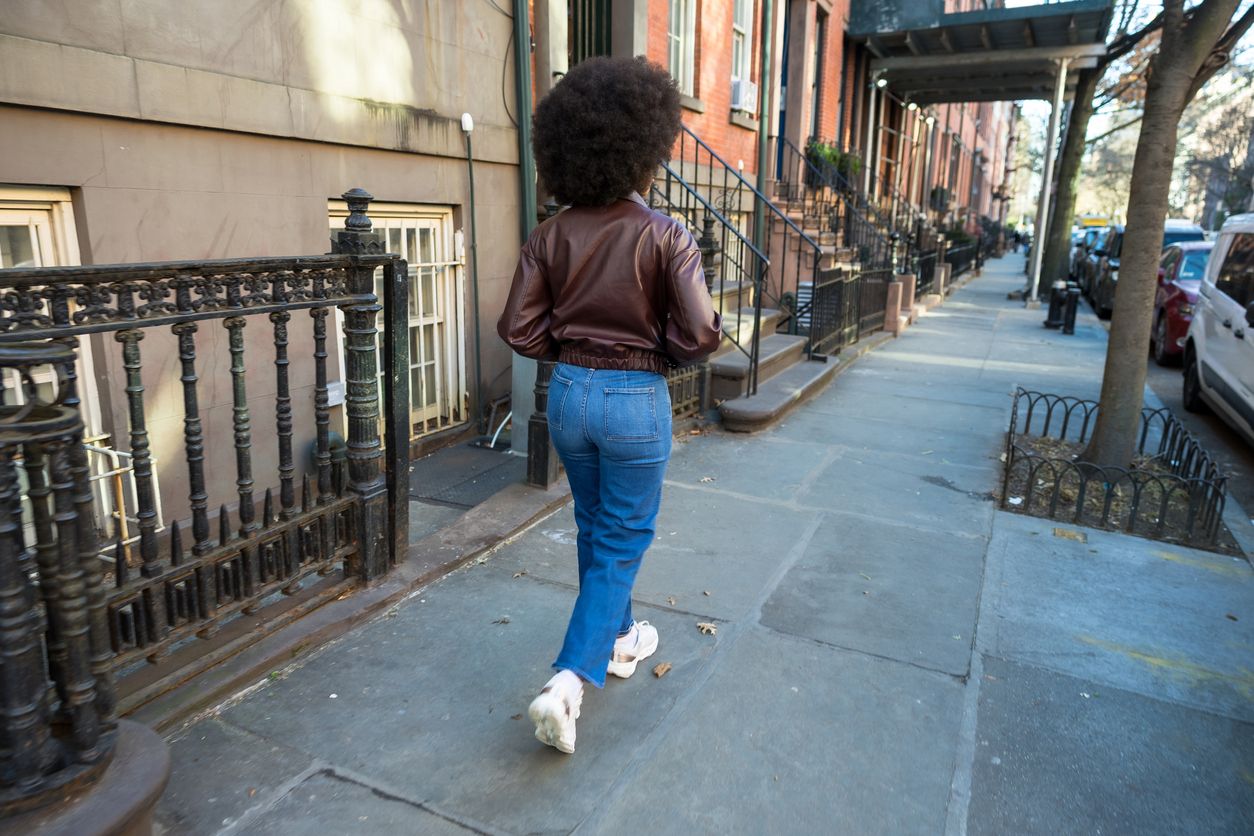
Not As Old As You Think
About These Stories
YC runs intensive nonfiction writing programs for teens in New York City, where they’re mentored by a professional editor to write personal stories about their lives and about issues that affect young people. Their stories are then published and read by thousands of teens, educators, policymakers, and other adults who work with and for young people.