
The first time I stepped into a yeshiva, when I was 9, I felt like a stranger in a strange land.
My parents and I had moved here from Ukraine only a few months earlier, so this was my first school in the U.S. Plus, the yeshiva was a private school, and there were no male students, which seemed unnatural to me.
But what made me most nervous was that it was a religious school. I believed in God, but religion wasn’t part of my daily life.
Still, I got a warm welcome that first day at the yeshiva. The teacher smiled as she introduced me to my new classmates. The girls were friendly and two of them even pushed their desks towards mine so they could share their textbook with me. And it turned out many of the girls there spoke my language-Russian-so I had no problem communicating with them.
But I felt weird about fitting in, and uneasy. Even though no one else there knew it, the girls surrounding me were all Jewish and I was only half. My father’s Jewish and my mother’s Christian.
Christened in Ukraine
For the first eight years of my life I was raised as a Christian. I was christened at a Greek Orthodox Church in Kiev, Ukraine.
I became aware at 4 or 5 that my parents were of different religious origins. They told me that before I was born, they’d agreed about which religion I’d practice-Christianity-with the condition that I’d be exposed to both.
I was young, so I didn’t understand much about Christianity, but my mother took me to the church where I was christened nearly every week and read me the Bible once in a while. She told me about Christian holidays such as Easter, the only holiday that I remember regularly observing.
I also recall praying to Jesus as well as to God. The church had a beautiful icon of Jesus, a long and colorful portrait that portrayed Jesus’ face distinctly, especially his wide-open blue eyes.
Soviets Against Religion
All practice of religion had been discouraged under Communist rule in the Soviet Union, which Ukraine was a part of until 1991. My mother felt forced to keep her Christian practices to a minimum as a child and a grown woman. It was only after my birth that she felt more liberated with religious matters.
It was even worse for my father, because Jews had been discriminated against for generations. My dad was unable to practice his religion as freely as my mom was and wasn’t educated about his own religious background and practices. He didn’t know much about keeping Shabbat (the Jewish day of rest), or other holidays besides the Jewish New Year (Rosh Hashanah) and Passover.
But he wanted me to acknowledge some Judaism, so he took me to a temple one Rosh Hashanah when I was 6. I recall dipping pieces of apple into honey and receiving a bow and arrow as a present from the rabbi to all the kids.
Moving to the U.S.
We moved to the U.S. in January 1992. Since the Chernobyl nuclear reactor explosion in 1986, I’d often been sick with viral and stomach infections and was hospitalized for a month with severe hives. My parents wanted to take me out of that harmful environment and bring me somewhere safer.
We also moved because of discrimination against my father’s religion. We wanted to move to where he’d be free to be Jewish. So when my uncle, who was already in the U.S., sent us an invitation to come here, we did.
When my parents and I moved to America, everything changed. We felt more liberated than ever. It was easier for us to practice any religion we wanted in any way we wanted.
No One Knew I Was Half
But my parents were scared to put me into an American public school since they heard that public schools here were dangerous. Because I was sickly, my parents thought I’d be safer and more sheltered attending a private school.
There were no Christian schools where I lived in Brighton Beach, and the only private school that I could attend was a yeshiva, so my parents decided to enroll me there.
None of my classmates or friends ever knew that I was only half Jewish. I didn’t want them to know. I didn’t know how they might react or what they’d think of me if they found out. I even talked about my father more often than my mother, since she wasn’t Jewish.
At first, I didn’t feel obligated to practice what everyone else at school was practicing, because I was only half Jewish and we weren’t observant at home. But over the next several months, I started feeling closer to Judaism and drifting away from Christianity.
Bonding With My Jewish Father
By 4th grade, I’d learned to pray in Hebrew and practice many Jewish customs. At home, I observed Shabbat by lighting candles. I followed Orthodox Jewish law, which prohibits going on transportation and working during Shabbat.
Sometimes I resented Jewish customs, like not eating meat and milk together, which I’d loved to do for many years, or not being allowed to watch TV or write on Shabbat. And sometimes when I’d pass by a church or see one on TV, I’d feel a soft spot for the church, especially its choir and beautiful organ.
But I was happy with my new identity, and it brought me closer to my father. After we moved here, he started practicing the religion too. With my yeshiva training, I taught him many things about Judaism, such as how to practice its holidays and customs, and the stories of Purim and Chanukah. We hung out a lot together and it was like we were best friends.
I Fit In as a Jew
I started to compare Judaism to Christianity and examine the differences between the two. The most essential difference is that Jews believe in God only and Christians believe in God the Father, Jesus his Son, and the Holy Spirit.
When I was a little girl, Jesus looked like a big hero to me and I loved praying to him, but as I grew older-and especially when I started learning about Judaism-I questioned whether I’d really had him in my heart. I liked the story of Jesus, but Judaism made more sense to me. It felt more right to pray to God only.
I felt I fit in more as a Jew; it warmed my heart to go to school and learn about the religion. I felt more obligated to keep the Jewish holidays and traditions than the Christian ones.
At first I just wanted to fit in with my classmates, but by 4th grade I started to identify myself as a Jew because I felt I was a Jew for real. I began to let go of my connection to Christianity.
My Mom Felt Left Out
But my becoming more Jewish was hard on my mother. My refusal to go to church or celebrate any Christian holidays was heartbreaking for her.
Before I went to yeshiva, my mother and I were close. Since my birth, she mostly stayed home and took care of me. I’m an only child and we had only ourselves to talk to, so we were each other’s best friend. She told me everything just like I told her.
Within the family, who was what religion had never stood out. But after a few years of my attending yeshiva, it was obvious that my dad and I were Jewish and she was Christian. She felt left out many times when my dad and I attended the synagogue or lit candles for Shabbat.
My mother didn’t say much about how she felt about my not going to church or celebrating Christian holidays with her. She kept it to herself, but I know she was upset because I could see it in her eyes.
Arguments With My Mother
I didn’t go to church because I felt it was inappropriate for me as a Jew to even step one foot into a church; I felt it was sacrilegious. Sometimes, my dad and I would stand outside the church doors waiting for her to finish attending the service.
At the time, I didn’t understand how much it hurt her. I didn’t realize how she felt until I got older, around 15.
My mother and I had many arguments about me trying to keep many Jewish customs and traditions. She tried to stop me from going overboard with keeping Shabbat or other holy days, but I wouldn’t listen.
I recall one argument we had about my refusal to turn on electricity on a Friday night. “Nothing will happen to you if you turn on your computer tonight,” my mother said. “If you recall, you’re not even a full Jew.”
She was right-I wasn’t a full Jew-but I was hurt. I felt I was as good and full a Jew as anyone else I knew who was Jewish.
No One Could Question My Jewishness
I didn’t want to hear it, because I wanted to keep Shabbat and not turn on electricity. I truly believed that God would punish me if I did. We argued a lot that night and in the end, I didn’t turn on anything electric. Other times, after the same kinds of arguments, I gave in, but then I spent hours feeling guilty and upset.
I became so caught up in practicing Judaism that I didn’t notice how much I made my mother and her beliefs invisible to mine. I think that’s one reason why our relationship is so hostile and damaged now. We love each other very much but there’s such a big wall between us, I don’t know how we’ll ever break through it.
By my freshman year of high school at yeshiva, I became so infatuated with Judaism that I spent more than an hour praying each day.
I often took longer than my peers to finish my prayers because I took time to actually think about the words as I was saying them and added the names of sick people to the prayers. Sometimes I was the last one left standing in the lunchroom, where the high school students gathered to pray.
I doubted that by the time I reached my sophomore year, anyone would question whether I was Jewish or not, including me.
Started Feeling Suffocated
The role I’d been playing for the past five or six years-observant Jewish girl-had slowly but surely become me. I’d become what the society around me expected me to be. Going to a Jewish school, I felt obligated to be religious; I felt obligated to be a Jew.
I know that it was my choice whether or not to practice the religion, but at times I also felt pressured to do so. In addition, while yeshiva was a warm and safe environment, it was also secluded and isolated. I didn’t feel like I was part of the larger world, or that I was expanding my horizons, and that started to bother me.
These feelings built up so much that by the age of 16, I started feeling suffocated. I began to regret passing up my opportunity to go to a respected Brooklyn public high school focusing on journalism. I wondered what I was missing.
Getting sick with what turned out to be chronic fatigue syndrome raised new questions for me about my yeshiva experience. Whenever I got sick and missed class, I received few phone calls from my classmates asking me how I felt, and that made me feel unimportant. No one made me a get-well card.
Feeling Like an Outsider, Again
I felt my academic accomplishments weren’t appreciated either. Even though I was sick, I did very well on one of my Regents exams, and my principal asked me to come in the last day before summer vacation and make a speech to the class about trying hard and succeeding in school.
But I didn’t receive any award certificates for my accomplishments like the rest of my class, and I wasn’t called up to say one word. That hurt me very much.
I didn’t lose faith in the Jewish religion, but I did lose faith in my Jewish classmates and teachers. I stopped feeling like I belonged, and started to feel once again like a stranger in a strange land, just like I did on my first day.
The next fall, I transferred to my neighborhood public high school, Lincoln HS, though that was partly because my illness made attending private school difficult.
Among the many reasons why I left, one was that I felt I no longer belonged there. I was also unhappy about the conflicts with my mom over my religious practices and just wanted it to end.
When I finally left yeshiva, I felt freer and more independent. I could practice the religion I chose and not the one that was chosen for me.
Being in a Jewish school was a great experience in many respects because it taught me a lot about God and humanity, but it also made me a slave to my religion. I took my religious studies and exalted them to such a high level that I didn’t notice anything else around me.
Practicing Jewish and Christian Traditions
But now I try to practice both Jewish and Christian traditions, which I haven’t done in a long time. I don’t think I’ll ever stop praying, whether it’s in Hebrew or English. I sometimes still light Shabbat candles and I care about keeping other Jewish traditions, too.
I actually visited a church in Bay Ridge not too long ago, just to see how it looked. That was a big step for me, since I hadn’t done it in so long. I also celebrated Christmas last year, for the first time in years.
Both religions are precious to me and have shaped the way I live now. Judaism has taught me the ways of God and his love for mankind, and Christianity has taught me to show generosity and kindness towards the world around me.
I still don’t believe in Jesus as the son of God, but I haven’t figured out what he means to me; maybe he was a Jewish man who wanted to change the world and make it better.
I still visit the synagogue once in a while, but now I want to try to attend church too. I don’t think it’ll hurt my father and it may soften the barrier in my relationship with my mother.
But I doubt I’ll be making any clear-cut choices yet. I think that after years of practicing both religions, I’ll figure out which one of them feels right for me, and I’ll convert officially. Until then, only one thing is certain: my belief in God.
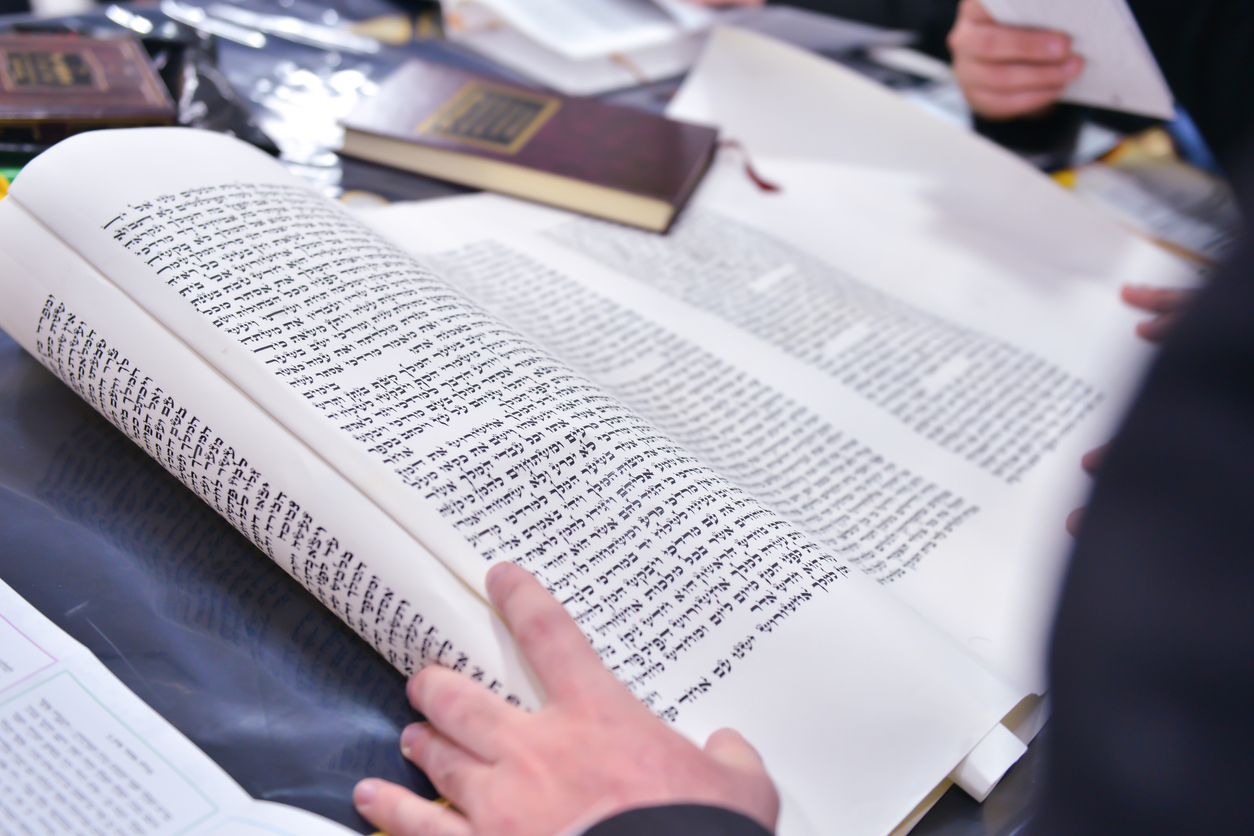
Christian or Jew?
About These Stories
YC runs intensive nonfiction writing programs for teens in New York City, where they’re mentored by a professional editor to write personal stories about their lives and about issues that affect young people. Their stories are then published and read by thousands of teens, educators, policymakers, and other adults who work with and for young people.