
Before I entered the system, I went to a private school-a strict, Catholic school for girls. There were no guys at my school and we had to wear uniforms. We weren’t allowed to wear nail polish and, of course, we couldn’t get our nails done. If anyone cursed in the school, her mother would have to have a meeting with her teacher. If anyone got in a fight, chances were that she’d get kicked out. And forget about cutting school! If you cut, the teacher would call your house at 9:30 in the morning to find out why you weren’t there. No child likes to get in trouble with her parents, so almost no one cut school.
A lot of us complained about all those rules, but we also knew they kept us on track. And because the classes were small and you got so much personal attention, it was a good learning environment. If we didn’t do our homework or if we slept during class, the teacher always knew. All those rules made us work hard.
Is This a School?
So I was in for a shock when I first started going to public school in the 8th grade. I left private school when I left my biological home and entered the system. In other words, I had no choice but to go to public school. It was a whole different ball game from private school. At first I couldn’t believe that people thought it was a school.
First off, there are almost no White kids in my school. But I thought segregation in schools was banned back during the civil right’s movement! To look at my public school, you’d think Blacks and Whites still aren’t allowed to be in the same school together.
Then I noticed that there are a lot more students in each of my classes, so you get a lot less attention in class, if you get any. And the halls are crowded. Sometimes people won’t move out of your way when you are trying to push your way to class. Everywhere I go, I hear kids cursing and none of the teachers say a thing to stop them.
And unlike at my old private school, people wear whatever they want. When the weather starts getting hot, students come to school with shorts that barely cover their butt cheeks. Again, no adult tries to stop that.
Plus, unlike my old school, my public school has boys in it. I notice a lot of kissing in the hall when students are supposed to be in class. Two students used to kiss regularly even in class. Once I saw a condom on the back staircase that looked like it had been used. It is hard to learn in an environment like that-there are just too many things taking away from your education. There are too many distractions.
The Building’s a Mess
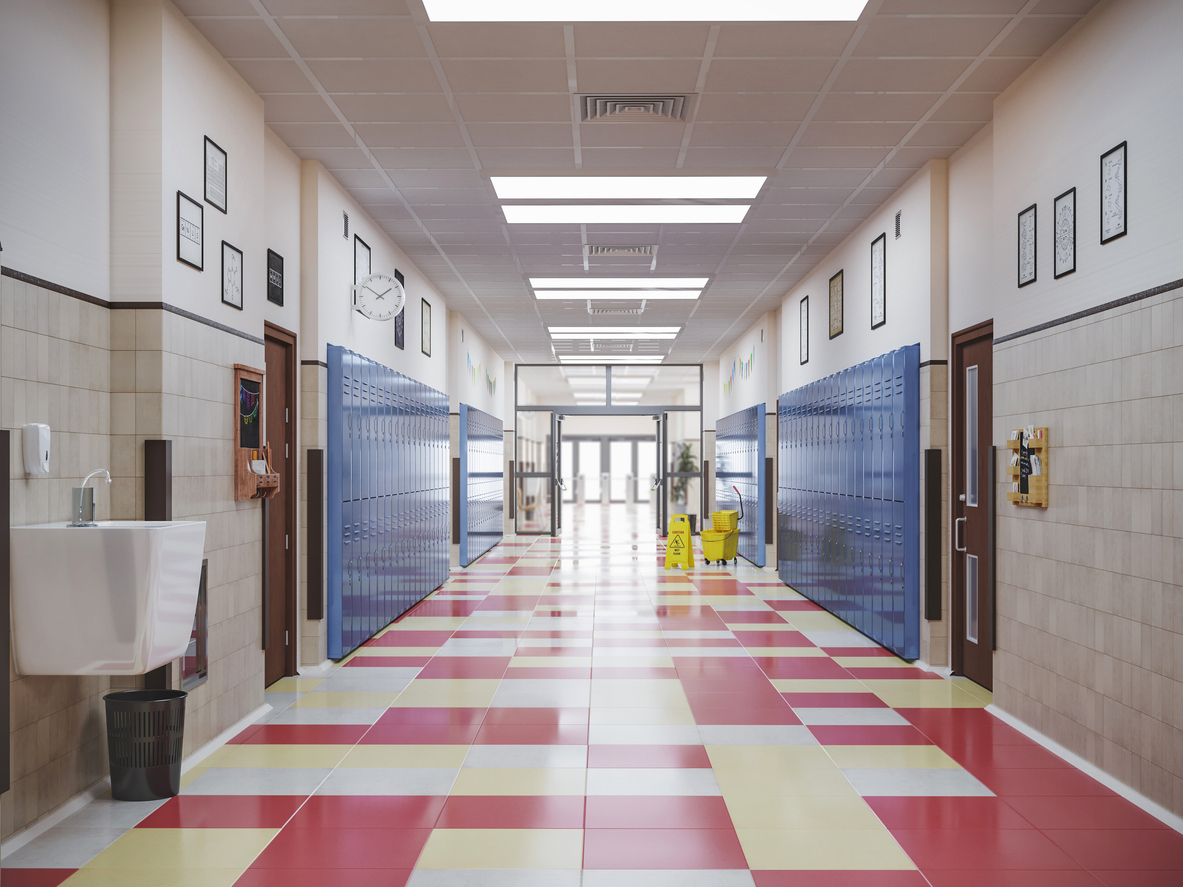
Then, while my old private school had been all nice and bright, my public school is a mess. The classrooms are filthy. The walls have writing all over them, writing which has been there since I came to the school two years ago. The bathrooms have no toilet tissue, no soap and no paper towels. Some of the toilet stalls don’t even have doors. There is even a machine that is supposed to have Maxi Pads in it, but it’s all broken up, and it has been like that for almost a year and a half. Classroom doors are broken down. The paint is even chipping from the wall. Is this our country’s way of saying how little they value the education of inner-city kids?
Books With Missing Pages
But it isn’t just the building that’s a mess. The books we receive at this school are already all torn up. There were even pages missing from my books when I got them. How are we supposed to learn if we don’t even have all the pages to read in a textbook?
But the weird thing is, no one seems to think that these things are strange. All of these things-the kissing, the yelling, the filth, and the torn textbooks-seem to be ignored by the adults. If a school has dirty halls and accepts bad behavior from the kids, the kids get the message that you do not care. This is how I put things together in my mind: If adults don’t care about the students and their education, why should we care about our education?
In an article in The New York Times, Jonathan Kozol explained this problem. He says that the world might not care that much about the education of youth in inner-city schools. Inner-city schools, like mine, don’t get enough attention or money, he says. Many New York City suburbs spend 50% more per pupil as New York City itself spends, and the suburbs pay their teachers up to $30,000 more per year than the city teacher gets. This means that suburban schools can get all the supplies that they need, unlike my school. It also means more teachers are going to want to work in the suburbs, where they get paid better and can work under calmer conditions.
So the better teachers will be the teachers in the suburbs. The teachers who work in the inner-city schools are not getting as much money, so they might not care as much about their job. And even when they do-sometimes they might care even more-sometimes the schools are so out of control that they can hardly teach.
Cheated Out of an Education
This is not fair. The kids who will be more prepared to succeed and become leaders are the kids in the suburban or private schools. They will be better prepared to take the SAT and go to college. Everyone should have the equal chance to succeed. But the way the school system is set up, if you live in the inner-city, you will probably go to a worse school and have less of a chance to get ahead. People born in America are supposed to have an equal shot at success. But that’s not happening.
Recently people have been talking about having a voucher program which would give some public school kids money to go to private schools so they can get a better education. Some people say that this will only help a few people and will be like giving up on the public schools altogether, instead of trying to fix them. I think that it is true. I think the voucher system is a bad idea. People need to work on making the public schools better.
As everything stands right now, we in the inner-city are suffering. Things that I am learning now as a sophomore, I learned when I was in 7th grade in private school. Chances are, the students I knew in private school are way ahead of me in their education by now. If you want to get kids in the inner-city to learn and to become leaders, you’ve got to teach us the same way as the students who go to private schools, or schools in the suburbs. Everyone deserves to be treated equal.
Cheated in the Classroom
About These Stories
YC runs intensive nonfiction writing programs for teens in New York City, where they’re mentored by a professional editor to write personal stories about their lives and about issues that affect young people. Their stories are then published and read by thousands of teens, educators, policymakers, and other adults who work with and for young people.