
When David Morales, 17, of Yonkers, first stepped off the train in the wealthy and mainly White suburb of New Canaan, Connecticut, he saw a lot of Ferraris and Porsches and “a whole lot of rich people walking into rich stores,” and he thought to himself, “Damn, I’m poor.”
And when Chris Ellis, 17, first came to New Canaan HS, he wasn’t used to being around so many White people.
Chris grew up in East Flatbush, Brooklyn, where “there were only two White people in my whole school,” so when he met his new classmates, he had lots of stereotypes about them, and they had stereotypes about him.
“When I first came, I used to wear my pant leg rolled up. They thought I was in a gang,” he said.
A Whole New World
Chris and David are enrolled in A Better Chance (ABC), a program that brings city kids to live in the suburbs and go to some of the best public schools in the country. To get in, students have to get good grades in middle school and pass a specialized test.
ABC also provides full college scholarships. As long as students do well in school, the only thing they will have to worry about is which college would be the best choice for them.
ABC offers a great education, but that does not mean everything is easy. Things are definitely different in New Canaan than in the hometowns of the kids in the program, like Yonkers, Brooklyn and the Bronx.
New Canaan is one of the wealthiest communities in the country. The majority of families earn more than $150,000 a year and live in houses with nine or more rooms, according to the United States census.
Jeeps, Saabs and Even a Mercedes
You can see it just driving through. There are rows of trees separating the houses from each other, and in most of the town, you’d have to walk a long way just to get from one house to the next because the yards are so big.
Most driveways have at least two cars parked in them, and a few houses have ponds for ducks. Lots of the houses look like they could easily accommodate 10 people each.
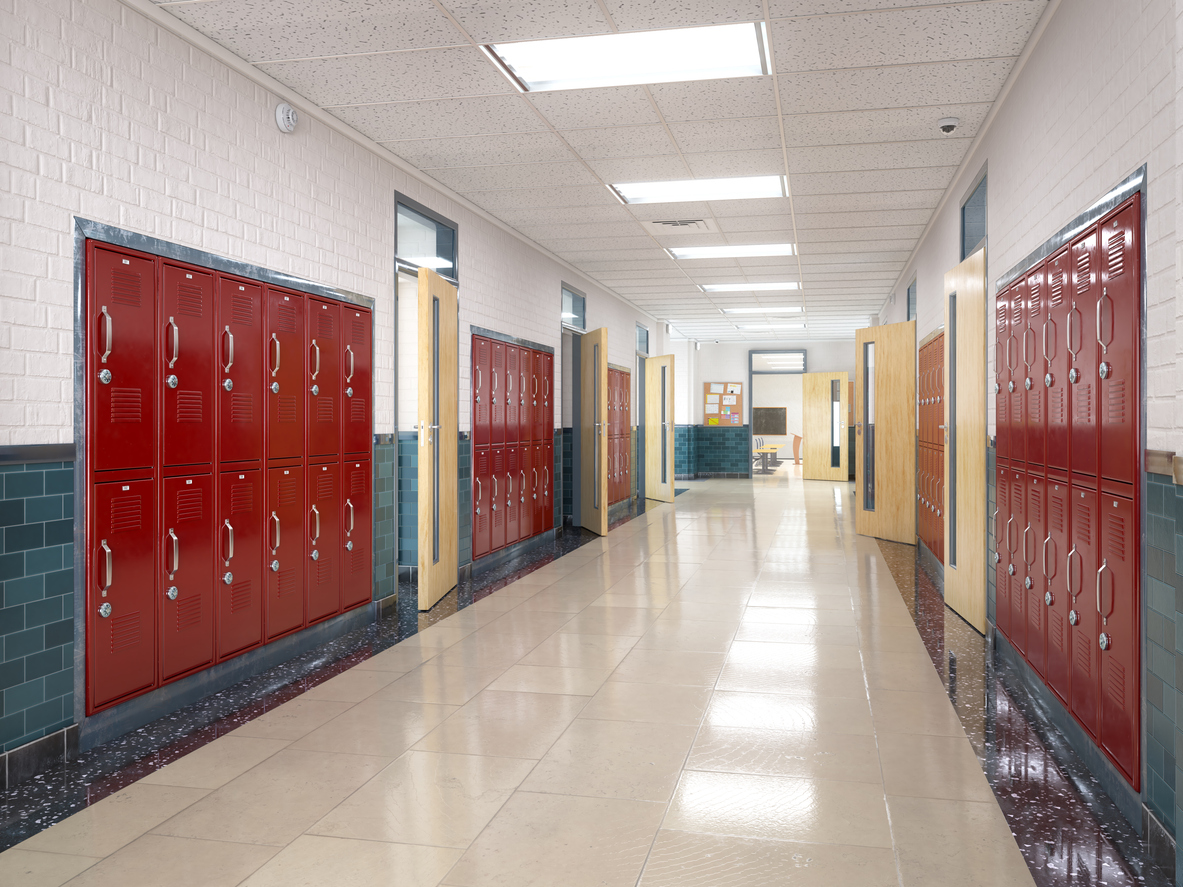
New Canaan HS is pretty, with painted murals throughout the school. Sunlight pours through the school’s various windows and glass doors, and there’s a brand new $1.2 million football stadium that the parents paid for themselves.
In the section of the parking lot where students park their cars, I saw Jeeps and Saabs and even a Mercedes.
Suburban Kids Break the Rules
“It’s a fantasy town. Not too many places are like this,” explained Rebecca Manetti, 17, of New Canaan HS, who grew up in the town.
“Anything you want, you have. I don’t think it prepares you for what it’s going to be like later on.”
Even though many New Canaan teens seem to live the good life, they also have problems and get in trouble just like city kids. The teens I talked to said that because there isn’t much to do, a lot of drinking and taking drugs goes on at parties and when people are just hanging out.
“Drinking is something kids do every weekend,” Mike, 17, of New Canaan HS, said. “Parents go away and everyone hears about a party. Two hundred kids show up, there are kegs, the neighbors call up the cops, the cops come, you get in trouble, and everyone goes home.”
For some of the ABC kids, this came as a big surprise.
“It kind of shocked me. Drugs and alcohol are part of the life as much as sports and class,” said Glen Austin, 17, a senior in the ABC program. “It’s funny. They consider the city [the place] where there’s all the drugs and alcohol. But there’s more of that here than I ever saw in the city.”
“Kids get away with things in New Canaan that they can’t get away with elsewhere,” said Castel Valere, 14, of the ABC program. “When they get out of New Canaan, they’ll get in trouble. They’re allowed to break all the rules.”
Group Living
The eight boys in the ABC program in New Canaan all live together in a big house.
They live with a very happy, big, white dog, and Kresta and Senan Hayes, the directors of the ABC house. When dinner is ready, everyone piles downstairs and eats together.
Even though they have each other, they’ve had to get used to their new surroundings and new people.
For some of the boys in the ABC program, it’s been hard to accept that almost everyone around them has money and cars, when they don’t have these things.
When he first came, David was taken aback by the wealth he saw in the town.
When he went to his new school, he saw everyone wearing North Face coats, and he asked, ” ‘How much does that cost?’ They’re like, ‘$600.’ I was like, ‘Whoa,’ ” he said.
‘Now My Friends Are White’
And of course, one of the main things the boys have had to get used to is being Black in an almost all-White school.
Glen said, “There are connotations that Blacks don’t do well in school, and we have to work twice as hard to make up for it.”
Because he is Black, Chris said he feels even more pressure to prove himself academically.
“All of my close friends are not minorities. They’re all getting 1500s on their SATs. Historically minorities don’t do well. I’m trying to do well. I got a 1280,” he said.
At the same time, the boys say that most of their friends are White, and it’s made them more comfortable with White people.
“It did change my views toward different kinds of people,” said Curtis Charles, 16, originally from Brooklyn. “I didn’t know what White people were like before. I just had them as teachers. They’re not as bad as what people saidâThe people I know said typical things coming from an all Black neighborhood. They’re always thinking about what they did in the past.
“Now my friends are White. My friends [from home] have said, ‘Oh, you’re a White boy now.’ “
Educating the White Kids
The ABC students come from one side of the tracks, and they are learning about the White people who live in New Canaan. But at the same time, the ABC students are educating the people from New Canaan about Black people.
“A lot of the kids haven’t had any experiences with Black people. They want to know more about what I do at home. They always want to hang out,” said David.
When I was in New Canaan HS for the day, I did not feel totally comfortable because I wondered if there might be some racist people there. The atmosphere was casual and positive, so it’s not like anyone did anything to make me feel uncomfortable.
It’s just that I always feel that way when I am the only Black person in a group.
But most of the ABC students I talked to said they did not experience any obvious problems with racism.
“There’s not too much racism up hereâIf we get any racial remarks, they’re joking, but not much more than that,” said David. “If they’re racist, they’re hiding it. And if they speak out about it, I’ll break their necks.”
Hard to Get a Girl
Sometimes, though, the students still feel like they’re seen as outsiders, although they said they think social status, not race, is the issue. For example, even though they have plenty of White friends, they said it was hard to get girls from their school to go out with them.
“Here it’s a struggle. It’s weird. You’re the new kid,” said Chris. “You have a different style than they’re used to. They’re not so ready to hook up with you. If they’re from the preppy group, they won’t look at you.”
‘Back Home, It’s Hard to Get a Tight Connection’
Sometimes, things like this can make the boys in the program really miss their friends and family back home. “I miss looking at girls walking up and down the block. Here you know them all,” said David.
“This is my first year in high school. Well, it’s like a hard change,” said Matthew Mobijohn, one of the newest members of ABC.
Most of the students I talked to said their friends and family at home were proud of what they were doing. But some felt like a distance had grown between them, too.
“It’s changed my relationships with my friends from homeâWhen I come home, they’re talking about stuff I don’t even know about. When I’m home, it’s hard to get a tight connection,” said Chris.
Called Sellouts By Their Homies
“You forget what’s going on with your friends, who they’re going out with, what fights there were,” said Curtis. “I feel left out in a way. That’s my home. I felt bad. Like I left them stranded there or something.”
A few said they get teased by their friends for being “sellouts.”
“I don’t pay attention [to kids calling me White]. I’m benefiting myself by learning to do things properly-like speak proper English. You go into a job interview speaking Ebonics, you won’t get the job,” said Castel.
Still, most of them said that their family and friends try to make them feel at home when they return for visits. Chris says his friends clue him in on the jokes he’s missed, and that they want to hear all his stories.
I guess it’s kind of like a balancing act to learn about a new culture without losing the old. David said he tries “to take the best of both worlds.”
A Better Chance in the Suburbs
About These Stories
YC runs intensive nonfiction writing programs for teens in New York City, where they’re mentored by a professional editor to write personal stories about their lives and about issues that affect young people. Their stories are then published and read by thousands of teens, educators, policymakers, and other adults who work with and for young people.