
Graffiti isn’t just a form of expression and emotion.
It’s also an art form that has been darkened by the negativity of the streets.
Whether it’s guys “bombing” trucks and walls, painting them with their tags, or artists fighting over turf, graffiti can be both destructive and dangerous.
“Graffiti can be territorial at times,” explains ICON, one of the few female artists I’ve met, who has experienced the harsher side of graffiti.
“Sometimes artists can get into fights with just anybody who [approaches] them,” says HASP, one of the younger artists. One time, he recalled, he fought several guys who had disrespected him by crossing out his tag.
‘Why Didn’t You Snuff Him?’
HASP doesn’t apologize for his art, or for defacing property when he creates it.
“I see a spot…If I wanna paint it, I paint it,” says HASP nonchalantly.
HASP explains that fights don’t occur that often, but when they do, he definitely doesn’t back down.
While I was interviewing him, we listened to two other artists describe how they watched a rival writer “buff,” or go over, HASP’s tag with their own.
“Why didn’t you snuff him right there?” asked HASP.
Chased By Cops
While the Phun Phactory provides a safe haven from violence for aerosol artists, some artists like HASP still display their art illegally.
HASP said he has been chased a few times himself “by cops and neighborhood heroes.”
When he was 12, HASP was arrested for doing graffiti, but was released.
KERF, another artist who paints at the Phun Phactory and also does graffiti in the streets, says he enjoys the adrenalin rush he experiences escaping from the police.
A couple of months ago, KERF and his friend SEAC were caught “bombing,” or painting, a commercial truck and were chased by the owners and the police. As he recalled the incident, KERF stared past me and an impish smirk spread across his face.
“It’s scary, but fun at the same time,” KERF exclaimed.
‘I Ain’t Going Back’
But SEAC seemed much more worried. Graffiti artists can get arrested or may have to contend with angry property owners.
“It’s funny, but it ain’t fun. I ain’t going back there no more,” SEAC assured me.
And graffiti artists don’t have just themselves and the cops to worry about. They also have to fear being seriously injured, even fatally so.
HASP told me a tale of an artist named BENO who had died in Miami that past weekend while attempting to do graffiti.
BENO was putting up a banner on a billboard when he fell from a great distance onto the tracks and a train ran him over.
‘I Don’t Think About Death’
I was disturbed by the story and more disturbed by how matter-of-factly HASP told me of the accident. It was as if HASP had accepted death as being a normal part of the culture of graffiti.
“I don’t think about getting killed,” says HASP. “I just put it out of my mind.”
But if HASP comes across as a tough guy, there’s another side to him too.
One day when I am at the Phun Phactory, HASP wanders around with his hands sunk in his pockets and his cap pulled down over his eyes. He watches solemnly as other artists create their pieces.
His Eyes Light Up
Pat Di Lillo notices HASP. “What’s the matter, HASP? You look bored,” he says. “You wanna paint?”
Like the face of a young child who has finally received the Christmas gift he has longed for, HASP’s eyes light up, and he eagerly answers, “Yeah!”
Di Lillo does not condone HASP’s illegal graffiti. “I’m totally against vandalism,” he says. “I feel if you have a talent, use that talent in the right way. If you don’t have a talent, get another hobby.”
Even though HASP continues to be a part of the “night life,” which includes eluding the boys in blue, he also says that the Phun Phactory “is one of the best things to happen to graf.”
Graffiti is a way for HASP to deal with his emotions and with life.
When he does graffiti, HASP explains with a grin on his face, “I take the stress out on the wall instead of on another person.”
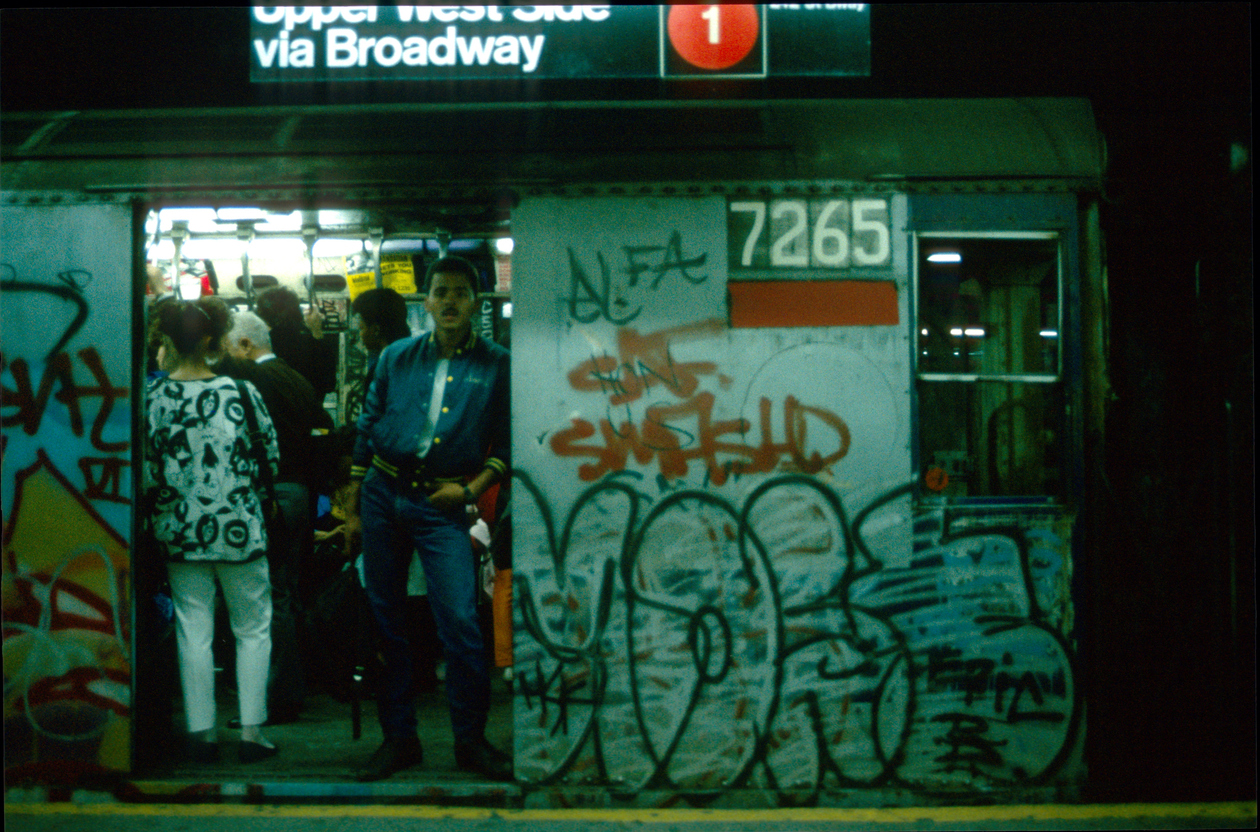
Tales from the Dark Side: Graffiti on the Streets
About These Stories
YC runs intensive nonfiction writing programs for teens in New York City, where they’re mentored by a professional editor to write personal stories about their lives and about issues that affect young people. Their stories are then published and read by thousands of teens, educators, policymakers, and other adults who work with and for young people.