
Graffiti Without Fear
By Michael A. Gonzalez
As the 7 train makes its way through Long Island City toward Hunters Point Avenue, it passes through an area darkened by the smoke from factories. Scraps of used cars, flat tires missing hubcaps and bricks that have fallen from vacant warehouses lie scattered beneath the rust-stained elevated tracks of the train.
I’ve already decided this section of Queens is destined to remain desolate when something outstanding along the side of a dingy building catches my attention.
An angel with long, flowing hair and pronounced wings thrusts her arm at a red devil who sits atop a Harley Davidson clutching his chest.
Beneath that, a woman in a black mask with brown curls and hollow white eyes opens her mouth to scream. To her left, an angry pumpkin stares in my direction and grimaces.
Abstract characters and bold colors reach out toward the 7 train and invite me to view more of this spectacular artwork called graffiti.
And as the train pulls into the tunnel I remember seeing one of the walls decorated with the words “Phun Phactory.”
Plague of the Streets
The Phun Phactory, established in 1993, is a large, old building where graffiti artists can display their work legally for about two to three months at a time. Here artists don’t have to worry about being chased by the police. And there is enough wall space so they don’t have to fight over turf with fellow artists.
The Phun Phactory was founded by Pat Di Lillo.
During the late summer of 1992, while recovering from a back operation, Di Lillo looked out the window of his apartment in Woodside, Queens, to see a scene of graffiti-covered walls.
As he lay in his bed peering out, Di Lillo wondered what he could do to get rid of the graffiti that plagued the streets where he lived.
In November of that same year, Di Lillo began an organization called Graffiti Terminators.
He worked with people from the community and inmates on a work-release program to clean, or “buff,” walls covered by graffiti.
‘It was Wildstyle’
During the late winter of 1993, Graffiti Terminators were buffing walls when they came across what Di Lillo described as a “fantastic work of art.”
“It was wildstyle,” said Di Lillo. “It was very different. The colors just knocked you out. It was like something I’ve never seen. It was the most beautiful thing I saw.”
At that moment Di Lillo recognized graffiti as an art form and realized it actually can be beautiful. He instructed the workers to leave the work of art untouched.
A Safe Haven Is Born
Just as the idea of cleaning the city streets led Di Lillo to create Graffiti Terminators, his realization that graffiti can be beautiful made him want to create a safe haven for graffiti artists.
Unfortunately, others did not see eye to eye with Di Lillo.
People in his community told him it would cause problems between gangs and that there would be graffiti all over the place.
Determined, Di Lillo searched for a location and finally found an old factory in Long Island City, Queens, where the Phun Phactory is currently located.
A Dismal Building Is Brought To Life
Today, Di Lillo boasts more than 500 aerosol artists who have participated in the Phun Phactory Aerosol Art program.
He gets some of the funds from corporate sponsors like Citibank and Time Warner. Some of it comes out of the pockets of the artists themselves.
As I enter the Phun Phactory, I am amazed by how such a dismal building is brought to life with fantastic artwork. Some of the bricks along the side of the building are crumbling. Large pipes are sticking out from the walls and are covered with rust.
But I am fascinated by the pronounced characters and vibrant colors that cover the factory’s walls and rooftops.
Northern Lights, Shooting Stars
I approach one of the artists.
“Yo, how many reindeer did Santa Claus have?” HASP, 17, asks me. Like all the artists I talk to, he wishes only to be identified by his tag, the name he uses in his art.
“I don’t know,” I reply. “I think eight.”
HASP wants to make sure the silhouette he is painting is precise. With the application of black paint and a few strokes of his index finger, HASP makes this image come to life.
“What do you think?” questions HASP as he steps back to admire his work, Santa and his eight reindeer. Northern lights emerging from a deep blue sky filled with shooting stars illustrate a once dull wall.
“It looks hot,” I reply honestly.
Once You Start, You’re Hooked
Like HASP, many of the artists who come to the Phun Phactory have been doing graffiti for years. It isn’t simply a hobby or something they do to pass time. Graffiti is an art form; it is a culture.
“Once you try graffiti, you’re hooked, unless your first experience is bad. My first experience with graffiti was good,” says old-school artist Iz The Wiz.
Before I leave the Phun Phactory, several artists take me to a deserted Amtrak tunnel nearby. It’s kind of dark and I can barely see most of the artwork.
You’ve Got To Pay Your Dues
There, KERF, one of the artists, proudly poses in front of his piece-simple bubble letters in orange, green and yellow-while I snap a photo.
Graffiti is something that gives KERF a sense of accomplishment.
“Anyone can create a baby, anyone can create a table,” he says, “but you got to practice graffiti…You got to earn your dues.”
The Phun Phactory offers permits to artists once they have shown Pat Di Lillo photos of their artwork and agree to abide by specific rules (including no drugs or alcohol and no gang affiliation or symbolism).
The Phun Phactory also provides the artists with supplies if necessary.
For more information, call 718-482-PHUN or 1-888-PHACTORY.
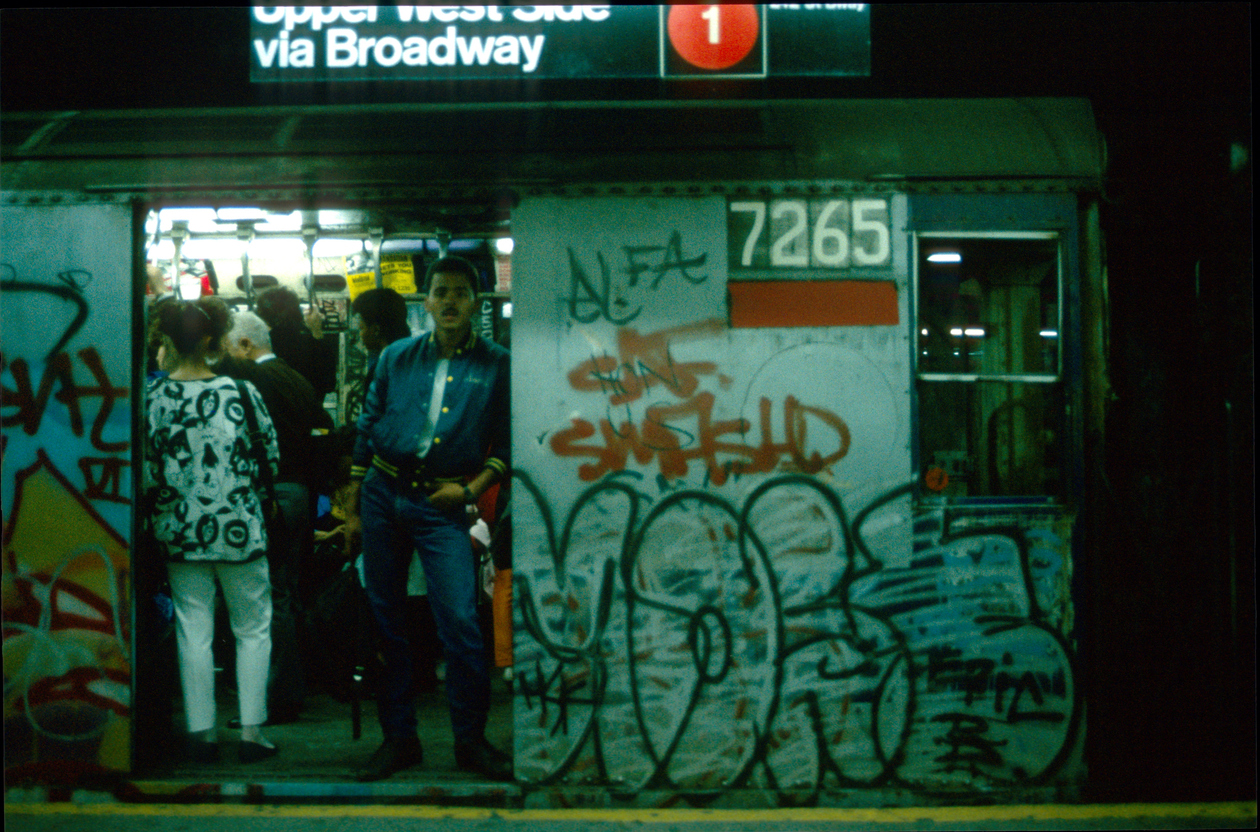
The Phun Phactory: Graffiti Without Fear
About These Stories
YC runs intensive nonfiction writing programs for teens in New York City, where they’re mentored by a professional editor to write personal stories about their lives and about issues that affect young people. Their stories are then published and read by thousands of teens, educators, policymakers, and other adults who work with and for young people.