
Even though I live in Chinatown, I don’t know much about it. I know what I see and what I see isn’t too bad. What I hear is a lot worse than what I see.
People tell me that gangsters hang out in the parks at night, but I don’t see them. All I see are the shining lamps that light up the street.
People tell me that gangsters run the jewelry stores along Canal Street, but I see old jewelers running them.
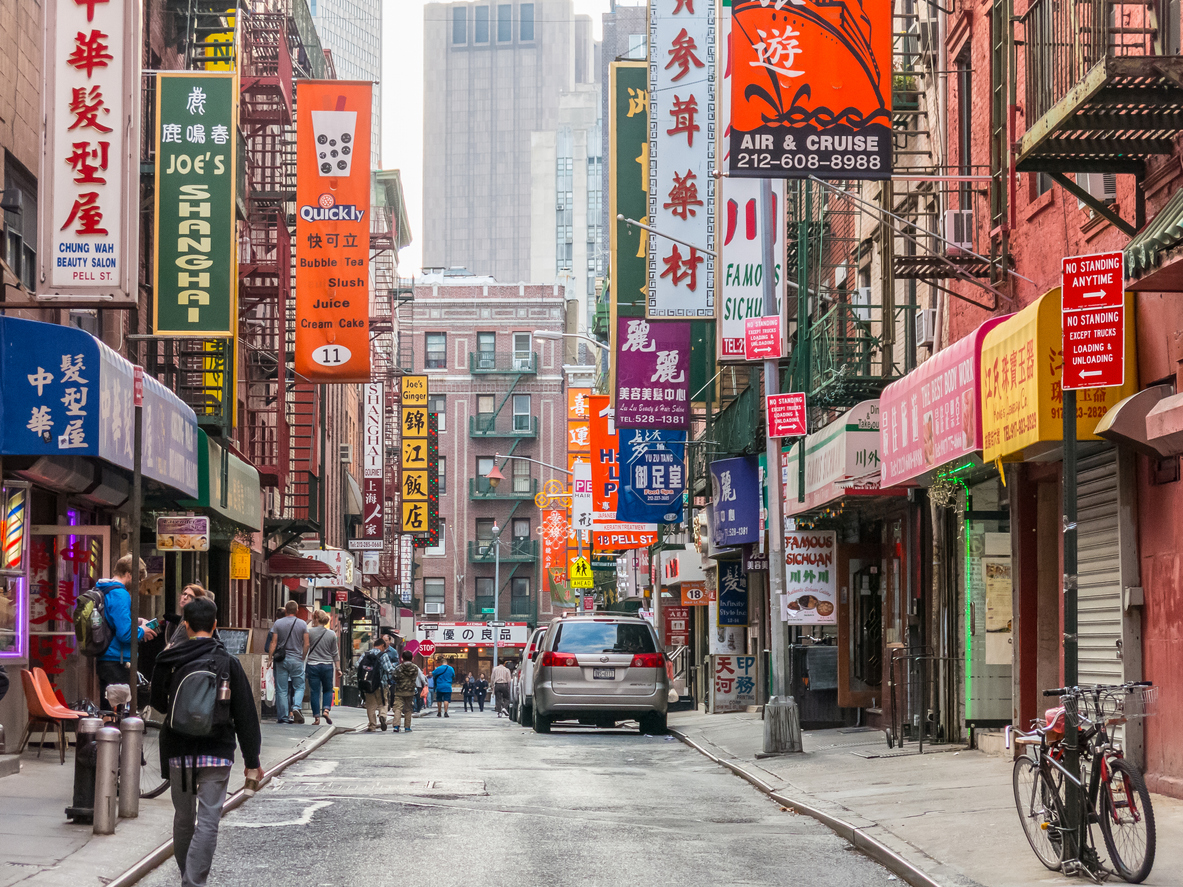
The Chinatown I see is a vast, diverse, and interesting place. Some of the banks look like old Chinese temples. Parades are occasionally held to celebrate the Moon Festival, Chinese New Year, and other Chinese holidays.
Basketball and Tai Chi
It’s a place where I can go to play basketball at the park and always get an open court. I see teenage boys trample up and down court, one of them powering his way to the basket to beat his opponents. They have lots of fun passing the ball around and putting “the moves” on their friends. In the middle of the game, other teenagers race through the courts on their expensive Rollerblades, ready to perform some tricks.
Chinatown is not only a place for teenage boys to have fun, but also for the older generation to relax. As I leave my apartment in Confucius Plaza, I peer outside and see elders concentrating on their tai-chi, a style of self-defense, in the broad park in front of me. Their hands move as if they were floating on the wind, but display definite rhythmic movement. The old men see me and yet they don’t see me due to the concentration they have to maintain.
Chinatown is also a place of bakeries and restaurants which serve delicious food. It’s a place to go for the best buns you’ve ever tasted. In some small restaurants, you can smell the Peking duck all the way from the kitchen. At the larger restaurants, all you can see is people standing in a crowd, waiting for a table. These crowds literally block your view into the exquisite inner dining areas. If you actually get in, you’ll see chandeliers ranging from the ceiling and dragon illustrations decorating the walls.
Rich Man, Poor Man
I also see some bad things. Unfortunately, it’s a very noisy, very dirty part of town. Tranquility doesn’t exist here. Cars and trucks zoom through the streets every hour of the day. Garbage and stench fill up some streets.
Chinatown is also a community full of inequity. Some areas have tall, modern buildings; others have tenements. Some people are homeless. They sit on the streets looking for food to keep them alive. Others are rich. Important businessmen in expensive suits walk in and out of tall buildings every day.
The most fascinating thing about Chinatown is that it has survived all these problems. It seems to be holding up, even growing, instead of descending into total bankruptcy. Even the homeless on the street seem to live rather peacefully. Whenever I leave my home, I see this homeless man around. Every time I see him, he either is hanging out at the corner of Division Street or sleeping on top of a bed of Chinese newspapers he has collected around town. I thought he would be very unhappy in his situation but he seems glad to be alive.
Invasion of the Tourists
Chinatown is also a place for tourists. They come in by bus and walk around the town. They come to see the “Oriental neighborhood,” but sometimes see the garbage and stench instead. They can taste the food and visit the parks, but they can’t see Chinatown through the eyes of the people who live there.
In my view, Chinatown is a very interesting place. It seems to continue growing; the streets get more and more crowded every day. I think Chinatown will remain in good health.
Chinatown: All I Know Is What I See
About These Stories
YC runs intensive nonfiction writing programs for teens in New York City, where they’re mentored by a professional editor to write personal stories about their lives and about issues that affect young people. Their stories are then published and read by thousands of teens, educators, policymakers, and other adults who work with and for young people.