
I hear a lot of kids say they wish they were back home instead of in the group home, or that they can’t wait ’til the day that they can finally leave foster care. But that’s not what I say or feel.
Believe it or not, I like living in foster care. Not just because I get clothing money, allowances, stipends, and social workers and guidance counselors hooking me up with school or a job, but also because the friends that I live with have become my family.
Before I even knew what “foster care” meant, I had a “dilaphidated” family. Back then, my father was an alcoholic and a diabetic. He died in ’85.
My mother and I were at opposites after she met her boyfriend. We were constantly arguing and fighting, not like mother and daughter, but like two females who can’t stand each other. Because of that, it was kinda hard to accept her as my mother.
My grandmother and I were also at opposites. Although she’s loving, caring, protective to the max (I love and appreciate her for that), she lacks patience, understanding, and can’t listen to other’s viewpoints (i.e. me) because she swears she’s never wrong and always 100% correct.
Why I Cherish My Friends
My uncle and I were at opposites, too. And it will probably stay that way. Why? He would ALWAYS agree with what my grandmother said (and still does to this day).
My aunt and cousins? Well, since I haven’t heard from them since Madonna’s very first single, “Everybody,” came out, I guess I don’t have any aunts or cousins.
But rite now, I’d like to tell a tale about my school nightmare and how it changed my attitude, self-esteem, and personality. (And why I cherish my friends so greatly.)
The school nightmare began when I was in fourth grade at C.S. 150. I was a quiet and shy girl. A boy named Lester Morales started by calling me “germs.” Then about five boys started calling me names.
By the end of two months, the whole class played the cooties game. I could’ve been a good sport and played along, but it wasn’t really a game. From then through 6th grade, I was the “cooties” girl. I had a few friends, but, unfortunately, I kinda lost contact with them.
I thought things would be different when I graduated from C.S. 150 to I.S. 116, but it was worse. When the kids from my new class tried to get to know me, I was scared and stayed away. That whole semester, they didn’t bother to say a word to me. I acted like that because I was afraid that the bad experience I had in the past year would happen again. And it did. The same boys from C.S. 150 also transferred to I.S. 116.
Constant Fights
Boy, did they embarrassed the crap out of me by still playing that cooties game! My grades were good, but slipped a little. I was depressed every day because of that. I had a school counselor, Mr. C, and he was great (I miss him!), but this problem was getting out of hand and I didn’t feel any better.
Graduating from I.S. 116 was nothing for me to feel great about. I couldn’t say farewell to “friends” or miss them or shed tears because I was a loner. I had shed enough tears already from the beginning of the school year and I was just relieved it was all over.
But I realized the reason why the same boys kinda “followed” me to I.S. 116: they lived around my way. Some of them lived (and still live) in the same building as me. It got to the point that I had fights almost every day with them. I was beaten up badly, but I didn’t care.
One Sunday, a boy (who looked more like a bodyguard) kicked me in the leg just because I said “Shut the hell up” after he dissed me.
At the beginning of the new school year I had to go to Jane Addams High School for the simple fact that I wasn’t going to even try going to James Monroe with the same kids from 116.
One nite I was alone outside in the park crying. I had pen and paper and drew stick figures committing suicide. I tried to figure out why those boys treated me the way they did. My thoughts were like this:
“They weren’t joking with me.”
“It’s not a cooties game. Games like that stop by the time you go to seventh grade.”
“They really hate me.”
“But I swear I never bothered them, said anything, or went near them.”
“I don’t look like a creature.”
“So what’s the problem?”
“Why do I feel like I can’t go near my mother when I need help?”
“Why do I feel like I don’t have a mother?”
By then, I thought about the other problems with my bio family, etc. I went home and went straight to the bathroom. I popped pills in my mouth and then felt like I was going to die. I almost did.
So to start off the new year (’87), I stayed in the hospital for a couple of months. Though I begged to go home, I’m glad I didn’t. The hospital wasn’t all that in the beginning because some girls acted hardcore (or psycho).
Friends Are Family
But during my stay, I made friends. People who love you and care about you and look out for you and UNDERSTAND you and don’t betray, backstab, change on you, or hit you. You’d call them friends. But since I’m a sensitive soul, I call them family.
I left the hospital and went to an RTF (residential treatment facility) in Westchester County in ’88.
I was in an apartment with 11 girls. At first, some of the girls didn’t like me. They thought I was conceited. I rolled my eyes at two girls named Rosa and Marianna, then smiled at them. That was to show them that I wanted to be their friend. It was strange, but that was my way of communicating since my socialization skills hadn’t blossomed yet.
‘We Ain’t Gonna Bite’
One day, the girls asked what my name was.
“Lala,” I said.
“Well, Lala, why do you keep rolling your eyes at us?” they asked.
I said that I was only joking with them.
“But we don’t even know you,” they said.
“Well, I guess I’m a little scared to say hi and say my name,” I said.
“Well, there’s no need to be scared, we ain’t gonna bite you.”
I laughed a little because I didn’t know what to say.
“Well, I’m Rosa and this is my friend Marianna.”
And from there, we were friends.
Weeks later, Marianna started calling me and Rosa her two daughters. Their boyfriends were my “daddies.” It was a little “family game” we played.
I’ve always felt Marianna was like a mother because she acted like one. She always wanted me and Rosa to hang with her. She made sure nobody messed with us. She’d always be there to listen.
Like one time, when I came back from a home visit crying. I couldn’t deal with my bio mother any longer. She had the kids from the neighborhood who called me the “cooties” girl chilling in her house. I felt kinda betrayed. It’s like she was saying to me: “Well, who cares if they bothered you or hit you? That’s not my problem.”
Well, Rosa and Marianna demanded to know what was wrong and I told them what happened during my home visit. They hugged me and said, “Don’t worry about that. You’re with us now.”
A Growing Family
God, you didn’t know how great I felt to hear that! We all went outside to meet our friends from the other apartments after dinner. The guys made us laugh with their usual antics.
We always chilled and parlayed together. At school, even if we didn’t have the same classes, we chilled outside between classes. During the first three months in the RTF I made new friends and my family grew.
We were always together thru good times and bad. Trips, parties, school, detention at the gym barn-we were always together. Obviously that’s because we lived together, but we were more like a family than just a “group.” And even though there were some kids I didn’t like, I had fun at my RTF.
We talked with each other about our problems with staff, like why certain staff think they’re all that just ’cause they live at home and we live in an RTF.
We talked about what happened in our lives and how our families treated us. I was shocked to hear that some of my friends’ stories were worse than mine.
But even though we were very close, I never thought that they would look out for me.
One day, a girl from another RTF confronted me about some rumor that was spread about her. (You see, her RTF and my RTF didn’t mix. It had been that way even before I came to the RTF. I don’t know why. But whenever they heard a bad rumor, they’d blame it on one of us, even if we didn’t say a damn thing about them.)
She started with the usual, “Were you talking about me a few minutes ago?”
I had an obvious answer, “No, why would I say something about you if I don’t even know you?”
“Well, my friend said you was talking about me and my friend wouldn’t lie and…”
My friends saw what was going on and they were there to have my back. They told her to leave me alone or they would $%# the girl up.
I was shocked. I was like, “Oh damn! They stood up for me?” I was at a loss for words. (Honest!) Why? Because I never had people stand up for me before.
A Positive Outlook
One nite, when it was lites-out at my RTF, I did a lot of thinking. I decided not to go on any more home visits or contact my bio mother. I was sick and tired of trying to work things out with her and the rest of my bio family and having it go nowhere. It just got me more upset.
When I moved to a new group home in ’92, I was very upset that I had to leave my “family” at the RTF (I gave them all a hug and cried.)
But I continued to make friends and “expand” the family in my new place. Only this time, I didn’t have any “mommies,” “daddies,” “aunties,” etc. (Unfortunately those days were gone.) Just good, loyal friends.
I think the key to living better in foster care is to have a positive attitude and outlook, and to know what good you can gain out of the system. I don’t pay attention to staff bossing me around. I don’t pay attention to staff who give me detention for little things like being five minutes late or level meetings (at my first RTF I cared, because I wanted to go to trips).
Actually. I think it’s fun to argue with staff (in a good-natured way).
My gain was new friends and learning a lot from them. I learned more from my friends than from my whole bio family put together. I learned the Golden Rule. I am loyal, respectful, and kind to others who treat me the same way.
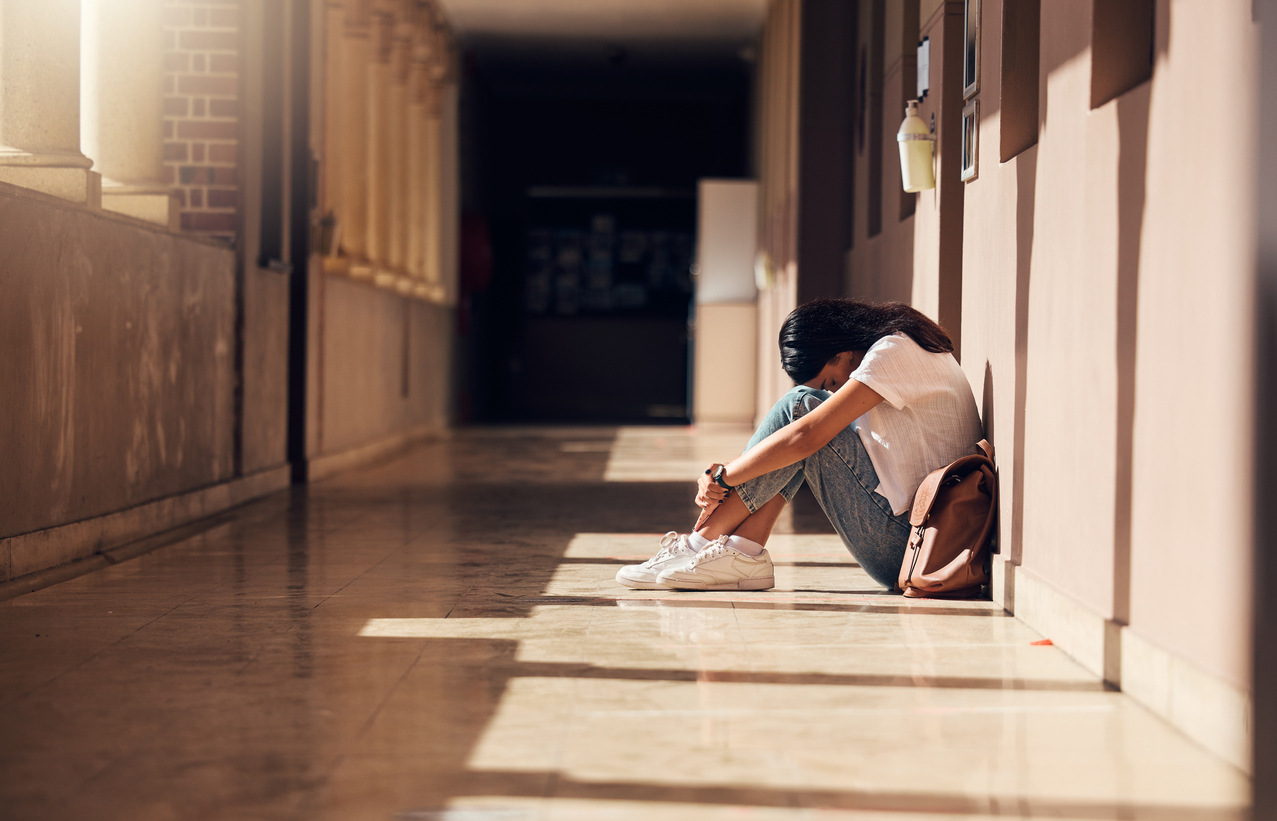
From Friends in the System: I’ve Created My Own Family
About These Stories
YC runs intensive nonfiction writing programs for teens in New York City, where they’re mentored by a professional editor to write personal stories about their lives and about issues that affect young people. Their stories are then published and read by thousands of teens, educators, policymakers, and other adults who work with and for young people.