
Soon after my daughter Anasia was born, her father went off to jail for sticking up a man for his money. So I had to convince myself that I was going to be the happiest single parent there ever was.
I told myself that I was going to give my child everything that she needed and wanted (being that I was only 17 years old, I had no choice but to think that way).
I also told myself that I was never going to hit my child, because I didn’t want her to experience the same kind of abuse that I took from my own father when I was pregnant with her.
I was going to start a new life with a new person in a Mother and Infant Program, a place for young teenage mothers who have no home. But as I started my new life, I found myself putting off everything I had been saying about the way I would treat my daughter.
Anasia was one and a half months old when I hit her for the first time. I hit her because she kept crying for no reason and I thought hitting her would make her stop.
When Anasia turned two months old, the hitting increased and I also started screaming at her.
And when she was three months old, Anasia fell off her high-rise bed. She was crying and crying, and I left her on the floor to cry. I didn’t pick her up until I was ready to get out of my own bed.
‘Why Do I Keep Hitting Her?’
I kept asking myself, “Why do I keep hitting her?” I didn’t know if I was hitting her because her father wasn’t around or because I couldn’t face being a teenage mother.
(Now, as I look back on the past, I know the reason. It was my first time being in foster care, and I never had to deal with any rules and regulations before. Dealing with the rules made me stress out.)
When Anasia was nine or 10 months old, she had a seizure in my arms. I didn’t know if it was because I was hitting her too much or because I wasn’t feeding her enough. (To tell you the truth, I really didn’t give a damn what it was from.) Half of me wanted to hurry up and take her to the hospital, and the other half was saying, “No, don’t take her, let her die because you don’t want her.”
In the Hospital
While I was taking my time to decide what to do, I was looking at this person in my arms. Her eye was closed up, her lips were blue from not getting enough air, and her body was shaking. I finally made up my mind to take her to the hospital and leave her there, so that’s what I did.
The doctors rushed Anasia out of my arms and took her to another room. I stood in the emergency room for about five or 10 minutes, then I turned around and walked away. As I did, I heard Anasia start to cry, but I tried to pay it no mind. Then she started to cry even louder and the people in the emergency room were looking at me in a funny way.
So I couldn’t help but turn around and go into the hospital to see what was wrong with her. But I was just pretending, so I could make myself look like a good and concerned mother.
As I entered the room she was in, Anasia had lots of I-V tubes in her arms and legs and an oxygen mask over her face. Her eyes were so big. It seemed as if she was telling me to help her, with little tears in the corners of her eyes. I couldn’t help but cry and ask myself, “Why?” I knew that I needed help.
Group Support
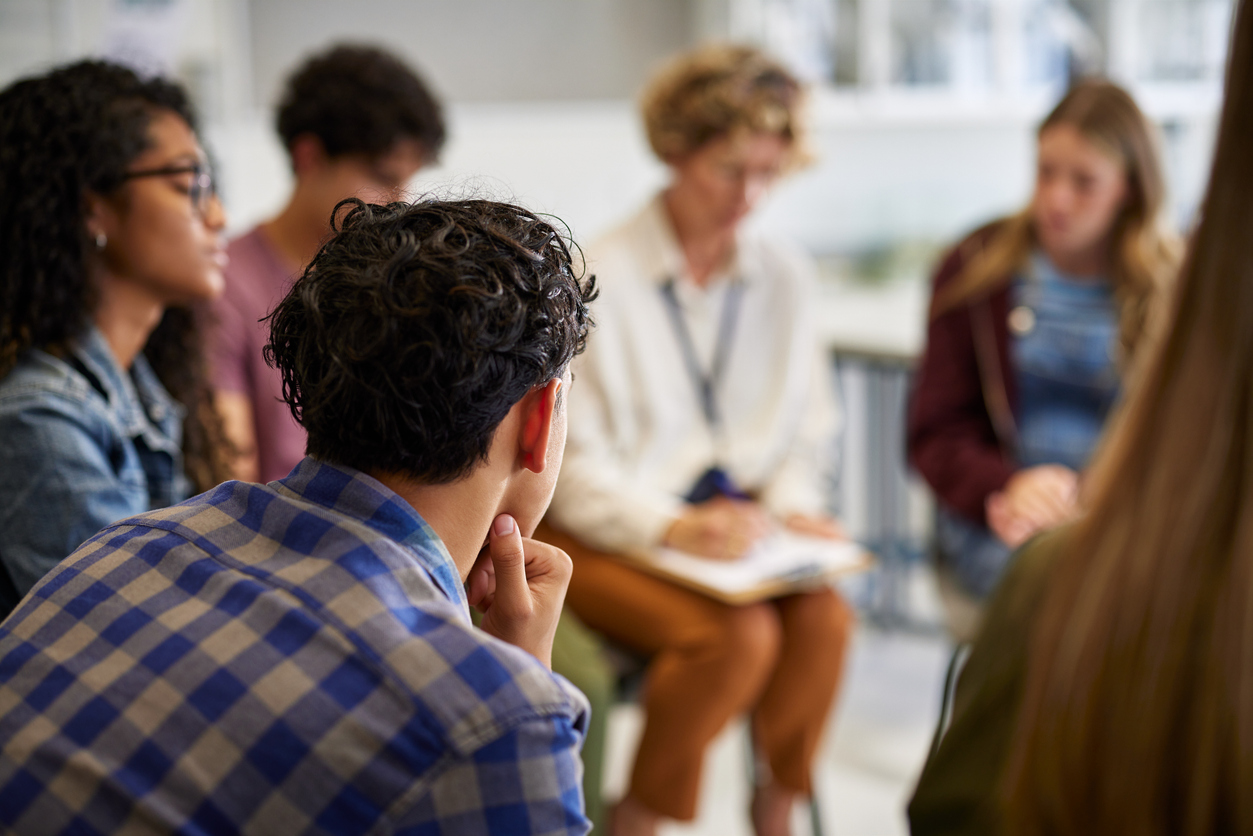
I went and joined a group of teenagers called the Mentor’s Group at an agency called Rosalie Hall, in the Bronx. They get together to discuss problems they’re having and how to find ways to deal with them.
When I joined the Mentor’s Group, I was afraid to tell them about the abuse I had done to my child. I don’t know why, but as I started to listen to the stories that everyone was sharing with each other, I felt relieved and started opening up to them. Some of the things they were talking about I could relate to, such as being a single parent and raising a child in the system.
Then I caught myself and realized that nobody was sharing anything similar to what I had done to Anasia, so I felt that the group was not for me. But a young lady shared her experience of being abused mentally and physically (by either her mother or father, I can’t remember) and after listening to her story, I couldn’t help but to open up and tell them about what I had done to Anasia.
Stay With the Hurt
After I told them my story, the group was quiet and didn’t say anything at first. I thought they wouldn’t understand me and were going to hate me, but I was wrong. They were quiet because of the abuse that I had done to my child, but also because they were trying to think of a way to help and support me in the best way they could.
The first thing they told me was that I had to stay with the hurt and not the anger. In other words, they were trying to say that if I was angry at my baby’s father for leaving me, or if I was angry for being a mother at such a young age, I shouldn’t take it out on Anasia. She didn’t ask to be here, she didn’t ask for anybody to hit or hate her, only to love her and show her the right way in life.
Listening to them made me feel so low about myself, because what they said was so powerful and so true. I had to accept the fact that Anasia was not the reason for my anger and should not be the target for it. That’s a message that I’ve kept near to my heart, and it’s made me become a better person. (Thanks guys.)
Now that Anasia is 15 months, she’s getting into things, but I don’t get the urge to hit or scream at her anymore. I try my best to put all the hitting and screaming behind us both. I try to make up for the past by taking her to the park, playing pitty-patt with her, reading books to her at night, and showing her her eyes, nose, mouth, and ears, and telling her what they are used for.
If there was something that I could say to my daughter, it would be this: Anasia, there is a God and He didn’t let those foster people take you away from me. I believe in my heart that He’s giving me a second chance to prove to you and to myself how much I love and appreciate you.
LOVE YOU, ‘NASIA!
Staying with the Hurt: Stopping the Abuse
About These Stories
YC runs intensive nonfiction writing programs for teens in New York City, where they’re mentored by a professional editor to write personal stories about their lives and about issues that affect young people. Their stories are then published and read by thousands of teens, educators, policymakers, and other adults who work with and for young people.