
You know the scene, the first week of school and your classes are packed. You walk in a little late only to find that all the seats have been taken so you have to stand. Usually they manage to find a seat for you by the second week (even if they have to take it from another overcrowded class).
Sometimes it’s because the program office has screwed up and accidentally given you a class you took last term or a class you didn’t ask for. But most of the time there are just too many students and not enough teachers or classrooms. Immigration is one big factor in why schools are so jammed. But the main reason is that there is no money.
At Humanities HS, for instance, Jan Zubiarr, 15, has 38 people in his Math class which is four over the limit set by the teachers’ union contract.
“Lots of people don’t have seats,” he said. “It’s not fair.”
The school has room for 1702 students but last year 1860 registered. This means that the school was at what the Board of Ed. calls “109% utilization.” (If 1702 had registered it would be 100% utilized- full to capacity.)
No Place To Sit Down
Students from several high schools all had the same complaint: with so many kids in one room, the time for learning is being taken up just getting the class together. “We deserve 41 minutes [of education],” said Nancy Alfaro, 16, of Grover Cleveland HS. “and not spend half of it finding out where people sit.”
Students also complained that there aren’t enough supplies to go around. Amy Herget, 16, also from Cleveland, says in her classes not only are people always standing, there aren’t enough books either. (Cleveland is 111% utilized.)
Another problem is that with so many people in one class, the teacher just doesn’t have time for all of them.
Claudia Ramos, a senior at Richmond Hill HS (129% utilized), is planning to pursue a career in the fashion industry. With 40 people in her Fashion Design class, she says it’s hard to get the teacher to look at her work. “It bothers me. I feel I’m getting less attention…a lot of kids are getting short-changed on their education.”
Overcrowding Causes Tension and Violence
Noreen Connell, executive director of the Educational Priorities Panel (EPP), an organization working to improve public education in New York City, says, “Overcrowding also affects morale.”
A 1989 EPP report on overcrowding said that “the school’s atmosphere can become tense and, in some cases, violent.”
Overcrowding can also contribute to the dropout rate. Students feel neglected and may want to leave school and not return. The EPP report found that schools with the greatest number of students at risk of dropping out are also the most overcrowded. And schools which are predominately Black and Latino are consistently more crowded than those with a large White population.
Many schools have tried to adapt by creating “double sessions.” At Bushwick HS, which is 170% utilized-serving almost twice as many students as it should be-this means that the 11th and 12th grades start their day at 7:50 and end at 2:00. The 9th and 10th grades start at 9:15 and finish at 3:30. But this often prevents students from participating in after-school activities.
Temporary Solutions
Rose T. Diamond, director of strategic planning at the Board of Ed’s Division of School Facilities, said some schools are moving administrative offices out of their buildings to make more space for students. During our interview, Diamond got a phone call about two school districts fighting over classroom space. Her solution was to use another place such as the auditorium or gym. This has been the common remedy around the city and not a great one, many teens say.
The EPP report goes on to say that the schools that aren’t overcrowded should try to create special programs to draw students away from those that are. It also suggested that schools that were closed be reopened and other alternative spaces be found in office buildings for example.
Meanwhile, the Board of Ed. has a five year plan to build new schools and add and lease new space. By the year 1995, they say they will need to make room for almost 50,000 more students. In Queens they will be building West Queens HS which will seat 2500 students. Townsend Harris (also Queens) will house 1000 students. In Port Richmond HS, on Staten Island, there will be room for 800 more.
Solving this problem, Ms. Diamond says, “is the Chancellor’s top priority.” In the mean time, she says we should “try to be patient and understand.”
But Connell doesn’t think so. She says that teens are a great “political force” and we should write letters to our legislators and invite them to “observe overcrowding firsthand.” She recommends that we “tell as many people as possible how bad things really are.”
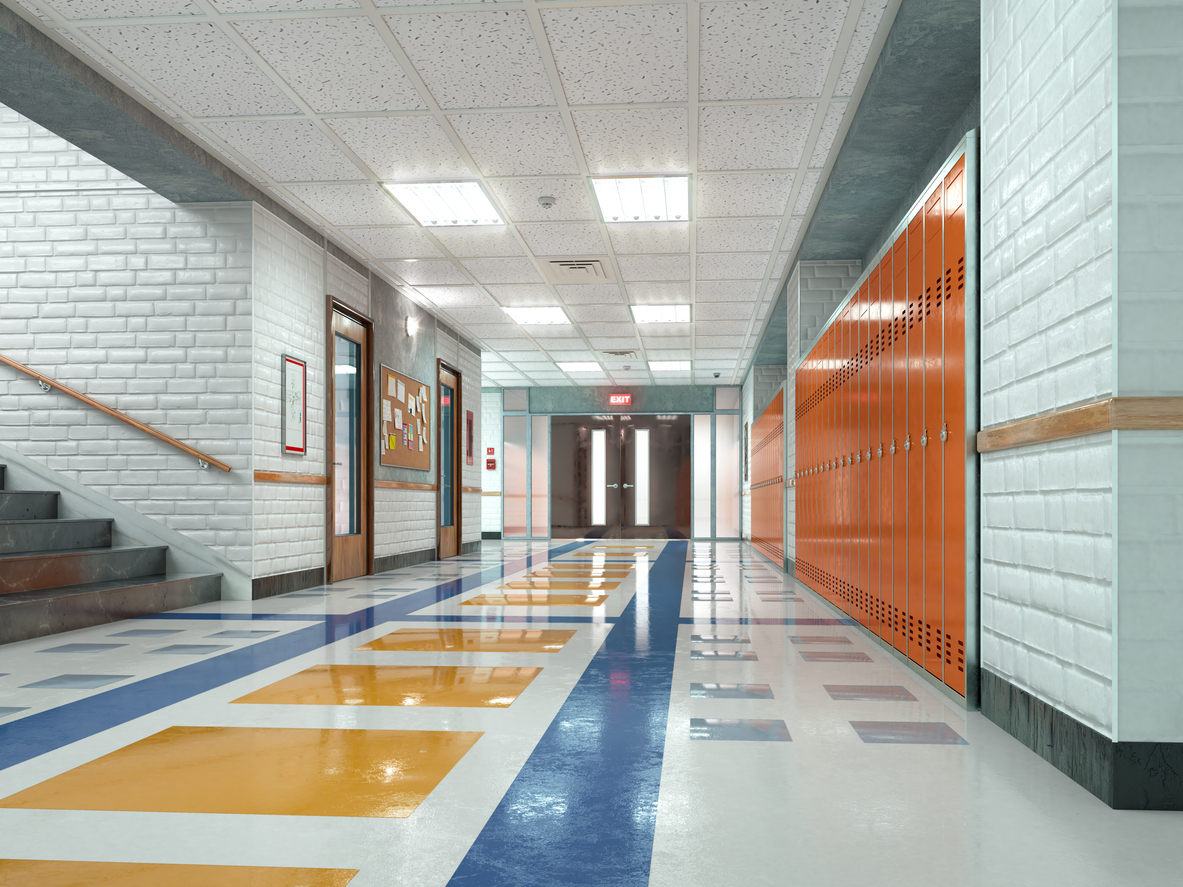
Overcrowded Classrooms: Do You Ever Feel Like a Teen Sardine?
About These Stories
YC runs intensive nonfiction writing programs for teens in New York City, where they’re mentored by a professional editor to write personal stories about their lives and about issues that affect young people. Their stories are then published and read by thousands of teens, educators, policymakers, and other adults who work with and for young people.