
“What did you do about the war in Iraq?” is a question our grandchildren will ask 50 years from now when the Bush administration, al-Qaeda, Saddam Hussein and Osama bin Laden are nothing more than words in history books.
Some will answer, “I joined the service for the defense of the United States.” Others may say, “I supported the troops from the home front.” I hope my answer to my descendants will do: “I served a summer working on an antiwar campaign for the War Resisters League. I felt I was doing a service not only for the United States, but for the greater good of the world.”
War Comes Home
Before September 11th, I thought of war as a far-off idea. I never thought another attack like Pearl Harbor would take place on American soil, let alone in my own city. I was shocked when it did.
Starting on September 11th, war became the order of the day. We marched into Afghanistan because the country harbored Osama bin Laden and his terror network, al-Qaeda. I believed we were going after a man who was a threat to America, if not to all the western world. In the process, at least in my mind, we were freeing the Afghani people from an evil regime, the Taliban.
But when our government began discussing invading Iraq, I felt far from sure this was a good idea. I come from a liberal household and my parents taught me not to be afraid to question those in power. So ever since George W. Bush got into office, I’ve questioned the ideas and policies of the White House’s chief occupant. (Heck, if you remember the way he got into office, you know why I did.)
What Does Iraq Have to Do With 9/11?
I began watching the news every night with my family. I understood that Saddam Hussein was no blessed saint. Like Hitler or Stalin before him, he killed those who could become political threats and butchered others as well.
But despite this man’s clear oppression of his own people, I still could not see war as a solution. I questioned the idea of a preemptive strike, which is when one country attacks another because it believes that the other will attack it in the future. I could also see no evidence to support a link between 9/11 and Iraq, or to prove that Saddam still had weapons of mass destruction.
One March morning, I was riding in my father’s car. Through the radio’s speakers I heard activists in London, Rome, Paris and all over the world, protesting the plans of the Bush administration to invade Iraq. That morning, I hoped that the voice of thousands could stop a looming war.
But the voices of the protestors seemed to make no difference. My hope died at the end of the day when President Bush announced that the U.S. had invaded Iraq. In hindsight, considering the buildup of American troops in the Persian Gulf, I wondered why I’d been kidding myself. I felt helpless.
Upset by Loss of Life
In May, in a scene I would have thought only Hollywood could have produced, President Bush landed on a naval vessel bearing the message “Mission Accomplished.” But in the months after the war was officially over, as more bodies of American servicemen and women piled up (and more than 10,000 Iraqis were reported killed), I felt more angry, upset and helpless at the loss of so much human life, on both sides.
One Sunday, late in June 2004, I served as an altar boy at my church. After the service was over, Father Simon, a respected and socially conscious priest (his sermons are often laced with messages of nonviolence, a nuclear weapon-free world and the like), approached my sister and me. He offered us summer volunteer jobs at the War Resisters League. I’d work there for 12 to 16 hours a week.
Workers for Peace
The War Resisters League was founded by pacifists in the 1920s as a response to the First World War. The League believes in nonviolent tactics of resolving conflicts, like those used by Mahatma Gandhi. The organization also works to rid the world of racism, sexism and human exploitation.
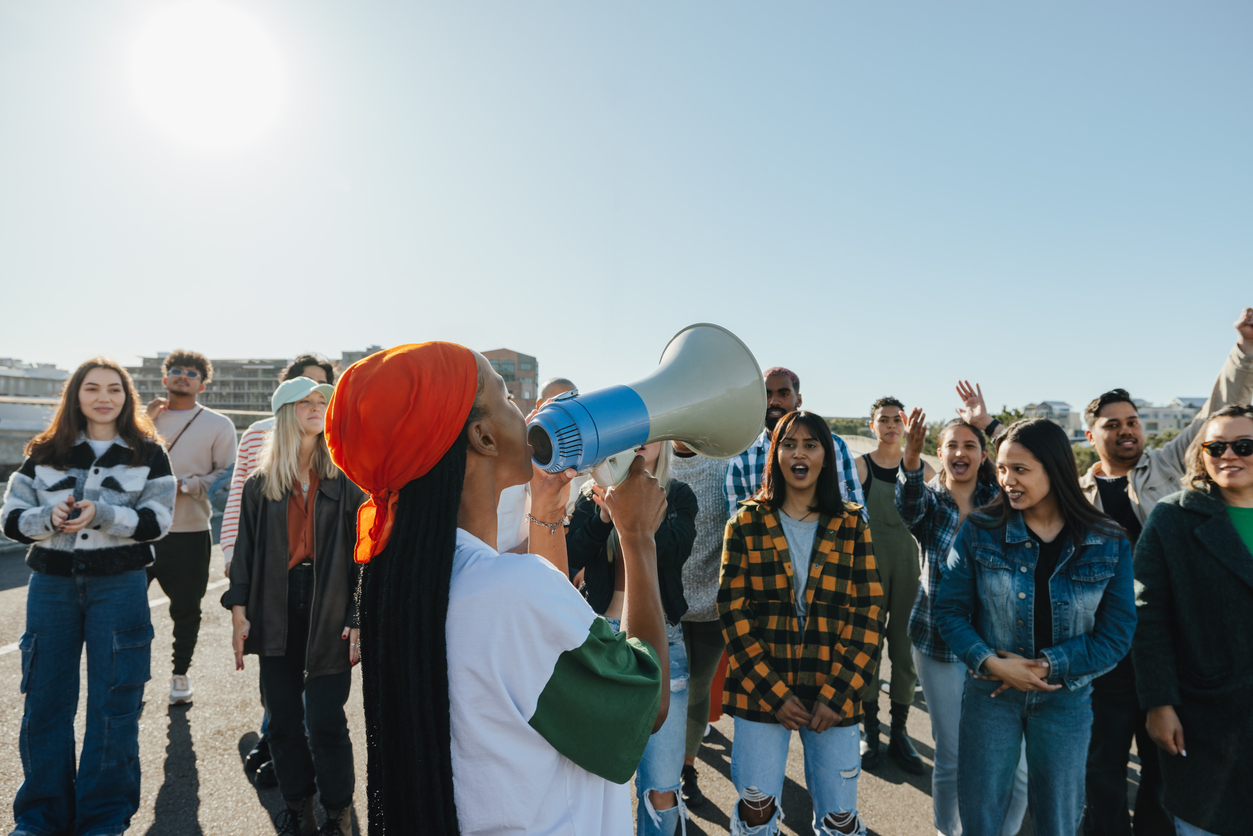
This summer, most members worked to organize protests against the conflict in Iraq, specifically during the Republican National Convention at the end of August.
Before I could start work at the League, I was assigned a stack of reading about Iraq.
Corporations in Control
One thing I learned is how U.S. and multinational corporations such as Halliburton, Lockheed-Martin and the Carlyle Group are making money off the fighting in Iraq by selling weapons and logistics (such as supplies, latrines, housing and security personnel) to our government.
Now, everyone has to earn a living. But what I was really troubled to learn was how much influence these corporations have in the halls of government.
For instance, Vice President Dick Cheney used to be the chief executive officer of Halliburton, and President Bush’s family has business ties to the Carlyle Group, another defense company.
Many members of the League believe we’re fighting this war in Iraq just to make money for these corporations. I don’t want to think that moneymaking is the main force driving our foreign policy. But I am concerned that if our political leaders are invested in war businesses, it might make their policies more pro-war.
Pictures of Death
Father Simon also showed my sister and me a PowerPoint presentation. We listened to the official reasons for why the war was launched and arguments against them. But what really struck me were the photographs. In the presentation, I saw death in the form of mass graves and decomposed bodies. I saw a man holding a deceased girl who was missing a foot. Dangling from where the girl’s foot had been were pieces of her flesh.
I always knew that in war, innocent people would be lost. And I view the deaths of both civilians and soldiers as losses, since they are all human lives. But for me, Father Simon’s presentation made the victims and travesties of war seem more real. I hadn’t seen such pictures on the 10 o’clock news.
Before 5th grade, I’d never seen a dead body. Then I attended the wake of an elderly gentleman. Seeing the body lying in the casket, I was struck hard by the fact that in the end, we will all be in that man’s state. The death of that one old man seemed brutal to me.
But looking at the photographs Father Simon showed us, I saw how much more brutal war is. I have trouble imagining a situation that would make me want to send young Americans, who are just beginning to experience life, to go and face that. I certainly can’t imagine it unless all other efforts to resolve the conflict have been used. In Iraq, I don’t believe they were.
The photographs made my sister and me uncomfortable. They also reinforced our moral conviction that the Iraq war was evil.
It’s My Duty to Dig Deep
Within three days of beginning at the League, I was put to work on the Stop the Merchants of Death campaign. The campaign’s main purpose is to educate the public about the corporations making money in Iraq and their connections to the Bush administration. Along-side another volunteer, I spent most of my days on the telephone calling college professors who might agree to speak on the subject.
I also did some writing. My biggest writing project came right after the Iraqis were officially given back control of their country, on June 28th. Father Simon assigned my sister and me to help him research and write an article critiquing the transfer of power in Iraq. Father Simon enhanced what we wrote, placed the War Resisters League stamp of approval on it, and it went up on the League’s website.
Learning so much about the conflict in Iraq made me believe even more strongly than I did before that it is right to look closely at our politicians and voice our opinions about their policies. As someone who loves this country, I believe I have the high duty of digging deep into the truth to try to understand the story behind the story that our government tells us. I have to come to an understanding of the issues myself before I can help educate others. I also believe it is important, when I turn 18, to vote.
Coming Together to Change Society
I can also say now I have a better idea of what it means to be a part of a political and social movement. Before volunteering, I wrote antiwar articles in my school newspaper, but it was always a solo operation. When I became involved with the League, I learned what it means to come together to change society.
At the League, I worked with two Catholic priests, including Father Simon, a Catholic sister, two college students, a World War II conscientious objector (he didn’t fight in WWII for moral reasons), fellow high school students and college professors.
They weren’t people eager to burn Old Glory. Many of them, including myself, love this country and the freedoms we have.
Despite coming from different walks of life, we all held the same belief that war, violence, racism and sexism are horrible stains on humanity. Finding so many people who wanted to do something about these problems made me feel a little less helpless and a little more hopeful about our country’s future.
Working for Peace in Iraq
My summer with the War Resisters
About These Stories
YC runs intensive nonfiction writing programs for teens in New York City, where they’re mentored by a professional editor to write personal stories about their lives and about issues that affect young people. Their stories are then published and read by thousands of teens, educators, policymakers, and other adults who work with and for young people.