
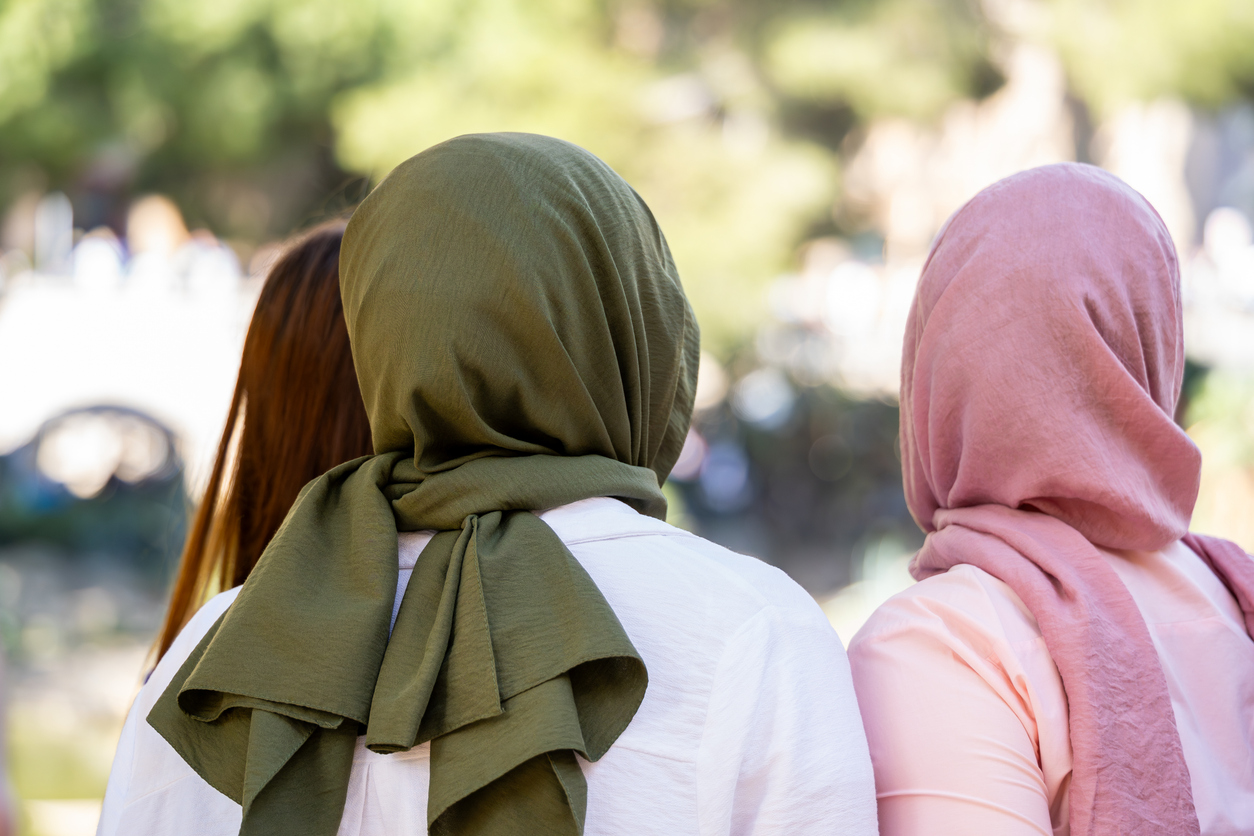
I’m a Muslim woman who wears the hijaab, a headscarf that covers my hair, neck and shoulders. Non-Muslims often ask me questions about it, usually the same things over and over. I wrote this series of questions and answers for everyone who doesn’t know about the hijaab. I might even start carrying it with me to refer to whenever I get tongue-tied.
Q: I bet you have to wear that all the time. Do you sleep with it on?
A: No, I can take it off at home because I can show my hair to my father, grandfather, uncles and brothers. I definitely don’t keep it on all the time.
Q: Why do you wear it? I mean, you must be boiling in all this humidity.
A: Actually, I’m not too hot at all. I feel cool because I’m sheltering myself from the sun.
But that’s not why I wear the hijaab. It’s a shield that protects me from men who would like to see my physical beauty. If I showed my hair, wouldn’t I look more attractive? The hijaab is a warning sign for men, saying, “Look out, ’cause I’m not available!”
We Muslim women are sort of like jewels in a museum. We cover ourselves up by wearing the hijaab with loose-fitting long-sleeved shirts and long pants or skirts, just as the jewels are hidden by the walls of the museum. You can only see them if you have a ticket. We hide our beauty, saving it for when it matters, for marriage.
I feel pious when I wear the hijaab, as if I’m hiding something special. It’s my way of presenting myself as a modest, respectable woman. I feel that I respect my body enough so that I don’t need to show it for others’ pleasure. I feel I’m not a slave to the media’s image of the perfect woman.
As a friend of mine once said, “The hijaab forces people to see us for who we are on the inside. They have to judge us by our intelligence, our mind, not by how tight or short our clothes are.”
Q: I don’t see Muslim men covering themselves up.
A: It’s mandatory for Muslim men to cover up from their navels to their knees. They are expected to dress decently in loose-fitting clothes, to present themselves in a dignified and respectable manner.
Q: But why do Muslim women cover their hair, neck and shoulders when men don’t have to?
A: Women have to cover more of themselves than men because of their beauty. Muslims believe Allah has given women more attractive features than he has given to men, features that can tempt men into taking advantage of women. Muslim women cover themselves so that there is nothing to see in the first place. We also believe that women are less tempted by physical beauty than men are, so men don’t have to cover themselves as much.
Q: How do you feel about wearing the hijaab after September 11th?
A: Ever since September 11th and the war in Iraq, it’s become even more important for me to wear the hijaab. I want to show Americans that Muslims are not those terrorists or extremists shown in the media, that real Muslims are caring, respectable, intelligent people.
Why the Hijaab?
About These Stories
YC runs intensive nonfiction writing programs for teens in New York City, where they’re mentored by a professional editor to write personal stories about their lives and about issues that affect young people. Their stories are then published and read by thousands of teens, educators, policymakers, and other adults who work with and for young people.