
I had first heard about Malcolm X while I was in my senior year in high school, in Africa. As I recall, I was in history class and the topic was human rights activists of the western world. But I didn’t learn that much about him and for this reason my curiosity about Malcolm X was very slim until I came to the U.S. and accidentally stumbled upon “The Autobiography of Malcolm X.” The very first chapter caught my attention faster than I ever expected.
Malcolm X’s philosophy was very complex. He was seen by some as pro-violence. His complexities were what inspired me.
In the past I was very quick to jump to conclusions. I remember, while I was still in Africa, I watched on TV the oppression of Blacks by Whites in South Africa. From that day on, I thought that all White people were born with racism in their blood. I had this conviction despite the fact that I never really had White people around me to justify my thoughts. I took that impression with me to the U.S., until I read “The Autobiography.” This book changed my thoughts about Whites.
Malcolm X went through many despairing moments before he became a devoted Muslim. This was why he had so much of that racial animosity in his earliest public appearances. Moreover, he was introduced into the religion at a time when America was unwilling to combat racism.
Visit to Mecca
Because of this, he responded to the race issue with an anger that seemed to promote violence toward the White community. However, his pilgrimage to Mecca in 1964 changed this despairing hate he held against the White community. During the period of his pilgrimage, he made a remarkable comment with respect to the race issue in America:
“America needs to understand Islam, because this is the one religion that erases from its society the race problem. Throughout my travels in the Muslim world, I have met, talked to, and even eaten with people who in America would have been considered ‘white’-but the ‘white’ attitude was removed from their minds by the religion of Islam. I have never before seen sincere and true brotherhood practiced by all colors together, irrespective of their color.”
Changed Views
I related to this passage, because through it Malcolm X changed the negative impression I had of the Islamic religion. Malcolm X helped me see Islam as a religion that opposes hate, and that promotes unity among racial groups. Before this time I had disliked the way some Muslim activists in America aired their views about other races.
No matter what happened in the past, preaching hate to the White community, hate to the law enforcement agencies, hate to the government, and Black supremacy are uncalled for. It is my opinion that preaching of this kind should be stopped because it hinders racial unity among different ethnic groups.
Malcolm X stood his ground for what he believed, but his pilgrimage to Mecca rearranged many of his views:
An Open Mind
“You may be shocked by these words coming from me. But on this pilgrimage, what I have seen, and experienced, has forced me to rearrange much of my thought patterns previously held, and to toss aside some of my previous conclusions. This was not too difficult for me. Despite my firm convictions, I have been always a man who tries to face facts, and to accept the reality of life as new experience and new knowledge unfolds. I have always kept an open mind, which is necessary to the flexibility that must go hand in hand with every form of intelligent search for truth.”
I related to this passage not only because Malcolm X changed his way of thinking, but because of the humble way in which he tossed aside his old views. This humility helped me to change my own way of thinking.
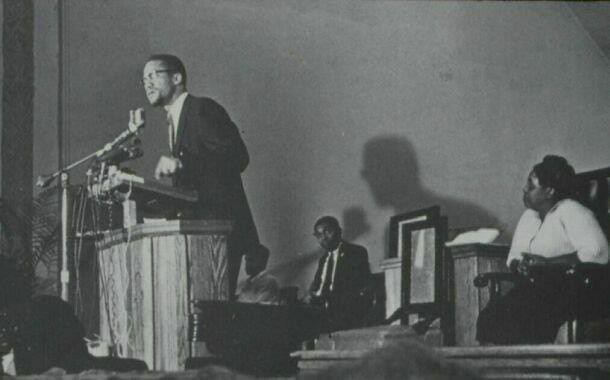
Choosing Malcolm X as my mentor means paying tribute to a radical African-American who remains a hero for many young people like me today. His legacy has become my source of inspiration.
Why Malcolm X is My Mentor
About These Stories
YC runs intensive nonfiction writing programs for teens in New York City, where they’re mentored by a professional editor to write personal stories about their lives and about issues that affect young people. Their stories are then published and read by thousands of teens, educators, policymakers, and other adults who work with and for young people.