
I was born on January 25, 1981, on a boat traveling from Haiti to America.
When my father first told me I was born in the ocean, I thought I must be a mermaid, and I couldn’t understand why I didn’t turn into one when I took a bath. Then he explained that I was born on a boat.
My parents came here on that boat in search of a better life. They wanted to leave a country where the police could beat you up for no reason or break into your house, where they raped the women and mutilated the men. As I’ve grown up, they’vetold me horror stories of things the police in Haiti have done to their friends. They came to America hoping that things would be different for them and for their children.
A Future Citizen
Although I’ve spent my entire life in this country and have never once been to Haiti, officially I am a Haitian citizen. A few months ago, when my parents became American citizens, I decided that I wanted to become one too.
My parents became citizens because of new laws being passed that would cut off or strictly limit aid to non-Americans living in this country. They also thought it would help them bring my older brother, Jean, here to live with us.
My parents told me that becoming a citizen would help me get money for college. But for me becoming a citizen seemed like the first step in fulfilling my American dream. I imagined becoming a successful writer and moving out of my neighborhood, where there are so many crackheads and fences everywhere, moving some place with houses and green grass.
Second Thoughts
But by the time I got my citizenship papers, I had begun to have second thoughts.
Over the summer while I was working at New Youth Connections, I traveled into Manhattan regularly for the first time in my life, and I began to notice the way black people and other minorities worked in the little jobs-behind the counter or cleaning up the parks-while the white people hurried off to offices in suits and ties. I wondered why almost all the cab drivers were Indian, black or Middle Eastern, while almost all the passengers were white.
I began to be bothered by the fact that there aren’t that many black people in positions of power. I felt angry that politicians want to throw juvenile offenders into adult jails while cutting money out of school budgets. I worried that for blacks and minorities like myself, the American dream could turn into an American nightmare.
I couldn’t Read Anymore
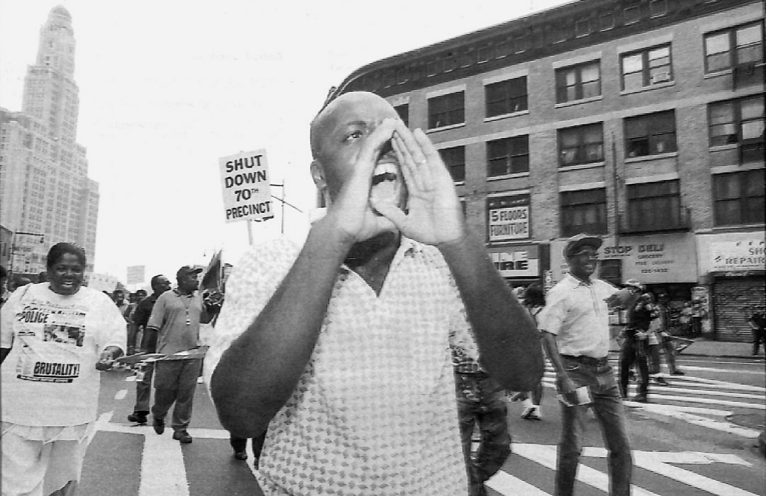
Then, a few days after I received my citizenship papers, I saw an article in the Daily News about a man named Abner Louima who was allegedly beaten and raped with a toilet plunger by cops of the 70th precinct. I felt sick to my stomach. The police officers were given the job to protect and serve the people of this country, but instead they were trying to kill this man.
The details of the beating and torture were so graphic-by the time Louima was finally taken to the hospital, he had damaged internal organs and broken teeth-that at first I didn’t want to read any more. I was so mad I just wanted to see the cops receive the same treatment they had given Louima.
Memories of Other Abuses
In the evening when I got home, I read the article more carefully: like me, Abner Louima was Haitian.
If he had been African-American or Chinese, I still would have been upset. Any time someone is robbed of his dignity and self-respect, I’m angry. But when I read that he was Haitian and heard on the radio that racist remarks were allegedly made by the police, that really pissed me off. It reminded me of rude things I had heard about Haitians before and I questioned whether I wanted to become a citizen at all.
In the summer of 1992, a brutal military regime was ruling Haiti and Haitians were fleeing to this country in great numbers.
Many settled in New York and at that time I heard people in my neighborhood, both black and white, stereotyping Haitians, calling us “boat people,” making fun of how we spoke English, saying that you would get AIDS if you slept with a Haitian woman.
I watched on the news how Haitians-including my own aunt and uncle-were being held prisoner at the Guantanamo Bay naval base in Cuba in overcrowded conditions just because they were trying to save themselves and seek refuge in America.
When I heard that Louima had been beaten by the police and harassed because he was Haitian, I remembered all these things, and questions filled my mind. Why should I be part of a country that doesn’t want to open its arms to people who seek refuge here? Why should I be part of this country if I have to fear the people who are supposed to protect me just like my parents feared the police in Haiti?
I’m Just Not Ready
Now, I’ve decided to wait to become a citizen. I guess I feel a little hopeless, and I just don’t believe that I can change this country.
I want to become an American citizen for the right reasons-I don’t just want to do it so I can get government aid for college or for some other financial benefits. I want to feel passionate about my country and I want to feel like I can bring about change.
Maybe in a few years I’ll feel differently. If I do become a citizen, I hope I’ll use that power to fight to eliminate some of the problems that I see going on now.
Right now, though, in light of what happened to Abner Louima, I’m just not ready to fill out the forms and declare that I’m part of this country.
Excerpted from the September/October 1997 issue of New Youth Connections.
What Happened to My American Dream?
Abner Louima's Nightmare: After a Haitian immigrant was attacked by police, one NYC writer wondered,
About These Stories
YC runs intensive nonfiction writing programs for teens in New York City, where they’re mentored by a professional editor to write personal stories about their lives and about issues that affect young people. Their stories are then published and read by thousands of teens, educators, policymakers, and other adults who work with and for young people.